


Donald Trump spent $55 billion on a war to undo Obama’s free deal and is now paying Iran $20B to agree to the same terms
The irony isn’t lost on anyone.
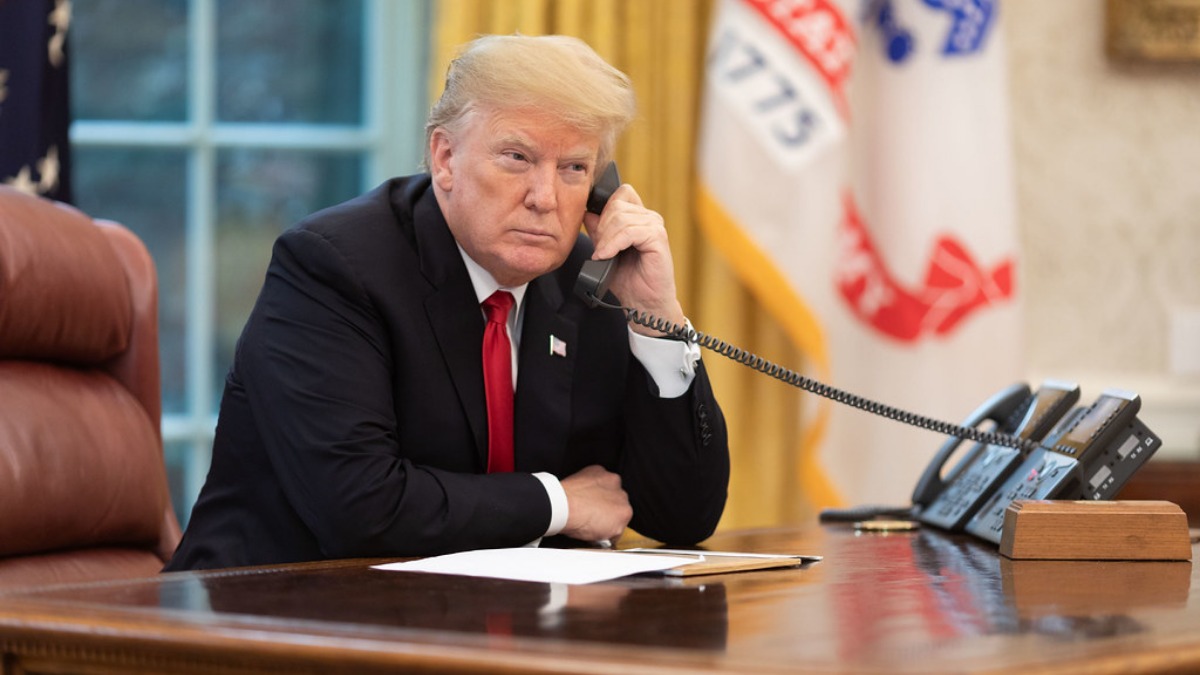
President Donald Trump is on the verge of handing Iran $20 billion in frozen assets, a move that would mirror the exact deal he spent years trashing as a “disaster” under Barack Obama. Reports surfaced this week that the president is weighing a three-page agreement to permanently end hostilities with Iran, with the unfreezing of billions in Iranian funds as a key bargaining chip.
The proposed $20 billion payment would dwarf the $1.7 billion Obama released in 2015, a sum Trump has repeatedly slammed as reckless. According to the Daily Beast, Trump spent his first term ripping up Obama’s nuclear deal, calling it “catastrophic” and “disastrous” during his 2016 campaign.
He even took specific aim at the $400 million cash payment Obama authorized, which Trump claimed was airlifted to Tehran in unmarked bills. “Obama gave them $1.7 billion in cash – green, green cash,” Trump said earlier this month, framing it as a national embarrassment. Now, his administration is reportedly negotiating a deal that could hand Iran more than ten times that amount.
The numbers alone tell a wild story
Initial U.S. proposals suggested unfreezing $6 billion, but Iran countered with a demand for $27 billion. The $20 billion figure now on the table would be a compromise, though it’s still a staggering sum for a deal that, in many ways, resembles the one Trump dismantled.
The sticking points remain familiar: the U.S. wants a 20-year moratorium on Iranian nuclear enrichment, while Iran is pushing for just five years. Mediators are still trying to bridge the gap, but the framework would allow Iran to keep nuclear research reactors for medical isotopes, provided all underground facilities are decommissioned and future sites are built above ground.
Trump’s public messaging on the negotiations has been characteristically bombastic. On Truth Social, he declared the Strait of Hormuz “completely open and ready for business,” while insisting a naval blockade would remain in place “until such time as our transaction with Iran is 100% complete.” He added that the process should move quickly since “most of the points are already negotiated,” though he made no mention of the $20 billion payment.
The White House, meanwhile, has refused to confirm or deny the reports. “Only announcements from President Trump or the White House – not anonymous sources – should be taken as fact,” said spokeswoman Anna Kelly, calling the discussions “productive” but declining to elaborate.
Critics have been quick to point out the glaring contradictions
Podcasters Danielle Moodie and Wajahat Ali didn’t hold back in dissecting what they called the “epitome of whiteness” in Trump’s handling of the Iran deal. “A Black person had already done something super well,” Moodie said, referring to Obama’s agreement. “You f— it up, right? And then you want to redo it and take credit for it, as if you had an original thought in your f—ing head.”
She went on to slam Trump for spending $55 billion on military efforts, getting hundreds of Americans injured, and killing over 165 children, all to arrive at the same basic terms Obama secured without firing a shot, per AlterNet. Ali piled on, comparing Trump’s self-aggrandizing tendencies to historical figures like Christopher Columbus and Elvis Presley.
“When they discover countries that are already inhabited by indigenous people, like when Christopher Columbus discovered America, except that he thought he discovered China,” Ali said. “No, dumba—. You stumbled upon America.” The critique extends to Trump’s demands for statues and a taxpayer-funded 250-foot arch, which Ali framed as the behavior of “fickle, weak, broken, fragile men who need to cosplay as crusaders.”
The financial and human costs of Trump’s Iran policy are heavy
After withdrawing from Obama’s deal in 2018, Trump reimposed sanctions and escalated military tensions, including a drone strike that killed Iranian General Qasem Soleimani in 2020. The fallout sent oil prices soaring and left the U.S. in a weaker negotiating position, forcing it to now offer billions more to secure the same nuclear restrictions.
For all the bluster, the current negotiations suggest Trump is backing into a deal that looks a lot like the one he once called a national disgrace. The $20 billion payment, if finalized, would be the largest transfer of funds to Iran in U.S. history, far exceeding the $1.7 billion Obama released. It’s a bitter pill for Trump’s base, many of whom cheered his hardline stance against Tehran.
Yet the reality is that after years of military posturing and economic pressure, the administration is now offering Iran a financial windfall to accept terms it once agreed to for a fraction of the cost. The Strait of Hormuz announcement might have been Trump’s way of signaling progress, but the details reveal a deal that’s far from a victory. Iran has already stated that the reopening of the strait is temporary, tied to the duration of a ceasefire.
Meanwhile, the nuclear moratorium remains a major sticking point, with Iran pushing for a shorter timeline and the U.S. holding firm on two decades. If a deal is reached, it will likely include strict oversight of Iran’s nuclear facilities, but the financial concessions will be hard to spin as anything other than a retreat from Trump’s earlier rhetoric.
(Featured image: The White House)
Have a tip we should know? [email protected]
Follow The Mary Sue:
