


In a stunning twist, the head of ICE is being deported from his own job
He’s moving to the private sector too, just like Pam Bondi.
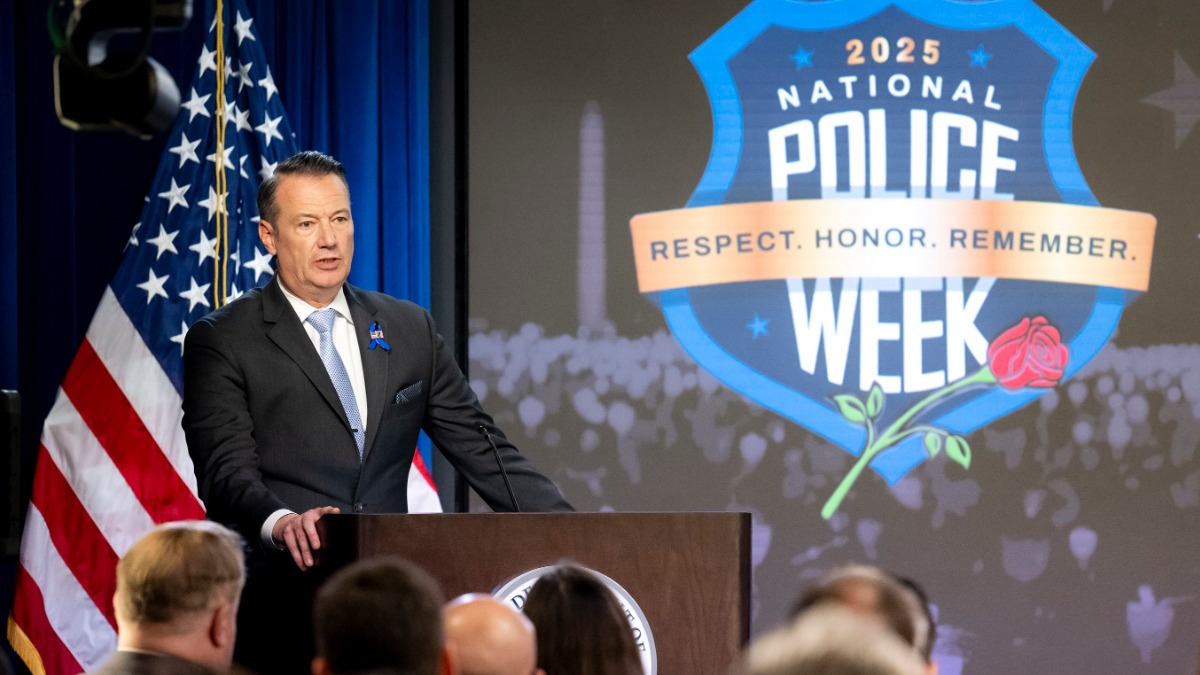
The acting director of U.S. Immigration and Customs Enforcement (ICE), Todd Lyons, is stepping down from his role on May 31, marking the end of a tumultuous tenure defined by record-high deaths in detention centers, controversial enforcement tactics, and intense pressure from the White House.
Lyons’ departure comes as the agency faces mounting scrutiny over its operations, including fatal shootings of American citizens, questionable detentions, and a surge in migrant deaths under its watch. According to CBC, his exit was announced by the new Department of Homeland Security (DHS) Secretary, Markwayne Mullin, who praised him as an “American patriot who made our country safer.”
White House spokesperson Abigail Jackson echoed that sentiment, framing Lyons’ work as a necessary correction to what the administration calls the failures of previous leadership. But the praise stands in stark contrast to the growing list of controversies that have dogged ICE under Lyons’ leadership.
The spike in deaths among migrants in ICE custody is alarming
Last year alone, 32 individuals died in ICE or Customs and Border Patrol (CBP) detention, the highest number since 2004. This year, the death toll has already reached 16, with detainees from 10 different countries, including four from Mexico.
Mexico’s Foreign Ministry has taken legal action, filing a brief in support of a lawsuit alleging poor conditions in detention centers, including inadequate medical care, unsanitary environments, and the punitive use of isolation. The ministry also plans to raise the issue with the Inter-American Commission on Human Rights.
When pressed by Democratic House Rep. Lauren Underwood about the rising death toll, Lyons attributed it to the record number of detainees in ICE custody. “It’s the highest total in decades because we do have the highest amount in detention that ICE has ever had since its inception in 2003,” he said. Underwood wasn’t buying it.
“Just saying simply there’s more detainees, I mean, you have more officers, you have more resources,” she countered. “That’s not, in my opinion, a valid rationale why the death rate would be increasing.”
The numbers back up Underwood’s skepticism
Even as detentions surged over the past two decades, annual deaths often remained in the single digits or low double digits. The noticeable increase began in 2020, coinciding with the COVID-19 pandemic, but the trend has only worsened since then. Advocates and lawmakers argue that the deaths are a symptom of systemic failures within ICE, including overcrowding, lack of medical care, and a culture of impunity.
Lyons’ tenure has also been marred by violent confrontations between ICE agents and the public. In January, American citizens Renee Good and Alex Pretti were fatally shot by federal officers during a protest against a deportation operation in Minneapolis. The shootings sparked outrage, with Minnesota officials criticizing the lack of transparency from federal agencies.
While the Justice Department launched a civil rights investigation into Pretti’s killing, it declined to do the same for Good’s, citing insufficient evidence. Lyons refused to apologize for the administration’s portrayal of the victims as radicals, telling lawmakers, “I welcome the opportunity to speak to the family in private. But I’m not going to comment on any active investigation.”
The fallout from the Minneapolis shootings has been severe
Hennepin County officials recently charged ICE agent Gregory Donnell Morgan Jr. with pointing his gun at an occupied vehicle, marking the first criminal case against a federal officer involved in the state’s immigration crackdown. Meanwhile, the brothers of Renee Good testified at a congressional forum, with Luke Ganger describing the events as “completely surreal.” “This is not just a bad day or a rough week or isolated incidents,” he said.
Beyond the high-profile shootings, ICE has faced criticism for detaining individuals who appear to have legal status in the U.S. Tania Warner, a middle-aged Indo-American court translator, and her seven-year-old daughter, Ayla, were held in ICE facilities for over two weeks in Texas, despite Warner’s insistence that they were living in the country legally. An 85-year-old widow from France and Canadian citizens have also been swept up in ICE operations.
Lyons’ departure comes at a time when ICE is flush with cash, despite ongoing disputes over funding. Republicans recently pushed through a multi-year funding package worth over $100 billion, and annual appropriations are expected to pass soon via a Senate procedure that bypasses Democratic opposition.
The agency’s budget has ballooned under the current administration, making it the most well-resourced federal law enforcement agency in the government. Yet, critics argue that the money hasn’t translated into better conditions for detainees or more humane enforcement practices.
Lyons’ tenure has been marked by extreme stress
Reports indicate he was hospitalized at least twice in the past seven months due to stress-related issues, including an incident in December where his security detail rushed him to a hospital in Washington. According to Politico, in another episode in Los Angeles, Lyons became so distressed during a ride-along with ICE agents that a bodyguard had to retrieve a portable defibrillator from a nearby government office.
Current and former officials describe Lyons as “visibly upset and struggling,” with some attributing the pressure to aggressive demands particularly from top adviser Stephen Miller. Miller, the architect of the administration’s immigration strategy, has been described as berating Lyons during daily morning calls.
While some downplay the tension, others say the pressure has taken a toll. “That’s gonna create some significant psychological pressure,” one current official said. Lyons himself has denied that the stress stems from the White House, instead blaming the workload required to “undo the harms Joe Biden has caused to the American people.”
As Lyons prepares to leave ICE for the private sector, the agency’s future remains uncertain. Whoever takes over will inherit an organization with unprecedented funding but also unprecedented challenges.
(Featured image: DHSgov)
Have a tip we should know? [email protected]
Follow The Mary Sue:
