




Federal judge slams Trump’s national security excuse for 90,000 sq.ft. White House ballroom as downright absurd
Also, who’s paying for all this?
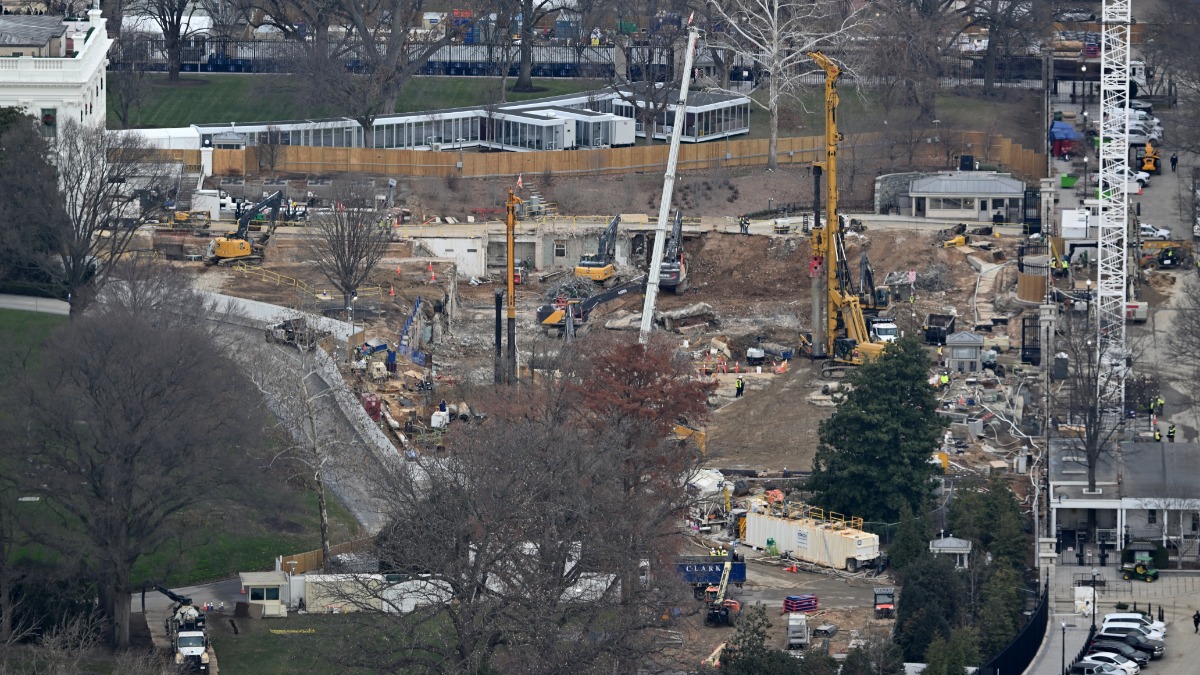
A federal judge just called out the absurdity of using national security as an excuse to build a massive 90,000-square-foot ballroom at the White House. In a sharp 10-page ruling, U.S. District Judge Richard Leon slammed the attempt to justify the entire project under a loophole meant only for critical security upgrades. The judge made it clear that national security isn’t a free pass for unlawful construction.
Last month, Leon ruled that the project was moving forward illegally because Congress never approved it. He carved out an exception to allow work on a high-tech bunker beneath the proposed ballroom, but the administration tried to stretch that exception to cover the entire above-ground structure.
Leon wasn’t having it. According to CNN, he called the argument “incredible, if not disingenuous,” and wrote that the administration’s reading of his earlier order was “neither reasonable nor correct.”
The legal battle over the ballroom has been dragging on for months
The judge didn’t mince words. “National security is not a blank check to proceed with otherwise unlawful activity,” he wrote. He allowed crews to keep working on the underground bunker and any other work necessary to maintain the White House’s safety and structural integrity. But unless Congress gives the green light, no above-ground construction can continue except what’s needed to secure the underground facilities.
The Department of Justice has already appealed the decision, but Leon gave the White House a one-week delay before his ruling takes effect. He warned that any above-ground work done during that time might have to be undone later.
The White House has been pushing hard to frame the entire project as a national security necessity. In court filings, DOJ lawyers argued that the ballroom’s design includes missile-resistant steel, drone-proof roofing, bomb shelters, medical facilities, and top-secret military installations. They claimed the above-ground structure is “inseparable” from these security features.
But the National Trust for Historic Preservation, which sued to block the project, called that argument nonsense. In court papers, the group pointed out that the White House has functioned just fine for over two centuries without a massive ballroom. The lack of one hasn’t stopped past presidents from hosting world leaders or using the existing East Wing bunker for nearly 80 years.
Carol Quillen, the president and CEO of the National Trust, said in a statement that the group is “pleased the court upheld the preliminary injunction and halted above-ground construction of the White House ballroom until Congress approves the project.” The response from the White House was swift and defiant.
On social media, the president argued that the ruling was politically motivated and a threat to national security. He claimed the White House has lacked a large-scale event space for over 150 years and that the ballroom is essential for safely hosting world leaders. The post listed an extensive set of security features, including bomb shelters, a state-of-the-art hospital, protective partitioning, and military-grade materials.
The underground bunker beneath the East Wing has a long and secretive history
It was first built in 1941 under Franklin D. Roosevelt as a bomb shelter after the attack on Pearl Harbor, per CNN. Over the decades, it evolved into the Presidential Emergency Operations Center (PEOC), a fortified command center designed to withstand nuclear attacks and other major threats.
The space has been used for everything from classified military planning to emergency evacuations, including during the September 11, 2001, attacks. Dick Cheney was rushed there moments before the Pentagon was hit, and the bunker played a critical role in coordinating the response. The current construction project has torn down the old bunker along with the East Wing’s above-ground structures.
The demolition began in October, and the underground facilities, including the PEOC, heating and air systems, and Secret Service infrastructure, have all been dismantled. A source familiar with the project said the new bunker is likely being rebuilt with modern technology to counter evolving threats like electromagnetic pulses, chemical attacks, and cyber warfare. But details remain scarce.
During a recent meeting of the National Capital Planning Commission, White House director of management and administration Joshua Fisher hinted at the secrecy surrounding the project. He said some aspects of the work are “top-secret” and that the underground construction needed to proceed without public oversight.
The cost of the project is another point of contention
The ballroom alone has seen its price tag balloon from $200 million to $400 million, and that doesn’t include the underground security upgrades. While the ballroom is supposed to be funded by private donors, the bunker and other security infrastructure will be paid for by taxpayers. Experts say the true cost of the underground work will likely never be disclosed, given the classified nature of the technology involved.
The legal fight isn’t over. The appeals court that asked Leon to clarify his earlier injunction could still weigh in, and the DOJ’s appeal means this saga has plenty of chapters left. For now, the ballroom’s future remains in limbo, and the White House will have to make do without its massive new event space, at least until Congress decides whether to approve it.
(Featured image: G. Edward Johnson)
Have a tip we should know? [email protected]
Follow The Mary Sue:
