




Major humiliation for Donald Trump as ships ignore his Hormuz blockade bluff and sail right through
How not to handle a crisis.
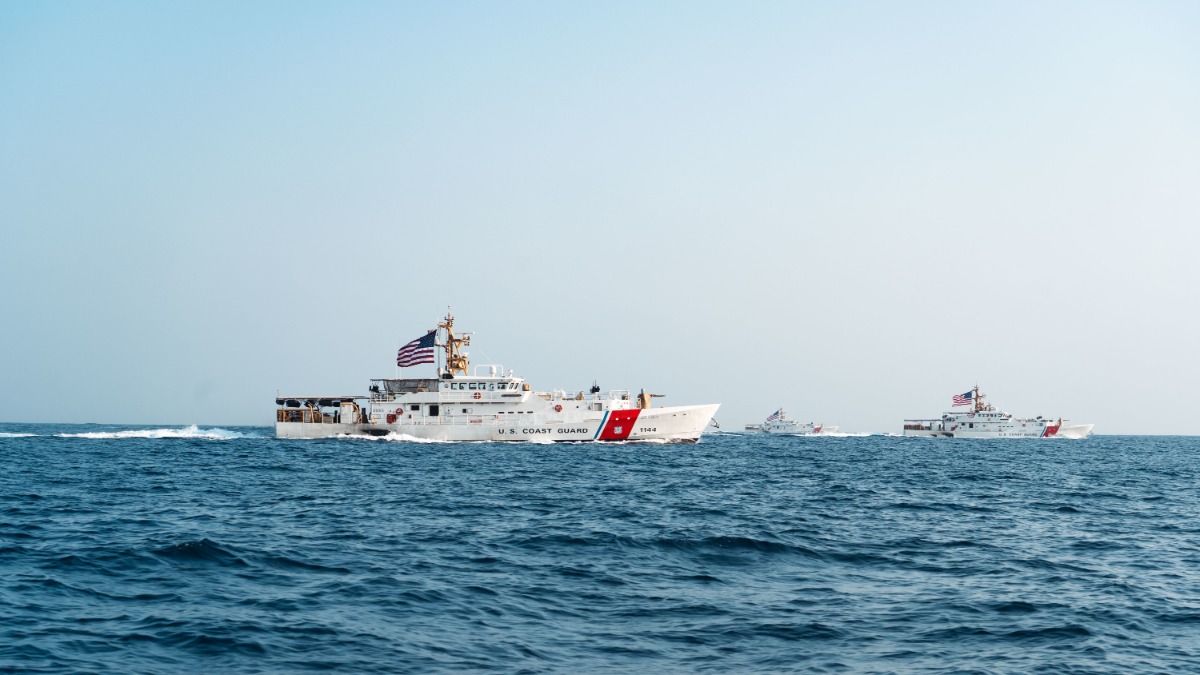
Donald Trump’s high-stakes gamble to squeeze Iran by blockading the Strait of Hormuz just got a reality check. Within hours of the U.S. Navy’s supposed ironclad blockade taking effect, multiple ships — including some linked to Iran and even a Chinese tanker — sailed right through the waterway like it was just another Tuesday.
According to The Daily Beast, the whole thing kicked off on Monday, April 13, 2026, after U.S.–Iran talks in Islamabad collapsed, leaving Trump with few options but to flex military muscle. He took to Truth Social in a now-deleted post on Sunday to announce the blockade, declaring, “Effective immediately, the United States Navy, the Finest in the World, will begin the process of BLOCKADING any and all Ships trying to enter, or leave, the Strait of Hormuz.”
He also accused Iran of “world extortion,” setting the stage for what was supposed to be a show of force. But the show didn’t go as planned. By Tuesday, U.S. Central Command was insisting that no ships had slipped past the blockade which sounded a little too confident given the independently verified shipping data showing otherwise.
That’s the kind of detail that makes you question how airtight this blockade really is
Centcom did clarify that 10,000 U.S. sailors, Marines, and airmen, along with over a dozen warships and dozens of aircraft, were involved in the mission. They also claimed that six merchant vessels had complied with U.S. forces and turned around to head back to an Iranian port on the Gulf of Oman.
The Strait of Hormuz is no small deal — about 20% of the world’s oil usually flows through it. But ever since Trump launched his war on February 28, the waterway has been at a standstill, and the global oil market is feeling the pain. Brent crude, the global oil benchmark, jumped 7% to $102 a barrel on Monday, while the average national gas price hit $4.12 a gallon.
The International Monetary Fund isn’t exactly helping ease concerns either. In a report released Tuesday, the IMF warned that disruptions to oil markets could slow global growth, fuel inflation, and even raise the risk of a recession. Pierre-Olivier Gourinchas, the IMF’s chief economist, didn’t mince words, writing, “The global outlook has abruptly darkened following the outbreak of war in the Middle East. The war interrupted what had been a steady growth trajectory.”
So, what’s next? Trita Parsi, the executive vice president at the Quincy Institute for Responsible Statecraft, laid out a few possibilities during a briefing call. One of the big concerns is that Iran could retaliate by closing the Strait of Aden, another critical route that handles about 12% of global oil flow. If that happens, Parsi warned, oil prices could skyrocket in a way that would be “devastating for Trump.”
Despite the ceasefire, Israel has continued bombing Lebanon
Meanwhile, Iran officials have accused the U.S. of violating the ceasefire by allowing Israel to continue bombing and conducting ground invasions in Lebanon. The latest war in Lebanon kicked off on March 2 when Hezbollah, an Iran-backed group, fired at Israeli positions. Since then, Israel has escalated its air and ground campaign, killing over 2,000 people and displacing over a million.
Hospitals are warning they could run out of life-saving supplies, and the humanitarian toll is getting harder to ignore. According to Reuters, the Red Cross has been sounding the alarm about the escalating violence. On Monday, a strike hit a Lebanese Red Cross center in Tyre, killing one person and damaging vehicles. The Israeli military claimed it was targeting a “Hezbollah terrorist” but is now investigating reports that the strike hit the Red Cross facility.
This came just a day after a Lebanese Red Cross volunteer, Hassan Badawi, died from injuries sustained in an Israeli drone strike in southern Lebanon. Badawi had been volunteering with the Red Cross since 2012, and his death has only added to the growing outrage. His mother, Ahlam Badawi, put it bluntly: “They attacked him directly. He was just doing humanitarian work. He was not doing anything more.”
Agnes Dhur, head of the International Committee of the Red Cross delegation in Lebanon, said, “The loss of those who dedicate their lives to saving others is gravely concerning, given the impact on the civilians who depend on their help. Humanitarian and medical personnel must be protected. They must be allowed to reach and help the wounded, and return unharmed.”
Back in Washington, there’s at least a sliver of hope for diplomacy
Israeli and Lebanese officials began rare direct talks on Tuesday, overseen by Secretary of State Marco Rubio. Rubio called it a “historic opportunity” but acknowledged the uphill battle, saying, “we understand we’re working against decades of history.”
Trump, for his part, is insisting that Iran has reached out about another round of negotiations. When asked if the U.S. had agreed to talks, he was vague, telling reporters, “We’ve been called by the other side. They’d like to make a deal very badly.” But experts say any deal would require major concessions from both sides, and with Trump’s track record of erratic decision-making, it’s anyone’s guess how this plays out.
Robert Malley, a former lead negotiator for the U.S. in the 2015 Iran nuclear deal, put it this way: “Everything is possible because of the oscillating quality of the president. Talks could go on as some are suggesting, war may resume, the impasse may persist, President Trump could walk away or there could be military escalation. Any of the above is anyone’s guess because it lies in President Trump’s erratic hands.”
Have a tip we should know? [email protected]
Follow The Mary Sue:
