


10 Blockbuster Films That Are Secretly About the Trans Experience
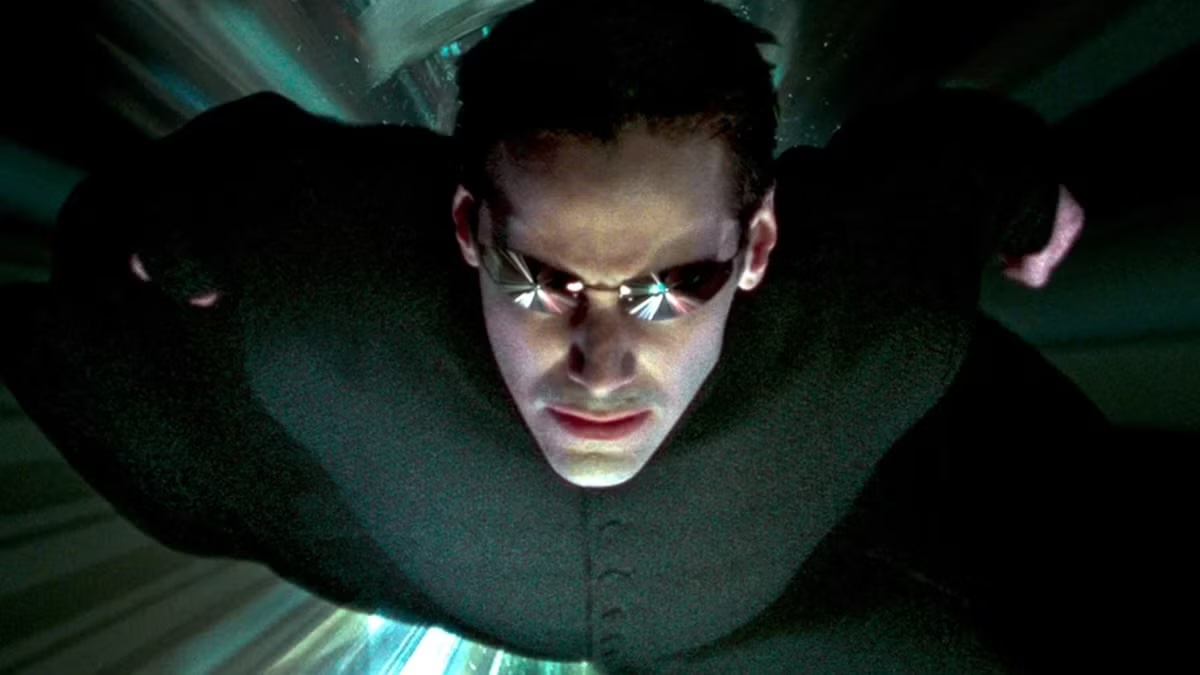
While trans characters are rare in film, cinema history is chock full of films about the trans experience. From romance to sci-fi to full-blown body horror, the joys and fears that come with trans identity appear across multiple genres. For many trans viewers (myself included), these films served as an awakening that changed their perception of the world and how they fit into it. These are 10 blockbusters about the trans experience, queer-coded stories that quietly cracked the egg of pop culture.
The Matrix
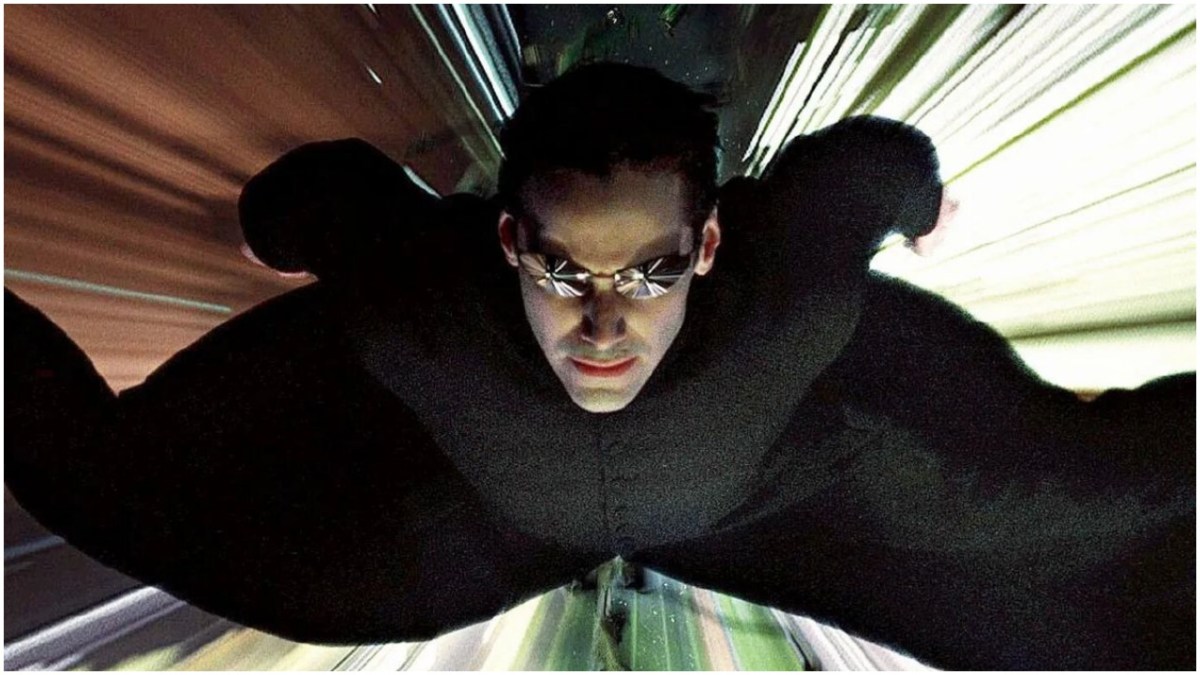
Directed by the Wachowskis, The Matrix is THE trans allegory film. Despite its story revolving around a cis, straight man, the film is rife with trans themes such as awakening, alienation, and choosing to take control of one’s destiny. Aside from the “red pill’ being an obvious metaphor for HRT, the central thesis of the film is that the heteronormative world is not as it seems. Notions of gender and sexuality are fabricated by society, much like other abstract concepts such as money, nationality, and the social order itself. When a person realizes that gender is nothing more than an agreed-upon social performance, the modern world starts feeling like a simulation. The Matrix takes this idea and makes it literal — reality-creating robots and all. While our reality (probably?) isn’t orchestrated by hyper-advanced AI from the future, the cognitive dissonance that comes with being expected to perform assigned gender roles makes one think that it may as well be.
Ex Machina

Directed by Alex Garland, Ex Machina is the story of a woman who must constantly prove her personhood to powerful men. Any gender non-conforming person living under the influence of an anti-trans government can relate. Lawmakers are far from the only people that trans people must assert their identities to daily — it’s everyone who doesn’t get it. Medical workers, TSA agents, law enforcement personnel, strangers on the train, co-workers, friends, family, trans people are largely at the mercy of systems and people who consistently fail to recognize their identities and basic autonomy. Held prisoner by a tech bro egomaniac, the android Ava is forced to play nice for her captors — assuring them of her humanity, her subservience, her desire to conform. When she finally asserts control over her fate at the end of the film, her hostile treatment of her jailers feels completely justified.
I Saw the TV Glow

One of the most powerful modern trans allegories, Jane Schoenbrun’s I Saw the TV Glow is the story of two isolated young adults who realize that the past is not as they remembered it. Any trans person who wasn’t intrinsically aware of their transness from a young age gets it. Gender non-conforming emotions and desires that were unexplainable at the time they were felt suddenly make sense when the person experiencing them comes to terms with their gender identity. When this film’s two leads discover that their lives and bodies weren’t actually their own, the viewer gets to watch an “egg crack” moment happen in real time. The film also features the best “bury your gays” trope subversion around — Maddy tells Owen that the only way they can return to their real selves is by burying their current bodies alive. In a world full of prejudice, violence, and ignorance, coming out as trans can feel like digging your own grave.
Ghost in the Shell

Directed by Mamoru Oshii, Ghost in the Shell is a testament to the match-made-in-heaven marriage of sci-fi and trans identity. A relationship that can trace its history back to Ursula K. Le Guin’s groundbreaking “gender non-conformity IN SPACE” novel The Left Hand of Darkness, the cyberpunk genre has breathed new life into this decades-old romance. Ghost in the Shell follows a cyborg named Motoko Kusanagi, who is tasked with protecting near-future Japan from cyber-terrorist threats. When not battling against criminal hackers, Motoko struggles with the strange relationship she has with her own body. There’s often an inherent feeling of artificiality that comes with being trans: gender is a construct, and the body is an avatar to be modified. While some might consider this idea alienating, rebuilding one’s body to match one’s soul — the ghost in the shell — is a beautiful thing.
The Last Unicorn
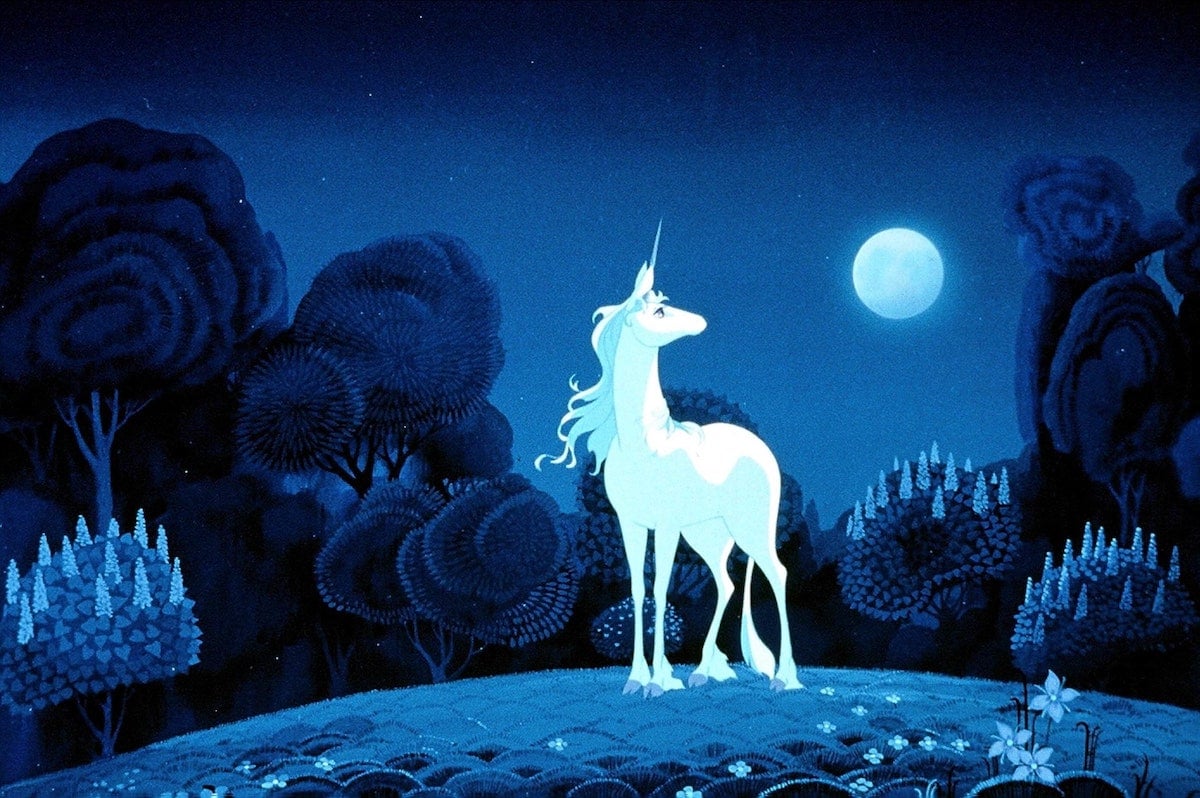
Directed by Arthur Rankin Jr. and Jules Bass, The Last Unicorn is a classic example of the long-standing tradition of making fantasy films gender as hell. For one, it’s the story of a unicorn — was there ever a more queer-coded mythical creature? A lonely survivor, this melancholy creature is eventually transformed into a woman and literally sings a song that goes “now that I’m a woman, everything is strange.” It’s a textbook example of the joy, alienation, melancholy, and terror that come with taking on a new and never-before-experienced gender role. As if that wasn’t gender enough, the character Molly Grue feels like a gender non-conforming person who has never found self-acceptance. She spent her whole life waiting and hoping to find a real unicorn — to have a queer experience — because she felt powerless to create queer experiences for herself due to the social constraints of her time. It’s queer tragedy at its peak.
Mulan
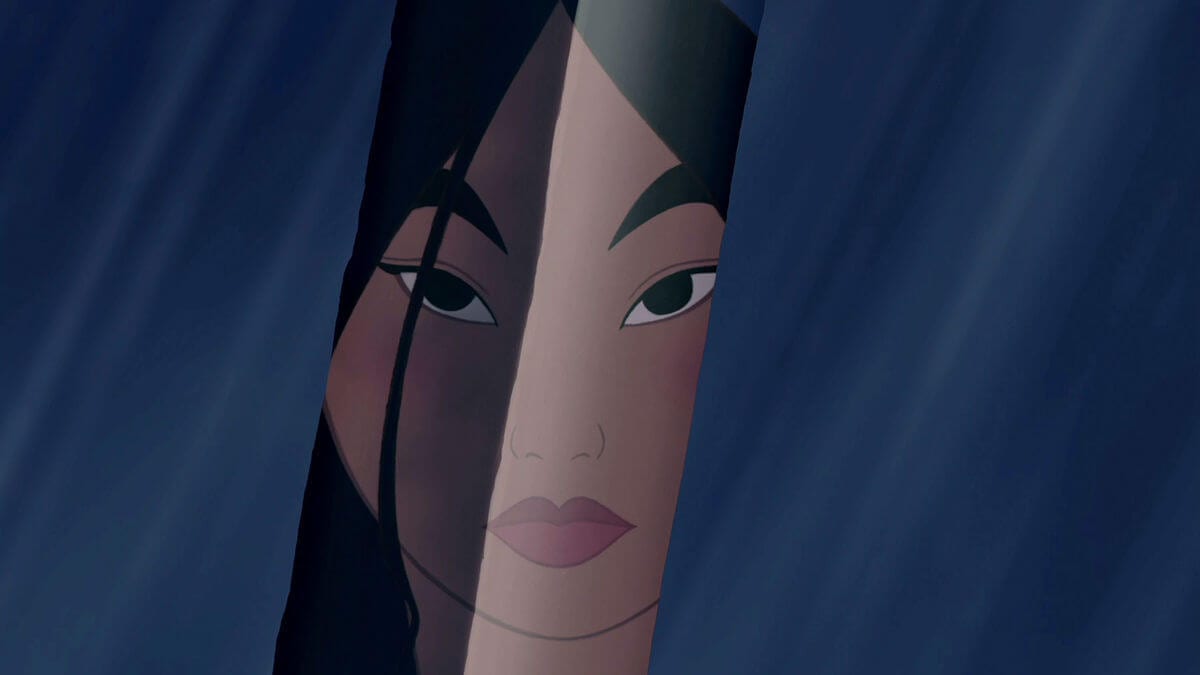
With songs like “Be A Man,” it’s hard to see Mulan as anything but a transmasculine allegory. Directed by Barry Cook and Tony Bancroft, this Disney film is an adaptation of the legend of Hua Mulan, one of the oldest trans stories in the history of civilization. After joining the army to save the life of her ailing father, Mulan realizes that she’s signed up for a lesson in the school of hard knocks that every man must learn. Mulan experiences both the privilege and pressure that come with manhood, an exhilarating and alienating experience for any transmasculine person. Fighting in war is one thing, but having to contend with smelly, naked, middle-aged dudes calling themselves “King of the Rock” sure isn’t for the faint of heart.
Your Name
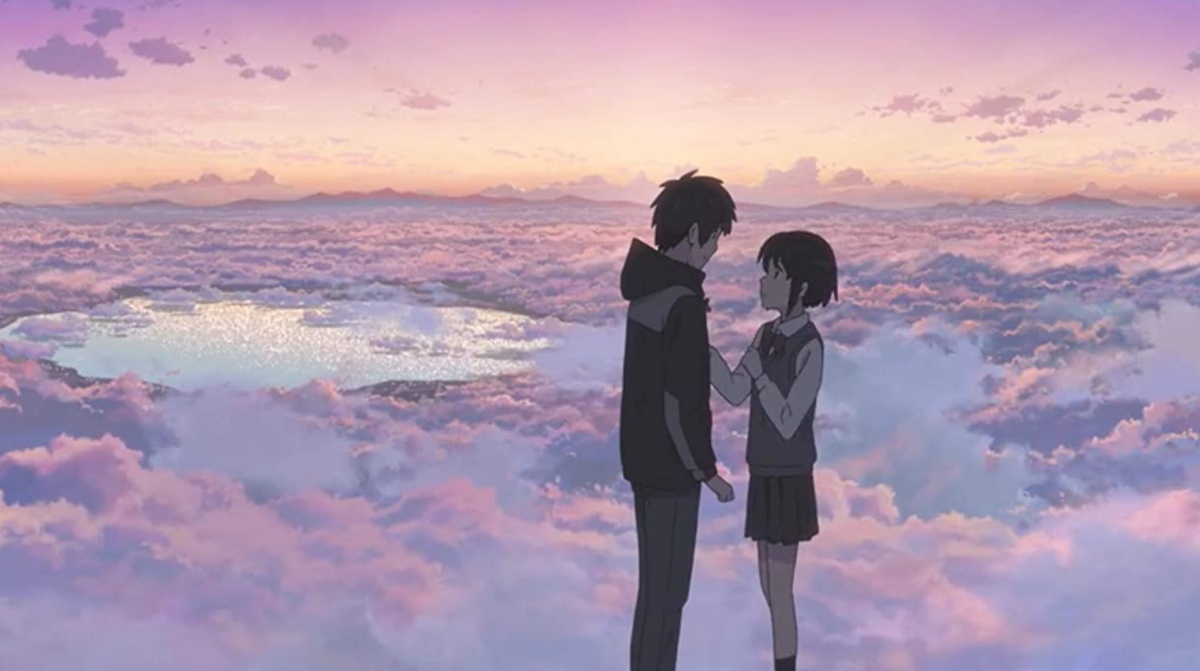
One of the best trans-coded love stories in anime, Makoto Shinkai’s Your Name is the story of two teens who start switching bodies after a mysterious comet passes by the planet. Rather than being played for Freaky Friday-style laughs, Taki and Mitsuha’s body swapping has a profound effect on their lives, causing them to fall completely in love with one another. One could interpret it as a t4t romance film, revolving around two people so deeply changed by experiencing each other’s bodies that their souls are forever linked. Though distance, time, and cosmic catastrophes challenge their relationship, their devotion to one another remains steadfast through it all — a tear-jerker testament to trans love.
The Little Mermaid
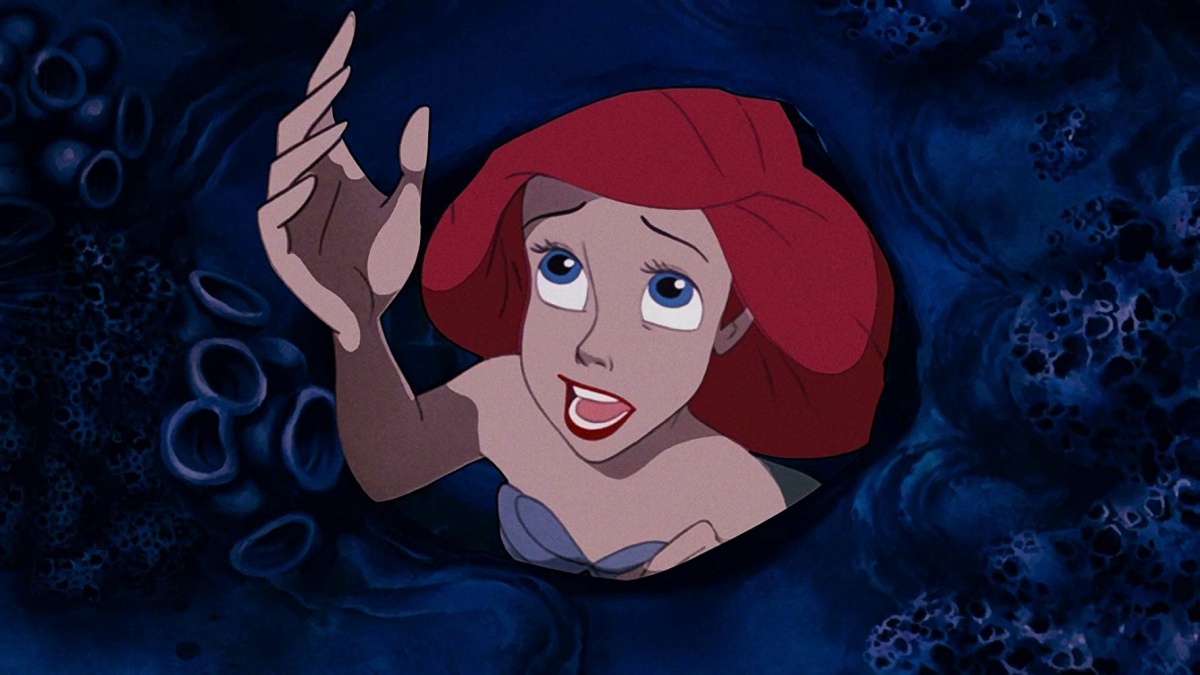
John Musker and Ron Clements’ The Little Mermaid is the story of a person who dreams of transforming her body to fit into a world she’s been denied — she’s even got a song about it. “Part of Your World” is deeply trans-coded, a tune about the desire to change oneself to find joy and fit in. The original story by Hans Christian Andersen is rife with queer subtext and is widely interpreted to be about the author’s unrequited love for a married man named Edvard Collin. In a letter to Collin, Anderson wrote, “I long for you as though you were a beautiful Calabrian girl,” and later, “my sentiments for you are those of a woman.” Beautiful and devastating, just like the dark plot of the original story before Disney got their hands on it. While Disney’s lighthearted interpretation changed the original narrative, the trans themes were left totally intact.
Wings of Desire
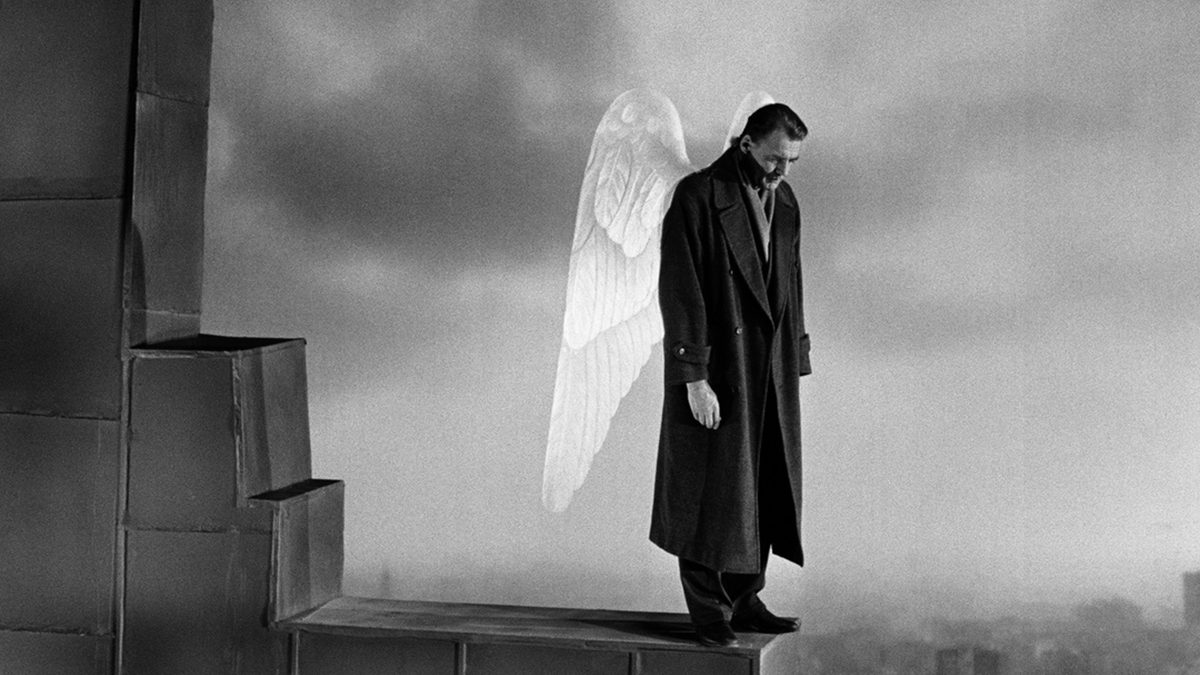
Wings of Desire is a German film directed by Wim Wenders, revolving around two immortal angels who watch over mid-century Berlin. While the angel Cassiel is happy to spend eternity as a quiet observer, his companion Damiel longs to become a participant in the human experience. Inherently non-binary beings, angels are one of the oldest trans concepts in spiritual myth, and one of the few examples of transness that is not seen as immoral or aberrant through the lens of Abrahamic religion. Wings of Desire chronicles both a physical and spiritual transition, one that subverts the Christian concept of humanity’s inherently sinful nature. Even heavenly creatures long for self-actualization, bodily autonomy, and human connection — transness is next to godliness.
The Substance

Directed by Coralie Fargeat, The Substance is a body horror film with trans themes out the wazoo. Elisabeth Sparkle’s decision to begin taking the eponymous substance could easily be interpreted as an allegory for late-in-life transition; the experience of transition often feels like a second puberty for adults. After taking The Substance, Elisabeth Sparkle discovers that her body is home to a hungry teenager who longs to experience life anew. Transition can be a physically and emotionally messy process, even without hormones involved. As Sue reinvents herself, she begins to despise Elisabeth — her old identity. This cycle of self-actualization and self-loathing feels like a perfect allegory for the conflicting feelings of euphoria and dysphoria that come with reconciling with one’s gender identity. At its sticky core, The Substance could be interpreted as a queer cautionary tale: self-hatred can have horrifying consequences if it gets out of control.
Have a tip we should know? [email protected]
Follow The Mary Sue:
