


Woman Says She Survived a Relationship With a ‘Compulsive Liar’. Then She Reveals Their Dead Child Was Allegedly Kept in a Freezer
Grief has no timeline.
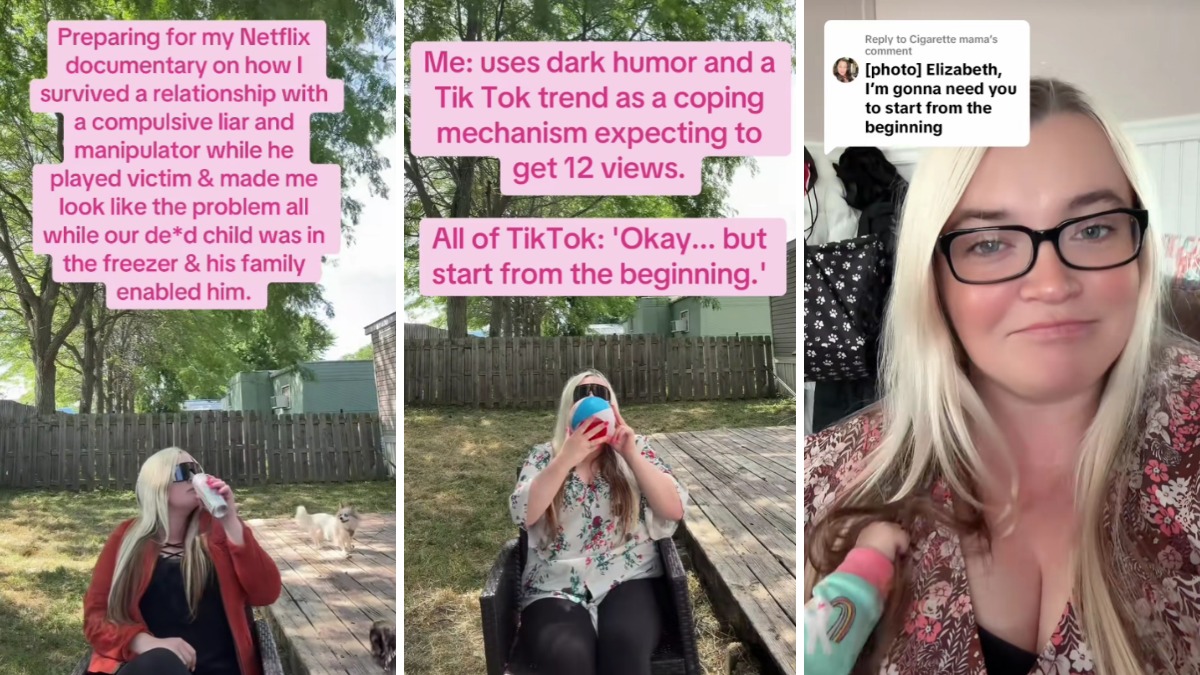
A woman’s story about surviving a relationship with a compulsive liar while her deceased child was allegedly kept in a freezer has gone viral, racking up over 620,000 views and nearly 50,000 likes since July 8, 2026. The video, posted by Elizibeth, @elizibethk97 on TikTok, opens with a chilling text overlay that frames her experience as potential Netflix documentary material.
It’s a bold, self-aware approach that’s become a staple on the platform, where creators process trauma by blending dark humor with raw vulnerability. But beneath the viral hook lies a deeply personal story of pregnancy loss, manipulation, and the isolating aftermath of grief. Elizibeth’s videos detail the emotional fallout of her miscarriage and stillbirth in 2025, a period she describes as compounded by her partner’s deceit and lack of empathy.
She recounts how his compulsive lying and victim-playing deepened her isolation during an already devastating time. The allegations about their child’s remains being kept in a freezer add a layer of horror to an already heartbreaking narrative, one that’s resonated with thousands who’ve left comments demanding answers. Many express shock, with one user writing, “Did anyone else read this like 5 times to make sure?”
Her story isn’t just about the trauma, though
In December 2025, Elizibeth gave birth to a baby girl, a “rainbow baby” that brought healing and joy while honoring her earlier loss. It’s a bittersweet update that underscores the complexity of grief – how it lingers even as life moves forward. Her willingness to share such a painful experience publicly has struck a chord, particularly as conversations around reproductive mental health and toxic relationships gain momentum.
Experts emphasize the importance of professional support, peer networks, and community resources for those navigating similar struggles. Elizibeth’s narrative highlights both the profound challenges of loss and the possibility of healing, especially with the arrival of a subsequent child.
The response to her videos reflects a broader cultural shift in how we talk about pregnancy loss. For too long, miscarriage and stillbirth have been treated as medical events rather than actual losses, leaving those who experience them feeling unseen and unsupported. According to TIME, Jami Crist, lead author of The Losses We Keep: Our Journey of Fertility, Loss, and Never Ending Hope, knows this all too well.
After losing her daughter at 14 weeks, she faced a barrage of well-meaning but painful comments. Friends and family told her “everything happens for a reason” and “at least you know you can get pregnant,” while automated registry emails cheerfully tracked a pregnancy that no longer existed. It wasn’t until her first therapy session, when her therapist asked about her daughter’s name, that she realized how few people treated her loss as a death.
This disconnect is common
Amelia Kelley, a trauma-informed therapist who’s had three miscarriages, calls pregnancy loss a “form of quiet trauma.” Unlike other types of grief, there’s no clear script – no funeral, no condolence cards, no societal rituals to mark the loss. Instead, people often default to toxic positivity, trying to “fix” the griever’s pain with phrases like “try again” or “at least you weren’t far along.” But these comments only deepen the isolation.
Jessica Zucker, a psychologist specializing in reproductive mental health, notes that most miscarriages are chromosomal and beyond anyone’s control, yet many women still blame themselves. Comments like “maybe your body wasn’t ready” or “maybe it wasn’t the right time” only reinforce that guilt.
What’s often overlooked is the sheer scale of what’s being grieved – the pregnancy and the future that came with it. The nursery half-imagined, the daycare spot secured, the plans for a life that now won’t happen. Crist recalls a friend who, after years of infertility and multiple losses, had to let go of the nanny she’d kept on payroll in hopes of a second child.
“It’s all the planning, it’s all the thinking around it,” Crist says. “Kids change your life – so when you plan for all these things, and then it doesn’t happen, all of that changes.”
So what should you say to someone who’s experienced a pregnancy loss?
Zucker’s advice is simple: name the awkwardness. “I don’t know exactly what to say to you, because I haven’t been through this – but I love you, and I’m here.” It’s a small gesture, but it acknowledges the loss without trying to minimize it. Crist found the most comfort in friends who said the least clever thing: “I’m so sorry for your loss.” No silver linings, no attempts to fix it – just presence and empathy.
Actions matter just as much as words. Instead of vague offers like “let me know what I can do,” take the initiative. Drop off dinner, send a gift card, or organize the house.
Meredith Eades, who had her first miscarriage in 2007, still remembers the friends who showed up for her. They put away the baby gifts that had already arrived or sent a simple Venmo for coffee with a note saying, “I was thinking of you this morning.” Those small acts of kindness linger long after the initial shock of loss fades.
Miscarriage awareness is only now catching up
Elizibeth’s story is a stark reminder of how much work is still needed to support those who’ve experienced pregnancy loss. Her videos, while framed with the dark humor of a potential Netflix documentary, shed light on the emotional toll of miscarriage and the added burden of unsupportive or manipulative partners.
As she shares her story at her own pace, she’s contributing to a larger conversation about reproductive mental health. It’s a conversation that’s long overdue, and one that demands more than just well-meaning platitudes. It requires listening, showing up, and acknowledging that grief doesn’t follow a timeline. For now, Elizibeth’s followers are left waiting for more details, with many urging her to pin a full storytime to the top of her page.
(Featured images: Elizibeth @elizibethk97 on TikTok)
Have a tip we should know? [email protected]
Follow The Mary Sue:
