


Woman scores vintage plates at Goodwill. Then she pulls out her lead tester: ‘Didn’t know I needed to worry about this’
Lead poisoning was a major concern in the U.S. for decades, especially when lead was widely used in gasoline, paint, plumbing, and other everyday products.
After major restrictions on lead paint, gasoline, and other consumer sources, blood lead levels in the U.S. fell dramatically.
One place many people know to be wary of, however, is vintage or antique ceramicware. Older dishes, mugs, teapots, and decorative pieces may contain lead in the glaze or painted decoration, and are still in circulation today.
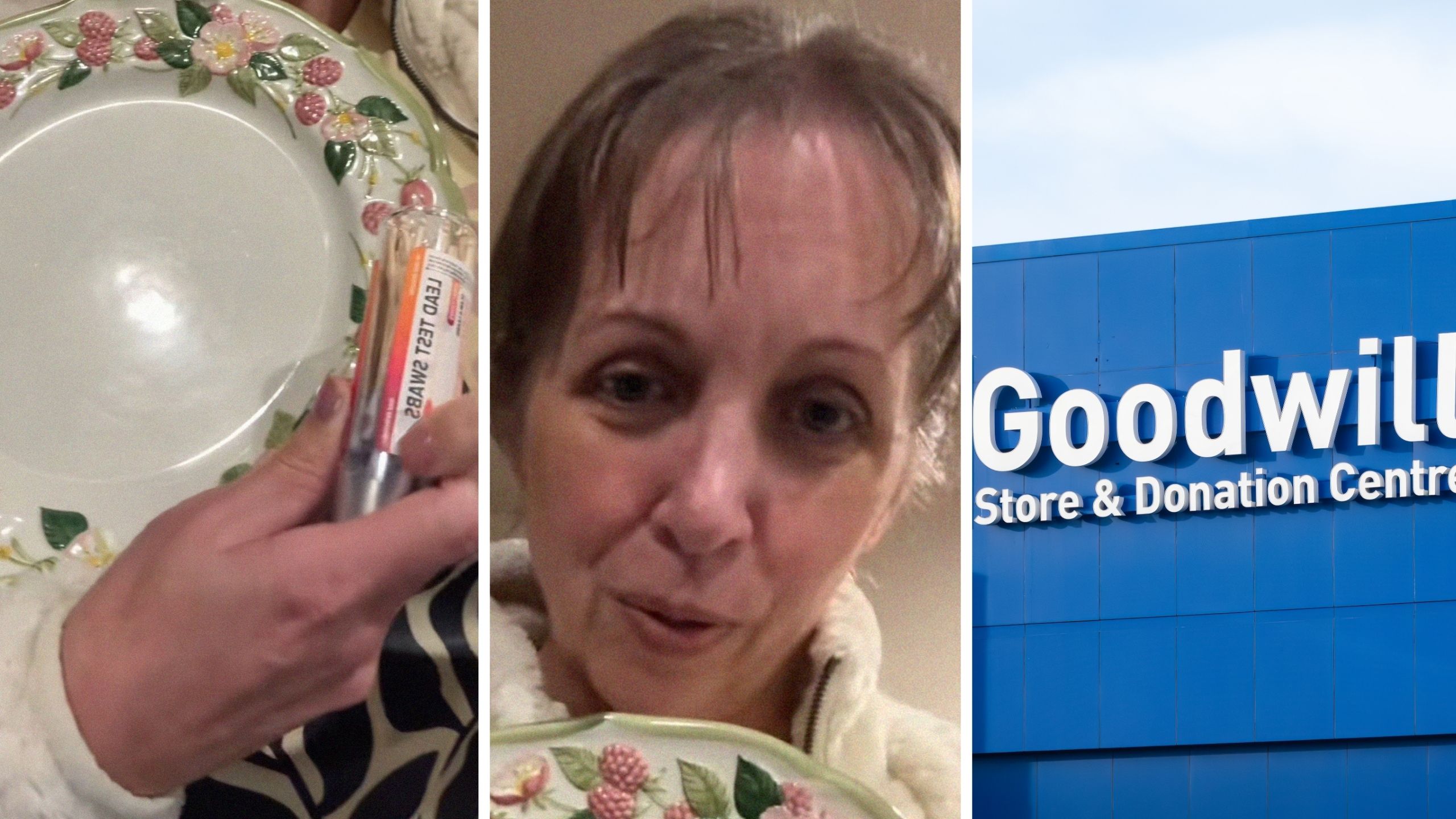
TikTok creator Annie Willems (@mom.behind.the.scenes) knows this. Equipped with an at-home lead testing kit, she recently tested a couple of beautiful antique pieces she got at Goodwill. Her video got over 2.5 million views.
Did The Goodwill Pieces Test Positive?
“Time to see if the people who donated these to Goodwill died of blood poisoning,” Willems jokes at the start of the video.
She explains that the at-home test changes color if lead is detected.
“If it turns this darker color down here, then they were goners for that reason,” she says.
First, Willems dips the test in vinegar, then rubs it along the edge of one plate for around 30 seconds.
“OK, it is still a light color. We’re good on that one,” she says.
Then she tests the middle of the same plate. This time, the result was different.
“Why is it making the middle part red?” she asks. “I think that’s a bad sign.”
The cotton swab turns a deep yellow color, which means it tested positive for lead.
She then tests the border again and says that part still appears OK.
“The border is fine,” she says. “If you just put the food around the border, you’re OK. If you put the food into the middle of the plate, that’s a different story.”
Then Willems moves on to a teapot from the same set.
“Because if I want to have, like, a tea party with a grandchild, I can’t do her in with lead,” she says sarcastically. “That is frowned upon.”
She tests the inside and outside of the teapot. Unlike the center of the plate, the teapot does not appear to show the same color change.
“So we can drink tea,” she concludes. “For the most part, tea is acceptable. Food is not.”
Can She Still Use The Plate?
Unfortunately, no. At least, not for food.
Lead in contaminated ceramicware is usually part of the glaze or painted decoration. If it leaches into food or drink, it is not something you can wash off.
The FDA explicitly says no amount of washing, boiling, or other process can make lead-leaching pottery safe for food use.
The agency also says that if a consumer tests pottery and finds that it contains leachable lead, they should not use it for cooking, serving, or storing food or drinks.
Some of these dishes have sentimental or decorative value, but the safest move is not to eat from them. Many people choose to display vintage pieces or turn them into artwork so they can keep the look without being exposed to harmful chemicals.
Commenters Were Horrified
In the comments, some viewers said they had no idea this was something they needed to think about while thrifting.
“Didn’t know I needed to worry about this,” one commenter wrote.
Another said they were not emotionally ready to test their own family dishes.
“I have my mom’s china set, 65 years old,” they wrote. “I’m going with ignorance is bliss. I only use them twice a year.”
Others were alarmed. “MY GOD THIS IS TERRIFYING,” one commenter wrote.
@mom.behind.the.scenes Replying to @LisaMarie ♬ original sound – Annie Willems
The Mary Sue has reached out to Goodwill and Willems via email for comment.
Have a tip we should know? [email protected]
Follow The Mary Sue:
