


They Spent Millions to defeat Thomas Massie and Failed. Now Trump’s Donors Are Stuck With a Problem
An expensive mistake.
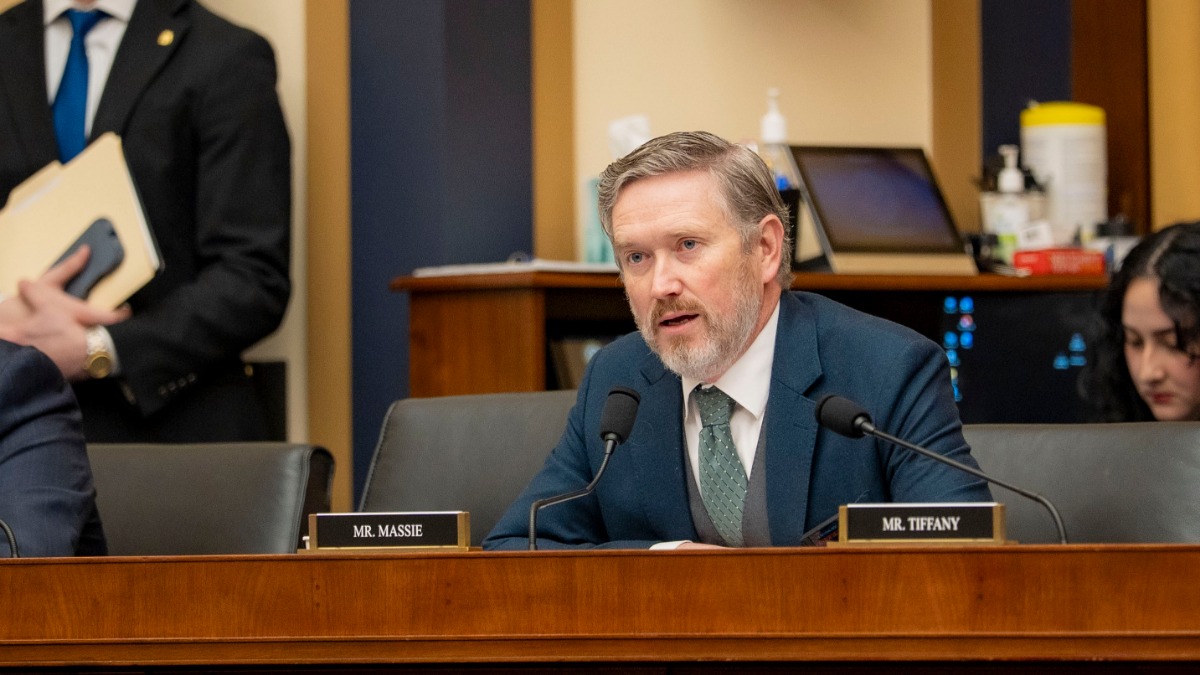
Thomas Massie just filed to run again in 2028, and the political machine that spent millions trying to crush him is already stuck with a problem it can’t shake. Less than a week after losing his Kentucky primary to Donald Trump’s pick Ed Gallrein, Massie dropped a social media post confirming he’s back in the game. The filing lets him keep raising money while he figures out whether to aim for his old House seat or something bigger.
Either way, the donors who poured a record-breaking $32.6 million into the race to oust him are now staring at the same headache they thought they’d solved. Massie’s loss was supposed to be a clean win for Trump’s operation. The president called him “a thorn in his side” and celebrated the result, but the victory came with a price tag that’s hard to ignore.
According to The Guardian, over 94% of the cash that flooded the race came from outside Kentucky. Billionaires and PACs tied to the American-Israel Public Affairs Committee led the charge, dumping over $18 million into ads for Gallrein while Massie’s side scraped together nearly $14 million to fight back.
A local primary turns into a national spectacle
The United Democracy Project alone spent more than $4 million opposing Massie, and MAGA Kentucky, a PAC backed by billionaire Paul Singer, dropped another $11.2 million. For context, the entire race cost more per day than most congressional primaries spend in a full cycle. Massie said, “They couldn’t buy my vote in 14 years, so they bought this seat.”
The numbers back him up. Federal Election Commission records show that Kentuckians contributed less than 6% of the total donations to both campaigns. New York, California, and Washington, D.C. made up a fifth of Gallrein’s funding and 15% of Massie’s. It’s one thing to lose a race, but it’s another to lose to a wave of out-of-state money that turned a relatively unknown challenger into a serious contender overnight.
Gallrein’s rise was a rare case where money actually changed the game. Stephen Voss, a political science professor at the University of Kentucky, pointed out that while foreign policy, especially Massie’s stance on Israel, drew the big donors, it wasn’t the only factor. “You don’t normally see this much money spent in a congressional race,” Voss said. The real issue was Massie’s frayed relationship with Trump and his base.
Even so, the cash gave Gallrein the platform he needed to mount a real challenge. “We really had a rare instance of money mattering in politics,” Voss added. “Why? Because it went to the people who normally wouldn’t have had a chance.”
The ads in the race got ugly fast
Massie called out the use of AI in political advertising after one spot realistically depicted him walking into a hotel room with two female Democratic leaders. The imagery was designed to smear him, and it worked, at least enough to help Gallrein edge out a 55-45 win. But the tactics left a bad taste, even among some who didn’t support Massie.
Kentucky’s Democratic governor Andy Beshear, said, “Thomas Massie and I don’t agree on much, but billionaires and special interest groups spent $35 million in Kentucky to unseat one conservative congressman, all because he stood up to Trump. It’s everything that’s wrong with our politics today.”
Massie’s defiance isn’t new. He’s been a thorn in the side of both parties for years. As a member of the House Freedom Caucus, he broke ranks with Trump early in his second term, criticizing the administration’s tariffs and spending. He was one of only two House Republicans to vote against Trump’s One Big Beautiful Bill Act.
He also co-authored legislation that forced the Department of Justice to release the Epstein Files, a move that kept him in the crosshairs of powerful interests. His district, which covers northern Kentucky and stretches into the suburbs of Louisville and Cincinnati, is reliably conservative, but even that wasn’t enough to shield him from the onslaught of outside money.
What will Massie do next?
His filing for 2028 keeps his options open, and there’s already chatter about a potential presidential run in a post-Trump landscape. That’s a long shot, but Massie has never been one to follow the usual playbook. For now, he’s got seven months left in Congress, and he’s made it clear he plans to use that time to stay engaged.
The donors who thought they’d bought themselves a quiet seat in Kentucky might want to think again. Massie’s not going anywhere, and the millions they spent to take him down could end up looking like a very expensive mistake.
The race also sets a worrying precedent for future primaries. Voss expects more out-of-state money to pour into Kentucky’s Republican primaries, especially since the state has become so reliably red. When the general election is a foregone conclusion, the primary becomes the real battle, and that’s where the big spenders will focus.
For candidates like Massie, who refuse to play ball with the establishment, it’s a tough road ahead. But if his comeback plans are any indication, he’s not backing down. And the donors who thought they’d silenced him might find themselves writing even bigger checks in 2028.
(Featured image: DHSgov)
Have a tip we should know? [email protected]
Follow The Mary Sue:
