


The Supreme Court Just Quietly Stripped Voters in Seven States of Their Power to Sue for Election Protections
A threat to democracy.
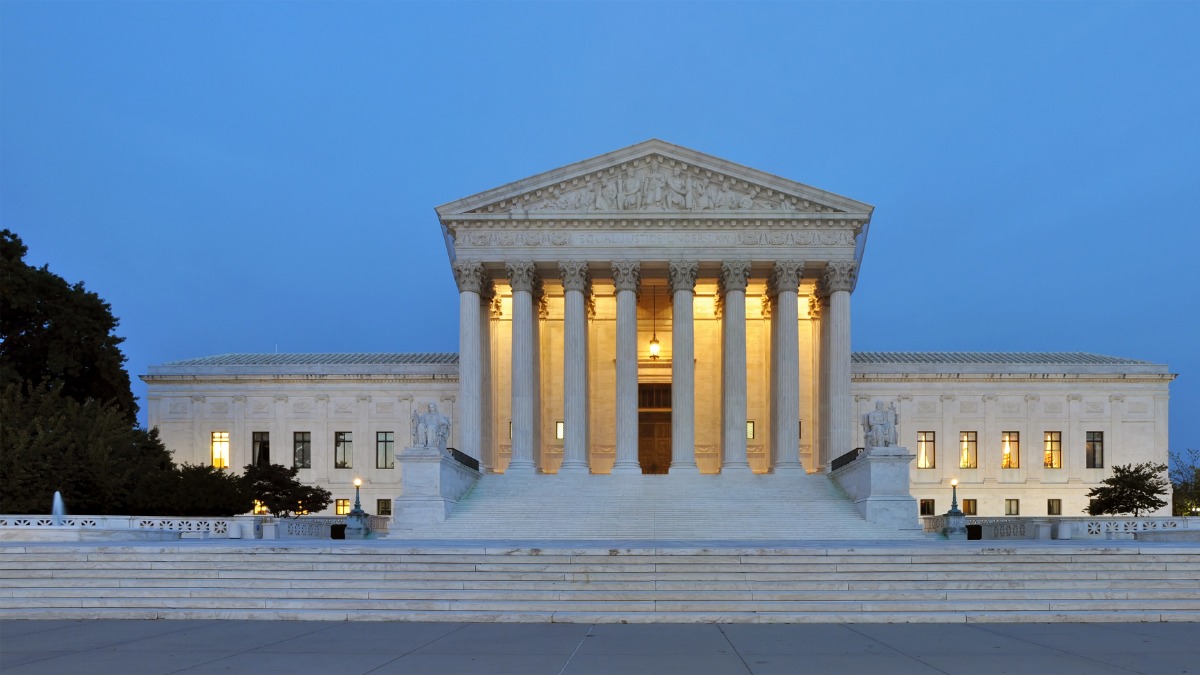
The Supreme Court just handed down a quiet but devastating decision that strips voters in seven states of their ability to sue for critical election protections. By refusing to review a lower court ruling, the justices let stand a decision that eliminates a key tool used to enforce Section 208 of the Voting Rights Act.
According to NPR, that section guarantees voters with disabilities or limited literacy the right to assistance at the polls. Now, in Arkansas, Iowa, Minnesota, Missouri, Nebraska, North Dakota, and South Dakota, private individuals and advocacy groups can no longer file lawsuits to challenge discriminatory voting laws. This move is the latest in a series of blows to the Voting Rights Act, coming two months after the Court’s conservative majority weakened another core provision, Section 2.
That ruling triggered a wave of redistricting battles nationwide. The issue at the heart of this latest case revolves around something called a “private right of action,” a legal concept that has allowed citizens and groups to sue to enforce voting rights for decades. Without it, enforcement falls almost entirely on the Department of Justice, which has limited resources and priorities that shift with each administration.
The case that sparked this decision was brought by Arkansas United
Arkansas United is an immigrant advocacy group that provides Spanish-language interpreters at polling sites. They challenged an Arkansas law that bars non-poll workers from assisting more than six voters. In 2022, a federal judge ruled the law violated Section 208, but the 8th U.S. Circuit Court of Appeals overturned that decision last year.
The appeals court argued that only the U.S. attorney general can bring lawsuits under this part of the Voting Rights Act, not private groups like Arkansas United. So far, the 8th Circuit is the only federal appeals court to break from decades of precedent on this issue.
The Supreme Court’s decision not to intervene leaves a massive gap in voting rights enforcement. For years, private lawsuits have been the primary way to hold states accountable under the Voting Rights Act. Without them, states have far more leeway to pass restrictive voting laws without facing legal challenges.
The Department of Justice simply doesn’t have the bandwidth to take on every case, especially when political priorities shift with each new administration. This creates a dangerous imbalance, where states can effectively ignore protections for minority voters without fear of consequences.
‘The ruling is an outlier’
Arkansas United’s attorneys at the Mexican American Legal Defense and Educational Fund (MALDEF) argued that the 8th Circuit’s ruling is an outlier. In a court filing, they pointed out that no other federal appeals court has issued a similar decision on Section 208. That means there’s no direct conflict for the Supreme Court to resolve, which might explain why the justices declined to take up the case.
But MALDEF warned that the lack of conflicting rulings doesn’t mean the issue is unimportant. Instead, it highlights just how unusual the 8th Circuit’s decision is. “The limited case law regarding private enforcement of Section 208 does not mean that the circuit split is nonexistent, or that the issue is unimportant,” their filing stated. “Instead, it demonstrates just how much of an anomaly the Eighth Circuit’s decision is.”
The ripple effects are already being felt. In May, the Supreme Court sent two other voting rights cases back to lower courts without ruling on the private right of action issue. Those cases involved Black voters in Mississippi and Native American voters in North Dakota, both challenging discriminatory voting laws.
The court’s inaction in those cases, combined with this latest decision, suggests a pattern. The conservative majority seems content to let lower courts chip away at voting rights protections, one ruling at a time.
The Supreme Court has previously undermined the Voting Rights Act
In 2013, the court gutted Section 5, which required certain states with histories of discrimination to get federal approval before changing voting laws. That decision led to a surge in restrictive voting measures across the country. The latest rulings on Sections 2 and 208 are part of the same trend. By limiting who can sue to enforce these protections, the court is making it harder to challenge laws that disproportionately affect minority voters.
The consequences are especially severe for voters who rely on assistance at the polls. Section 208 was designed to ensure that people with disabilities, limited English proficiency, or low literacy could still cast their ballots independently. Without the ability to sue, states can impose arbitrary restrictions on who can provide assistance, effectively silencing marginalized communities.
In Arkansas, for example, the law banning non-poll workers from helping more than six voters could prevent advocacy groups from offering language assistance to voters who need it. That’s a direct attack on the right to vote, and now there’s no legal recourse for those affected.
How can it get worse?
The Supreme Court’s decision not to review the 8th Circuit’s ruling is a green light for other states to follow suit. If more appeals courts adopt the same interpretation, the private right of action could disappear entirely. That would leave the Department of Justice as the sole enforcer of voting rights, a role it’s ill-equipped to handle alone.
The department’s resources are already stretched thin, and its priorities can change dramatically depending on who’s in the White House. Under one administration, voting rights might be a top priority. Under another, they could be ignored entirely. That kind of inconsistency is a recipe for widespread disenfranchisement.
For now, the fight isn’t over. MALDEF and other advocacy groups are likely to keep pushing for a Supreme Court ruling that clarifies the private right of action. But with the current conservative majority, the outlook isn’t promising. The court’s refusal to intervene in this case sends a clear message: voting rights protections are eroding, and there’s little recourse for those who want to fight back.
(Featured image: Joe Ravi)
Have a tip we should know? [email protected]
Follow The Mary Sue:
