


After Kneecapping the Voting Rights Act, the Supreme Court’s Conservative Bloc Kicks Native American Lawsuits Back to Square One
The system is rigged.
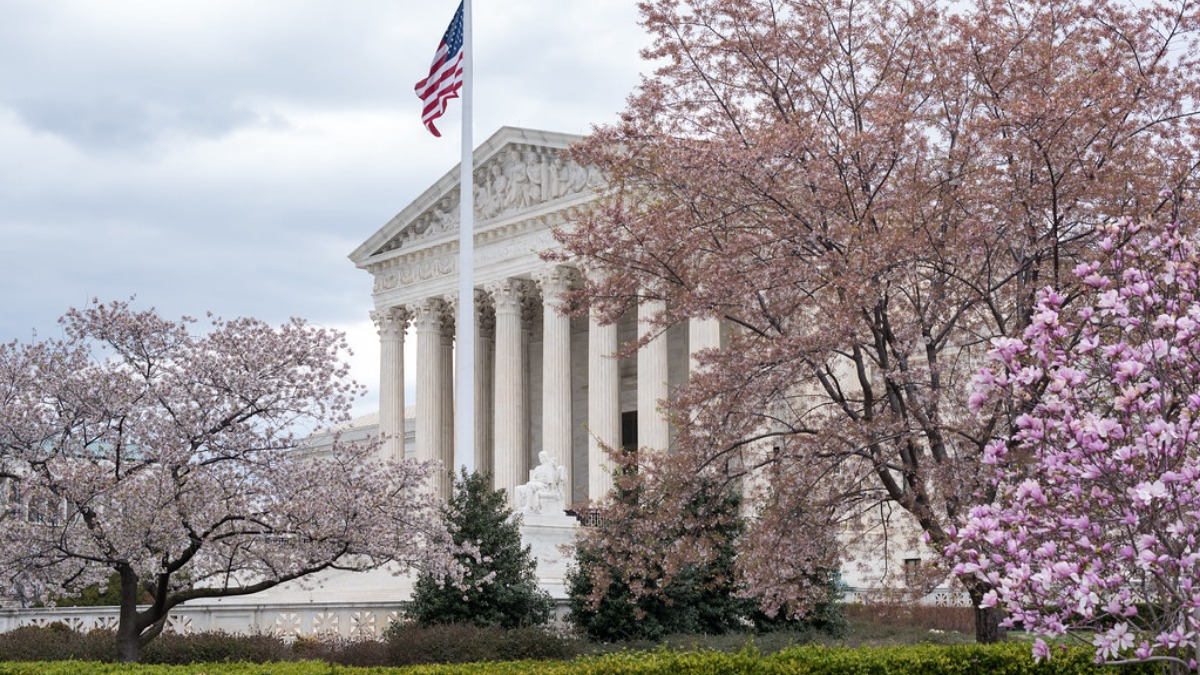
The Supreme Court just kicked two major Native American voting rights cases back to lower courts, and the move could gut decades of progress under the Voting Rights Act. On May 18, 2026, the justices ordered a do-over in lawsuits brought by tribes in North Dakota and Black voters in Mississippi, telling judges to reconsider their rulings after the high court’s conservative majority weakened the landmark civil rights law earlier this year.
The Supreme Court’s decision forces lower courts to re-examine whether private groups – like tribes, voters, or civil rights organizations – can even sue to enforce Section 2 of the Voting Rights Act. That provision has been the backbone of challenges to discriminatory election maps and voting laws, and if the courts side with the argument that only the federal government can bring these cases, it could slam the door on future lawsuits.
The North Dakota case is a perfect example of what’s at stake. Native American tribes and voters sued over the state’s 2021 legislative map, arguing it split their communities across districts and diluted their voting power. A federal district court agreed and ordered a revised map that improved Native representation. But then, per Newsweek, the 8th U.S. Circuit Court of Appeals threw a wrench in the works, ruling that private plaintiffs couldn’t sue to enforce Section 2.
This is a direct hit to the way voting rights cases have worked for generations
That decision flew in the face of decades of precedent, and the Supreme Court temporarily blocked it last July, allowing the tribes’ preferred maps to stay in place. Now, the justices are sending the case back for another look, and the outcome could reshape how voting rights cases move through the courts.
Justice Ketanji Brown Jackson dissented from both decisions, arguing that the Supreme Court’s recent ruling in Louisiana v. Callais – which raised the bar for proving discrimination – didn’t even address the question of who can sue under Section 2. “This case presents only the question of Section 2’s private enforceability, which our decision in Louisiana v. Callais… did not address,” she stated.
“Thus I see no basis for vacating the lower court’s judgment.” Her dissent highlights the deep divisions on the court over how far it should go in narrowing the scope of the Voting Rights Act.
The Mississippi case is just as critical. Black voters and the state NAACP challenged legislative maps they argued were discriminatory, and like the North Dakota dispute, the case hinges on whether private plaintiffs can sue under Section 2.
The Supreme Court’s decision to send it back for reconsideration could jeopardize three new majority-Black state legislative districts, though the effects likely won’t be felt until 2027. Damon Hewitt, president and executive director of the Lawyers’ Committee for Civil Rights Under Law, said the ruling puts those districts at risk, and the broader implications are even more alarming.
Section 2 of the Voting Rights Act has been a lifeline for minority communities
It has allowed voters and advocacy groups to challenge everything from gerrymandered maps to restrictive voting laws. For decades, these lawsuits have been the primary way to enforce the law, with private plaintiffs bringing most of the cases filed under Section 2. But the Supreme Court’s conservative majority has been chipping away at that power, per ABC News.
In April, they struck down a majority-Black congressional district in Louisiana, ruling that the map relied too heavily on race. That decision effectively limited Voting Rights Act claims to cases where plaintiffs can prove intentional discrimination—a much higher standard than what courts have applied in the past.
Rob Weiner, the Voting Rights Project director at the Lawyers’ Committee for Civil Rights Under Law, didn’t mince words about the Supreme Court’s latest move. “In remanding this case for further consideration in light of Callais, the Court gives Mississippi relief it did not even request,” he said.
“The only issue the State presented for the Court’s review was whether private parties can sue for violations of the Voting Rights Act.” Weiner added that the decision confirms the court’s “apparent hostility to voting rights, especially the rights of Black people,” and warned it’s “wreaking havoc in our Nation’s electoral system.”
The stakes couldn’t be higher
If courts adopt the view that only the federal government can enforce Section 2, it could drastically reduce the number of voting rights cases, particularly in areas where private lawsuits have been the driving force behind challenges. Native American voters, Black communities, and other minority groups have relied on these lawsuits to fight barriers to representation, and the Supreme Court’s decision puts that entire system in jeopardy.
Lenny Powell, an attorney for the Native American Rights Fund, said sending the case back was the right call but vowed to “keep fighting to ensure that Native voters have the ability to vote and effect change in their communities.” That fight is far from over.
The cases will now move back through the lower courts, where judges will have to apply the Supreme Court’s revised interpretation of the Voting Rights Act. The outcome could shape how voting rights protections are applied for years to come, and if the conservative majority’s recent rulings are any indication, the future looks grim for anyone hoping to challenge discriminatory election laws.
(Featured image: RLBolton)
Have a tip we should know? [email protected]
Follow The Mary Sue:
