


SpaceX Rocket Collides With the Moon at 5,400 MPH
Don't worry; the moon's fine.
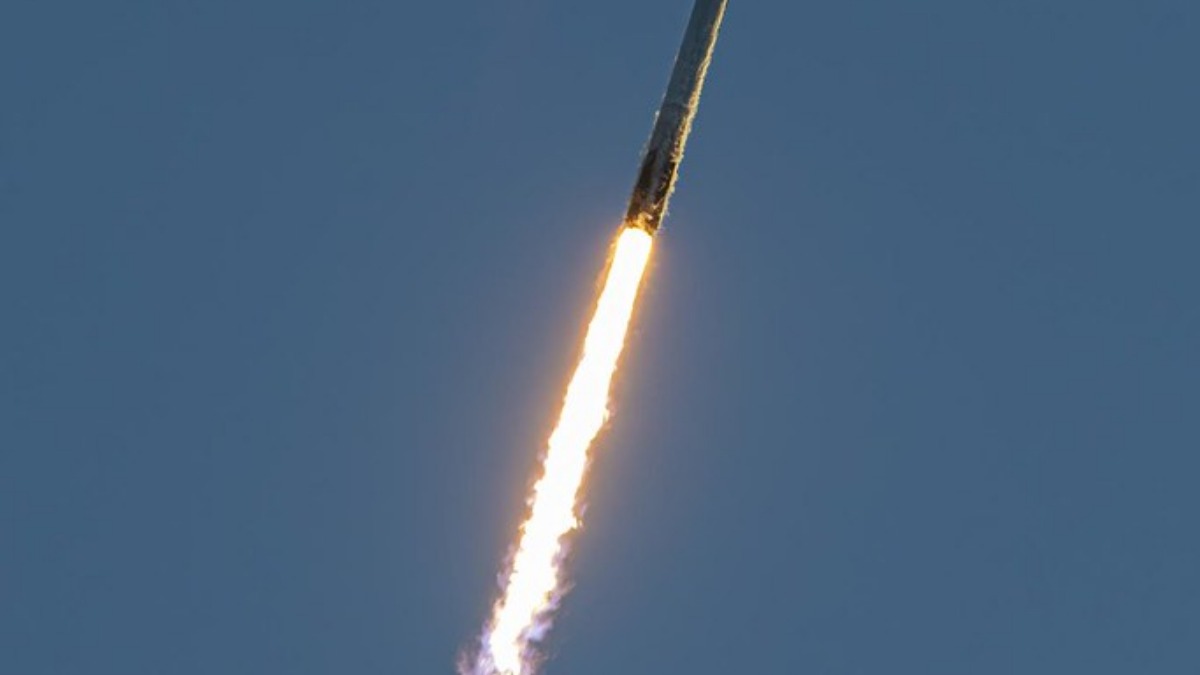
A piece of a SpaceX Falcon 9 rocket collided with the moon on Aug. 5, 2026, at an estimated speed of 5,400 mph (or over seven times the speed of sound). The rocket’s upper stage separated as planned during a January 2025 launch before drifting through space. Over time, the rocket’s trajectory brought it toward the moon.
Researchers estimated that it struck the moon’s surface around 2:35 a.m. ET, according to The Daily Beast. They estimated the impact occurred near the Einstein crater on the moon’s far northern region. As the rocket is about the size of a five-story building and weighs around 8,818 pounds on Earth, researchers expected the impact to leave a new crater. However, according to People, NASA confirmed that the crash landing posed no danger to Earth.
Researchers Looked for Signs of the Impact
While those out stargazing at the time of impact probably wouldn’t have seen a crater or damage to the moon itself, scientists predicted before the event that powerful instruments might be able to detect light or dust. And, in fact, a telescope operator in Chile shared that at the estimated time of the crash, he noticed changes in brightness that suggested the Falcon 9 had impacted the lunar surface, according to the BBC.
As a postdoctoral researcher at Los Alamos National Laboratory in New Mexico, Benjamin Fernando, explained to ABC News before the rocket hit, “We expect that to vaporize the booster, create a flash of light, probably a plume of ejecta — dust, regolith, other stuff mixed into it […].”
The Impact Also Renewed Concerns About Lunar Debris
Scientists have also raised concerns about the human-made debris left on the moon following the impact. The impact adds to an estimated 3,000 human-made objects already on the lunar surface.
Space debris doesn’t pose any immediate risk. However, concerns have arisen about the debris’ ability to interfere with the protection of historic sites and the preservation of untouched areas for scientific research. More concerning than that, though, is the possibility of future missions colliding with these objects when orbiting around the moon.
One astronomer at the University of Cambridge, Matt Bothwell, also explained to the BBC, “It could feasibly be within a few decades hard to get past Earth’s orbit because space is so crowded.”
Have a tip we should know? [email protected]
Follow The Mary Sue:
