


‘So the actual rate is higher?’: JD Vance says unemployment statistics undercount joblessness and accidentally proves the problem is worse

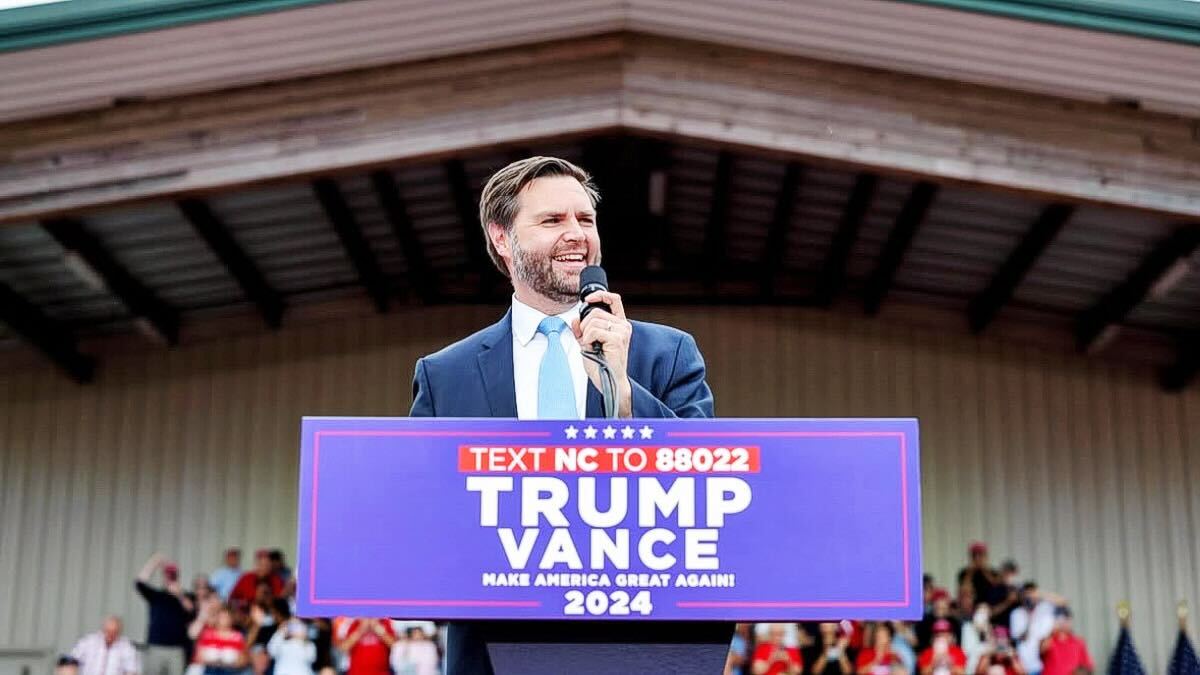
On December 16 in Pennsylvania, Vice President JD Vance tried to spin rising unemployment as a sign of economic strength. But unknowingly, he walked straight into an argument that admits joblessness may be worse than the headline number suggests.
At a Uline warehouse in Pennsylvania’s Lehigh Valley on Tuesday, JD Vance delivered the Trump administration’s familiar economic victory lap. He praised job creation, wage growth, and investment, and blamed Joe Biden for everything that went wrong before January. The VP even graded the current economy an “A+++” under Donald Trump, mimicking his words.
Early in the speech, Vance touted headline-friendly figures to sell the message. He pointed to 61,000 jobs added in November and claimed private-sector wages were growing at 4.2%. He framed it as proof that Trump’s economic agenda was already delivering historic results. According to Vance, this was the fastest wage growth the country had seen “in many, many years,” because the administration “believes in you and fights for you.”
But then came the press questions, something his speech writer couldn’t prepare him for. A reporter from WFMZ’s 69 News noted that while November saw job gains, October had lost 100,000 jobs. On top of it, the unemployment rate had climbed to 4.6%, the highest since the pandemic (via Reuters). He asked a straightforward question: How do income tax cuts help people who don’t have jobs? And how does the administration plan to inspire companies to hire?
Vance dismissed the concern almost immediately, arguing that tax cuts always help because more disposable income is “good for everybody.” He waved away the October losses by claiming they were mostly government jobs. Firing bureaucrats and hiring “great Americans,” he said, was the point instead. However, he then tried to explain away the unemployment rate, and things went disastrously off the rails.
Vance argued that the unemployment rate only counts people actively looking for work. If someone stopped searching years ago, they’re unemployed but not counted in the official statistics. Bizarrely enough, the rise in the unemployment rate to 4.6% wasn’t bad news at all, according to him. For him, it is evidence that discouraged workers were re-entering the labor force because wages were rising and opportunity was finally back under Trump.
What you’re seeing, as wages go up and as more investment comes into our country, is that people who weren’t looking for work under Biden’s administration are getting out there and looking for work in the Trump administration. That’s exactly what we want. We want to get people off the sidelines and give them a good job with good pay.
What Vance essentially admitted without realizing is that the 4.6% unemployment rate excludes a large group of jobless people who have given up looking for work. If discouraged workers are now looking again and still can’t find jobs, that doesn’t mean unemployment is improving. It means previously invisible joblessness is becoming visible.
In other words, if his explanation is true, then the real problem is bigger than 4.6%. Rising unemployment isn’t automatically a positive signal. Sometimes it reflects people re-entering the labor force, yes. But it can also mean hiring isn’t keeping up with demand, that wages aren’t enough to absorb new entrants. Vance skipped that part entirely and treated a higher rate as proof of success.
Have a tip we should know? [email protected]
