


Her patient came in with tight braids. The doctor had to take her scalp off: ‘It feels like one of those Squishmallows’
One hairstyle choice sent this patient to the operating room.
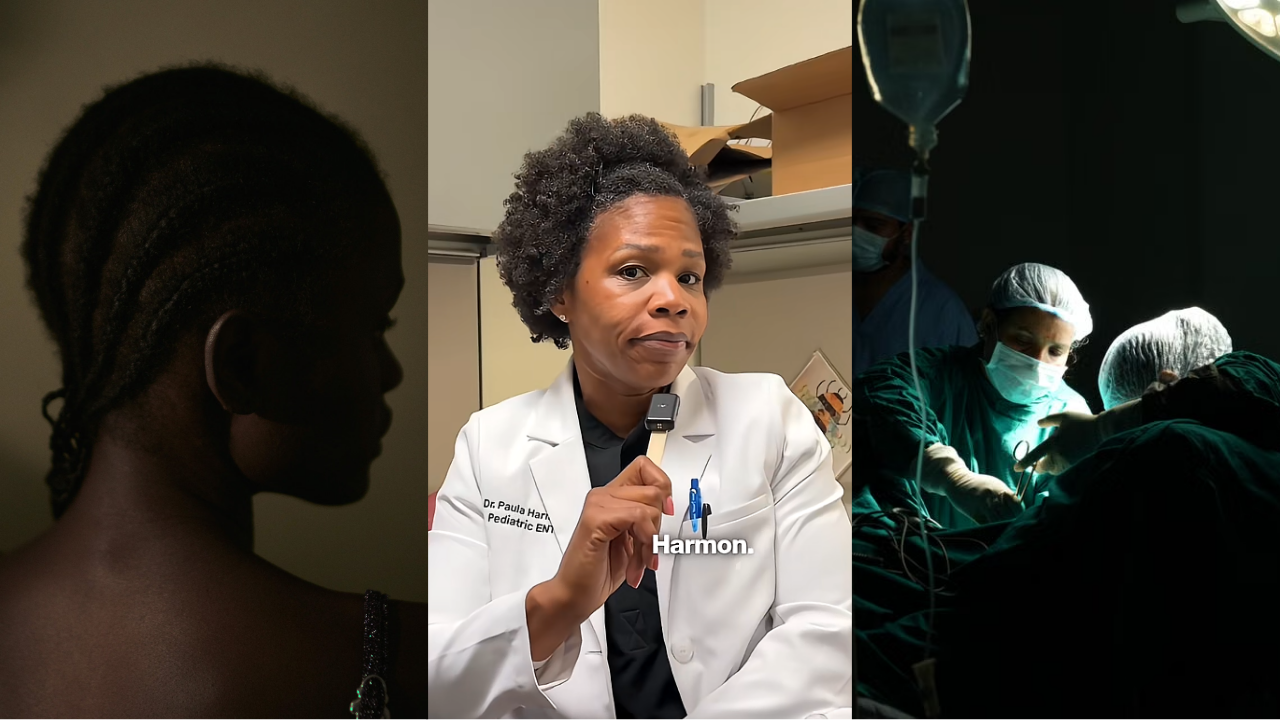
Dr. Paula Harmon, an ear, nose, and throat (ENT) specialist from Atlanta, told TikTok about a patient’s case she handled a few years ago. Her patient, a fifteen-year-old Black girl, had to undergo surgery all because of her tight braids.
“You know we love doing things to our hair,” Harmon commented. She prefaced the story by describing the beehive weave. The hairstyle involves parting the hair into multiple braids that wrap around the head, mimicking a beehive. It’s a tight weave, and hair extensions can also be added to the cornrows.
“A 15-year-old comes into the office. She has some tenderness in her scalp. She’s had braids and this beehive for a while,” Harmon said. Her patient has already taken the extensions off, but still has her hair up in a beehive weave.
“She’s a type one diabetic,” Harmon added for additional context. The doctor added that her patient has worn the braids and extensions for only two months. Nevertheless, her patient was in pain and told the doctor her scalp was feeling tender. Additionally, the patient disclosed that she had fevers leading up to her doctor’s visit. Although she no longer had fevers, she still wanted her scalp to be checked.
Her braids sent her to the operating room
“I kid you not. I initially tested the top of her scalp,” Harmon said. She prodded deeper and continued, “It just feels like one of those Squishmallows, or one of those NeeDohs that kids are playing with.” It was an emergency that easily topped this North Carolina woman’s fried hair disaster.
“Baby, it’s probably an abscess under your scalp. Let’s get this checked out,” Harmon told her patient. When she pulled one of the beehive braids, the doctor said she could already feel her patient’s scalp. She continued, “The whole top of her head, where she had these tight braids, there was an edge where I saw a pus come out.” Despite the pressing, Harmon said her patient didn’t feel anything.
“I pulled off the edge of that scalp, and guys, the hair, the braids, the skin was separating from the top of her scalp,” Harmon claimed. The doctor explained that the braids were too tight, which led to an infection. Harmon presumed the braids caused folliculitis, which created a pus pocket on her patient’s head.
“She had a huge pus pocket. Because that pus pocket had been there for so long, it separated from her scalp,” Harmon described. She continued, “I literally had to take her whole scalp because it was dead, off.” After the procedure, Harmon said they had to let the patient heal by secondary intention for months. She explained that she couldn’t just sew everything in because of the infection. It took her patient months to heal, but after a trip to the plastic surgeon, she eventually got her hair back.
“But guys, you cannot have these very tight braids in your hair. You cannot have these long-standing hairstyles. And especially if you’re immunocompromised, you really, really need to think about how you wear your hair,” Harmon advised. This case shows that some simple decisions, like hairstyle, may seem harmless but pose hidden health hazards. Just as Harmon will never forget her patient’s scalp incident, two nurses from California shared several health decisions they would never make.
Have a tip we should know? [email protected]
Follow The Mary Sue:
