


Evangelists allegedly corner Texas Roadhouse diners, they retaliate with a pasties flash. Then she got booked by cops: ‘God bless’
Are they both in the wrong?
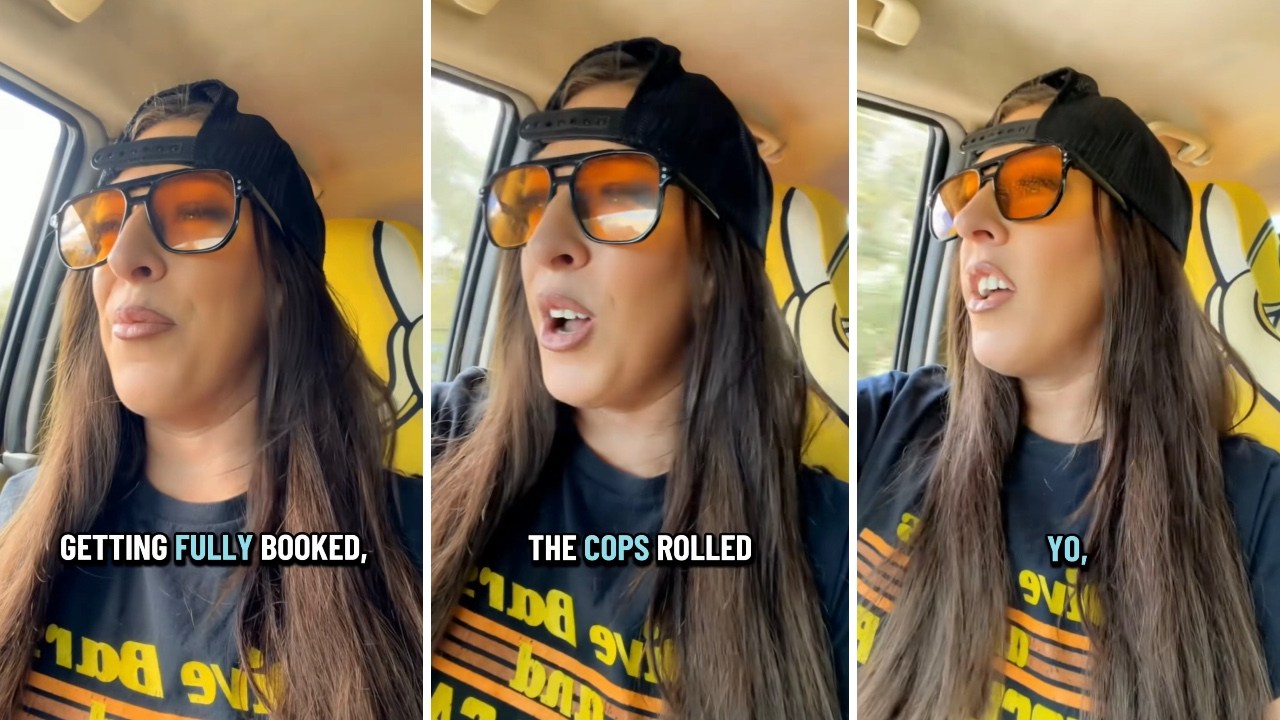
A Florida woman was reportedly arrested outside a Texas Roadhouse after flashing a nearby group of Evangelists that repeatedly approached her table to preach. Police allegedly booked her for disorderly intoxication following a confrontation with the restaurant manager in the parking lot.
TikTok creator Karle Davidson (@xoxo.karledavidson.xoxo) detailed the incident in a video while driving her car and laughing about it. Davidson explained that she and a friend were dining at a Panama City Beach location following their shifts during Bike Week. Just then, members from a large adjacent table allegedly began proselytizing directly at them.
Despite multiple requests to be left alone and notifying their server, the religious group allegedly returned to their booth several times. At this point, Davidson admitted she wanted revenge. So, before exiting the restaurant, she allegedly mounted a booth seat and briefly flashed her chest at them, covered only by nipple pasties.
Unwanted preaching from Evangelists led Davidson to a retaliatory display
Recounting the evening from her vehicle, Davidson explained that she and her friend were having drinks and dinner in a corner booth when the nearby group caught their attention. “There was a big table on the other side of the section of this super Christian group. I don’t know if evangelists or what they were,” Davidson said.
“They kept coming over in groups of like two or three, and they came over to our table, and they started going crazy—praise this, praise the Lord,’” Davidson claimed. She also claimed that both she and her friend asked those people to stop, telling them the restaurant was not an appropriate place for preaching.
However, the evangelists still allegedly returned to their table. So, Davidson and her friend reportedly alerted staff. But right before leaving, Davidson decided on a disruptive exit. “As we were leaving, I got up on the booth behind them, and I dumped them out with pasties on,” she said.
Davidson noted that the pasties ensured she remained physically covered. “And yeah, they didn’t like that. I said, ‘God bless!’” But their stunt allegedly backfired. The store manager reportedly followed Davidson and her friend outside to the curb, where they also called cops shortly after.
Davidson stated that because her breasts were covered by adhesive pasties, officers could not cite her for indecent exposure. “I think they were in cahoots with the church, and they knew they couldn’t get me on indecent exposure because I was covered, so they got me on disorderly intoxication.”
So, the cops reportedly instead took her into custody under Florida’s disorderly intoxication statute. Davidson also pointed out that she requested a breathalyzer, which the cops allegedly declined, saying they could smell the alcohol.
The legal boundaries of public conduct and restaurant disruptions
The confrontation highlights the legal standards governing disorderly conduct within private commercial establishments open to the public. Under Florida Statute §856.011, disorderly intoxication applies when an individual is intoxicated and endangers another person’s safety or property. Or, when they’re intoxicated or consume alcohol in a public place, causing a public disturbance.
Unlike DUI investigations, the statute does not require officers to administer a chemical breathalyzer test. Instead, officers may rely on circumstantial and observational evidence, including slurred speech, bloodshot eyes, and an unsteady gait, when assessing intoxication.
However, these indicators must be considered alongside the statutory requirements of endangerment or public disturbance. The mere smell of alcohol or evidence of consumption does not automatically establish the offense.
Simultaneously, uninvited religious solicitation inside commercial dining venues regularly tests establishment policies. Hotel Executive also talks about how private venues retain the legal authority to enforce decorum policies and eject customers whose conduct infringes upon other diners’ service experience.
Even though public retail and dining spaces frequently host diverse groups, disruptive confrontations between any two parties can quickly shift from civil annoyance to criminal citations. So if customers proselytize to fellow diners against their wishes, managers should ideally intervene to prevent escalations.
Have a tip we should know? [email protected]
Follow The Mary Sue:
