


Britain’s New Prime Minister Andy Burnham Unveils His Cabinet and Makes a Promise He Says Will Change the Country
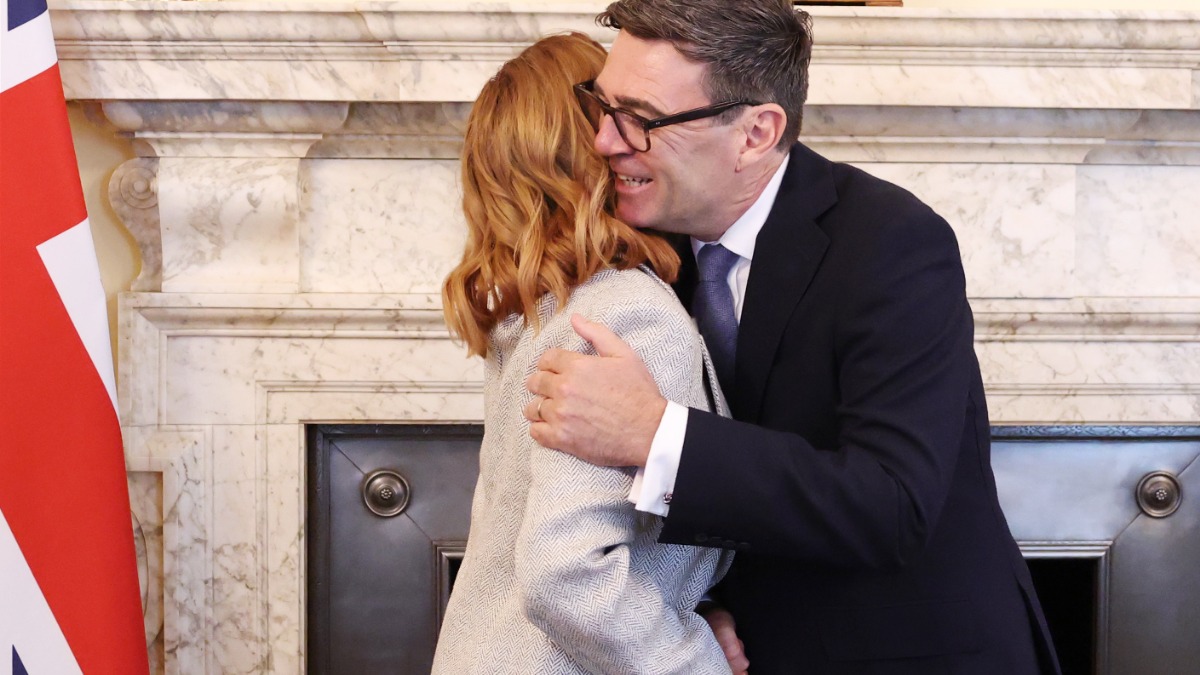
Britain entered a new political chapter on Monday following a change in leadership at Downing Street. The transition comes as the government faces continued pressure over the cost of living, economic growth and public confidence after years of political instability.
After Labour MPs removed Keir Starmer from office, Andy Burnham became Britain’s sixth prime minister in a decade. Attention soon turned to his first moves in government.
According to The Guardian, Burnham began his first day in office by forming his cabinet and outlining the priorities his government would pursue. His first public address also set out the themes he said would guide his administration.
His first message was hard to miss as he took office
Speaking outside No. 10 Downing Street, Burnham acknowledged growing frustration with politics after years of political instability. “I know people at home are fed up with politics. I hear you, and I want to be honest with you. We have not been good enough, and we need to be better. We will be.” He later added: “Let’s build a new national sense of unity, of common purpose, and positivity. Let us make this the moment when Britain starts to believe again, the moment we bring back hope.”
Rather than focusing on major constitutional reforms, Burnham used his first day to highlight cost-of-living measures. He said the government would introduce a fully funded support package, including help with energy bills and bus fares, with further measures under consideration.
“We just want to do some things that people will feel, and feel quite quickly. It won’t solve everything, it won’t take all of the pressure off, but it just shows the direction of travel and that we’re serious about helping them out,” he said.
Economic policy will likely remain under close scrutiny after Burnham indicated he was willing to use flexibility within Britain’s existing fiscal rules to finance infrastructure investment. “I’ve said we’ll stick to the fiscal rules and by that I mean the existing fiscal rules and use, obviously, any flexibility within them,” he said. “So none of this is about taking risks with the economy. I’ve never done that in any role that I’ve had. I’ve always taken a very prudent approach.”
Financial markets reacted cautiously after Burnham’s comments on borrowing. Investors remain concerned about higher government debt as the new administration prepares to outline its first major economic plans.
Burnham’s vision builds on ideas he has promoted throughout his years leading Greater Manchester. He has called his political philosophy “Manchesterism,” an approach centered on devolving power away from Westminster and giving cities and regions greater control over economic development, public services and local decision-making.
That message appeared again during his first address as prime minister. “We will make this moment a circuit breaker for Britain, bringing forward the biggest changes in the last 40 years. A new political model and a new economic model.”
He continued: “In the 1980s, Britain took some wrong turns. Political power was centralised, economic power privatised, large parts of the country deindustrialised, and they still haven’t recovered.”
“Many feel as though they’re still in decline, and they don’t have the ability to turn things around. And that’s why we will change politics to make it more collaborative, more about problem-solving than point-scoring. And we will take power out of here and carry it into every postcode in the land so that they can do more.”
Burnham also spoke with Ukrainian President Volodymyr Zelenskyy and European Commission President Ursula von der Leyen as Britain continues balancing European cooperation with its security partnership with Washington. Members of Burnham’s own party have recently pressed for diplomacy over military escalation, including one Labour Party member who called for “de-escalation, diplomacy, and a ceasefire” during the ongoing US-Iran conflict.
(Featured Image: Simon Dawson / No 10 Downing Street, OGL 3. Via Wikimedia Commons)
Have a tip we should know? [email protected]
Follow The Mary Sue:
