


A Michigan Chick-Fil-a Employee Allegedly Couldn’t Get Water Without Paying, and One Customer Wasn’t Having It
"Is this how you're treating your employees?"
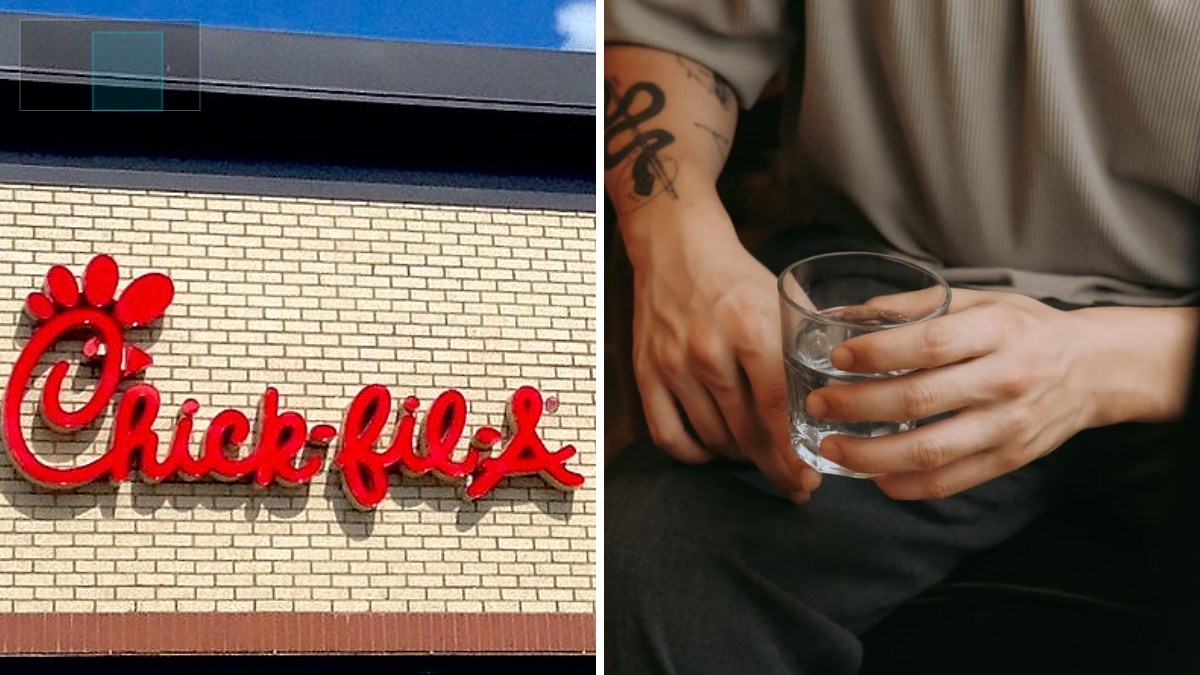
A Michigan Chick-fil-A allegedly tried to charge one of its own employees for a cup of water. According to BroBible, a customer captured the exchange on video and said she bought the water for the worker herself. “Chick-fil-A, are you guys actually charging your employees for water?” the customer asks at the start of the clip.
She says she was picking up an order when she saw what looked like a new employee ask a manager for a water cup. The manager told him, “You’re gonna have to pay for it unless you brought your own water,” according to the video. The employee reportedly asked if he was actually being charged for water, and the manager said, “Yes.” He walked back to his table without one, the customer says. “Obviously, I bought him a water after that,” she says in the video. “Is this how you’re treating your employees?”
Whether this is actually legal comes down to a narrow distinction: charging for the cup itself versus charging for access to water. Federal law doesn’t generally require employers to hand out unlimited free disposable cups, but it does require something more basic than that.
Here’s where the actual legal line gets drawn
Under OSHA’s sanitation standard, 29 CFR 1910.141, employers must provide potable water to employees at every workplace, and the same regulation explicitly prohibits a shared drinking cup. That requirement covers access to water itself, not necessarily a specific brand or style of disposable cup. There’s also a separate wage law angle worth knowing.
Under the Fair Labor Standards Act’s so-called kickback rule, an employer generally cannot require an employee to spend their own money on something that benefits the employer, like a required cup or supply, if doing so effectively pushes that employee’s pay below minimum wage for the hours worked. The rule applies whether the employer deducts the cost directly from a paycheck or simply requires the employee to pay out of pocket in the moment.
Michigan enforces its own version of the safety rule through MIOSHA, the state’s federally approved workplace safety agency, which has adopted many OSHA standards, including sanitation requirements, and can independently investigate complaints. Workers who believe a policy violates safety or wage law can file a complaint with MIOSHA or Michigan’s Department of Labor and Economic Opportunity.
The incident also doesn’t necessarily reflect Chick-fil-A’s policy nationwide. Most locations operate as independently owned and operated franchises, meaning one manager’s call at a single restaurant may not represent the company as a whole, an issue that’s come up before at other locations over how employees are treated.
Chick-fil-A has also drawn scrutiny over small charges tacked onto customer orders, like an extra fee added to a bill that one customer called out earlier this year. The outlet reached out to Chick-fil-A for comment but has not indicated whether the company responded.
Have a tip we should know? [email protected]
Follow The Mary Sue:
