


Divers Eager to Taste the 162-Year-Old Bottle of Guinness They Found in a Shipwreck, ‘An Unforgettable, Once-In-A-Lifetime Experience’
Probably best not to immediately drink the nearly 200-year-old deep sea beer.
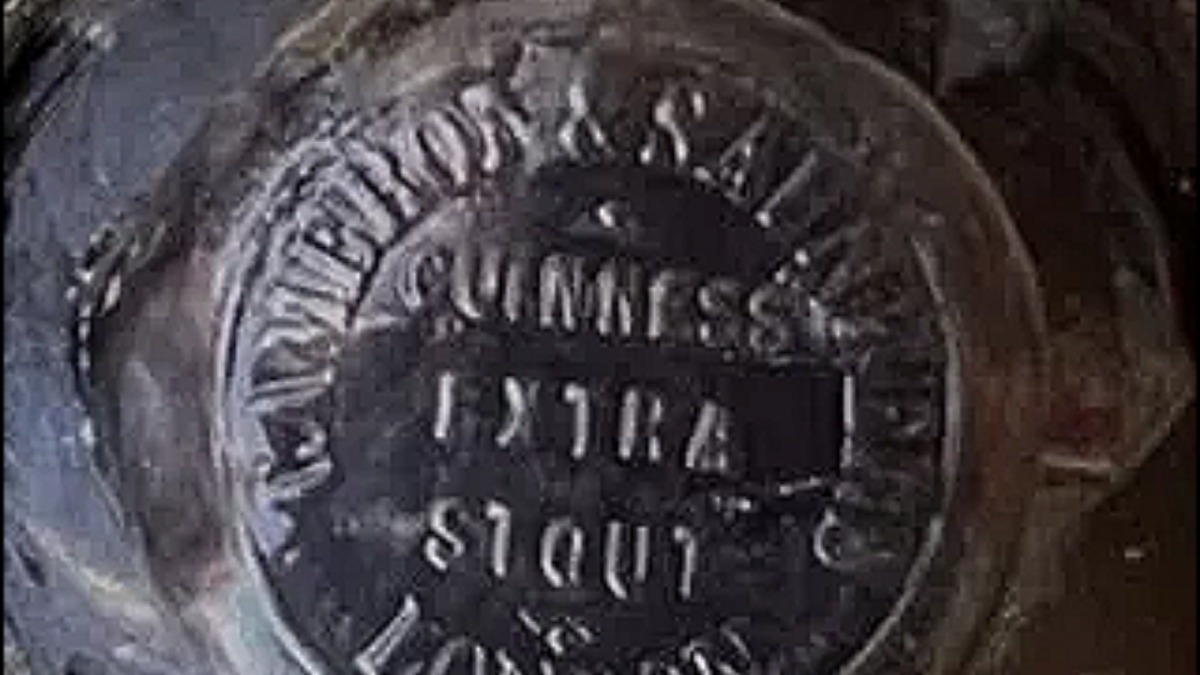
Last year, when diver Stefan Panis and a friend explored the shipwreck Mindoro, they made a surprising discovery: a sealed bottle with a label that read “Guinness Extra Stout, London.” The Mindoro, a British sailing vessel, sank in 1864, making the bottle of Guinness approximately 162 years old. Panis contacted another diver who was also a researcher, Pawel Truszynski, to look further into the beverage.
Truszynski told Smithsonian Magazine, “We immediately recognized that we weren’t just holding an old artifact. We were holding a flawlessly sealed time capsule of liquid history.”
Both men were eager to taste that capsule of liquid history. However, the question was how to do that safely. As it turned out, a couple of options were available to them, and they wanted to try both.
The Safety Factor
Panis and Truszynski could have simply popped the top on the beer and taken a swig, but needless to say, that might not have been the wisest idea. If ocean water had gotten into the beverage, it could have introduced harmful bacteria, making it unsafe to drink. Admittedly, the beer seemed fairly well-preserved, as Panis had noticed other bottles still packed into wooden crates in the shipwreck.
As Truszynski explained to Smithsonian Magazine, “They were packed upside down, which under deep-sea pressure created a perfect natural hydraulic block, keeping the seawater out.”
However, to ensure safety, the men sent samples from the bottle to a university in Belgium so microbiologist Kevin Verstrepen could run tests. If Verstrepen gives the green light, Panis and Truszynski will be among the first in line to try it out (even if Panis isn’t normally a Guinness fan).
“To taste a flavor profile that has been trapped in a vacuum since the Victorian era would be an unforgettable, once-in-a-lifetime experience,” Truszynski said to Smithsonian Magazine.
Another Potential Way to Taste the Guinness May Exist
Drinking straight from the bottle if the beer is deemed safe would be the easiest way to taste this rarity, but Panis and Truszynski are also hoping to recreate the beverage by sequencing DNA from the beer’s yeast in what they are calling Project Jurassic Beer. The original yeast might not have survived all these years, but by sequencing its DNA, there is a possibility to find modern “siblings” that can be used in the recreation.
Additionally, according to an Instagram post sharing the find, gas chromatography testing will be done to determine if and how deep-sea pressure might have changed the beverage and to map its historical hop profile. The divers have reached out to the Guinness Archive about their discovery, as well.
A representative for Diageo, which owns the Guinness brand, told the Irish Times, per reporting by Smithsonian Magazine, “Discoveries like this provide a fascinating window into our past and help build a deeper understanding of our heritage.”
For now, though, the original bottle Panis discovered is safely stored in his garage, kept in the dark and submerged in water, in a semblance of the conditions in which he found it.
Have a tip we should know? [email protected]