


Nursing Home Staff Demand 96-Year-Old Influencer Stop the Late-Night Bashes or Face Immediate Eviction
A total riot.
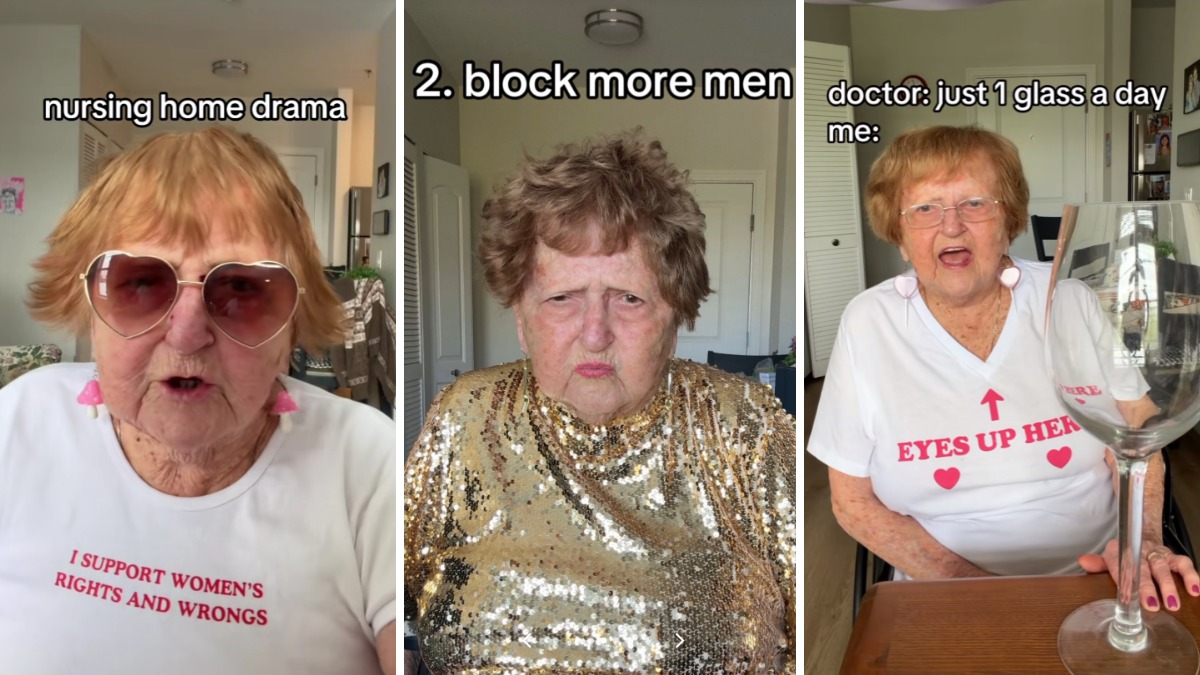
Nursing home staff have given 96-year-old influencer Lillian Droniak an ultimatum – stop the late-night bashes or face immediate eviction. The viral grandma, known online as Grandma Droniak, shared the news in a video posted to TikTok and Instagram last month, where she revealed she’d received a formal warning from the unnamed care facility. Droniak told her millions of followers that the letter threatened eviction if she didn’t curb her partying habits.
According to UNILAD, the notice, which she read aloud in the video, cited multiple noise complaints and security footage showing people leaving her room at 1 a.m. last Tuesday. It also explicitly banned serving alcohol to other residents, calling it a safety concern. The letter warned that continued violations could lead to restrictions on visitors, loss of common area privileges, and a review of her residency status.
The warning didn’t seem to faze Droniak, who fired back with her signature defiance. “I could do what I want. I pay $12,000 a month to live here. I could party if I wanna,” she said in the video. She even announced plans for another gathering that same night, declaring, “My girlfriends are coming over tonight. We’re gonna drink and gossip. I can’t help it. I love to party. You can’t stop me.”
Her response quickly spread beyond her usual audience
Droniak’s situation even caught the attention of one of the OG influencers Paris Hilton. Hilton commented on the post, writing, “You deserve to keep Sliving. Sending you 500k Hilton Honors points so you can go party it up at a @Hilton My Hilton fam will be in touch.” The term ‘sliving’, invented by Hilton in 2019, is a combination of ‘slaying’ and ‘living’. The well-known media personality has even filed nine trademark applications for the term.
Droniak’s representative later confirmed to PEOPLE that the situation had been resolved. The nursing home agreed to let her continue hosting guests in her room late into the evening, but with one major condition – she can no longer supply alcohol. The compromise seems to have satisfied both parties, at least for now.
Droniak moved into the retirement home in June 2024 after a fall left her with a broken leg. At the time, she explained her decision, saying, “I got put in a home. I need assistance. I don’t want to fall again.” But it’s clear she hasn’t let the move cramp her style. In a follow-up video the day after her initial rant, she appeared hungover, captioning the clip with text that read, “The nursing home can’t stop me from partying through the last chapter of life. xoxo.”
The standoff raises questions about how much control nursing homes actually have over their residents, especially those who pay steep monthly fees. Droniak’s case isn’t just about late-night noise. It’s about the balance between personal freedom and community rules in long-term care facilities.
Most nursing homes have strict policies around alcohol, noise, and behavior, often outlined in residency contracts. Violations can lead to warnings, restrictions, or even eviction, depending on the severity.
Federal law limits the circumstances under which nursing homes can evict residents
According to the advocacy group Justice in Aging, evictions are only permitted if the facility is closing, the resident isn’t paying for their care, their medical needs can’t be met, or they’re endangering the health or safety of others. In Droniak’s case, the nursing home cited safety concerns over alcohol consumption, which falls under the last category.
Moneywise states that if a resident is threatened with eviction, the process usually starts with an initial warning, like the one Droniak received. This notice outlines the violation and gives the resident a chance to correct the behavior within a set timeframe. If the issue persists, the facility must send a final eviction notice, including the eviction date and the resident’s right to appeal.
Justice in Aging advises residents not to move out immediately after receiving a threat, as many panic and leave before exploring their options. Residents also have the right to file a formal complaint through their state’s long-term care Ombudsman program, which is overseen by the U.S. Administration on Aging. Appeals hearings are typically held within the nursing facility itself. If a resident wins, they can return to their room.
A case of individual autonomy vs. institutional rules
Droniak’s story highlights the tension between individual autonomy and institutional rules in retirement communities. While most residents follow the guidelines without issue, her case shows that even at 96, some aren’t willing to give up their independence or their fun. The nursing home’s decision to compromise rather than enforce a full eviction suggests they recognized the value of keeping a high-profile resident happy, even if it meant bending the rules.
For now, it seems Droniak has won this round. She’s still hosting her girlfriends, still gossiping, and still living life on her own terms. The only difference? No more serving drinks. But if her past behavior is any indication, she’ll find a way to keep the party going – with or without the nursing home’s approval. After all, as she put it herself, “You can’t stop me.”
(Featured images: grandma_droniak on TikTok)
Have a tip we should know? [email protected]
Follow The Mary Sue:
