


Trump Calls His New Qatari-Funded Flying Palace the Height of Luxury, While Ethics Experts Warn of the Hidden Strings Attached
What’s the trade-off?
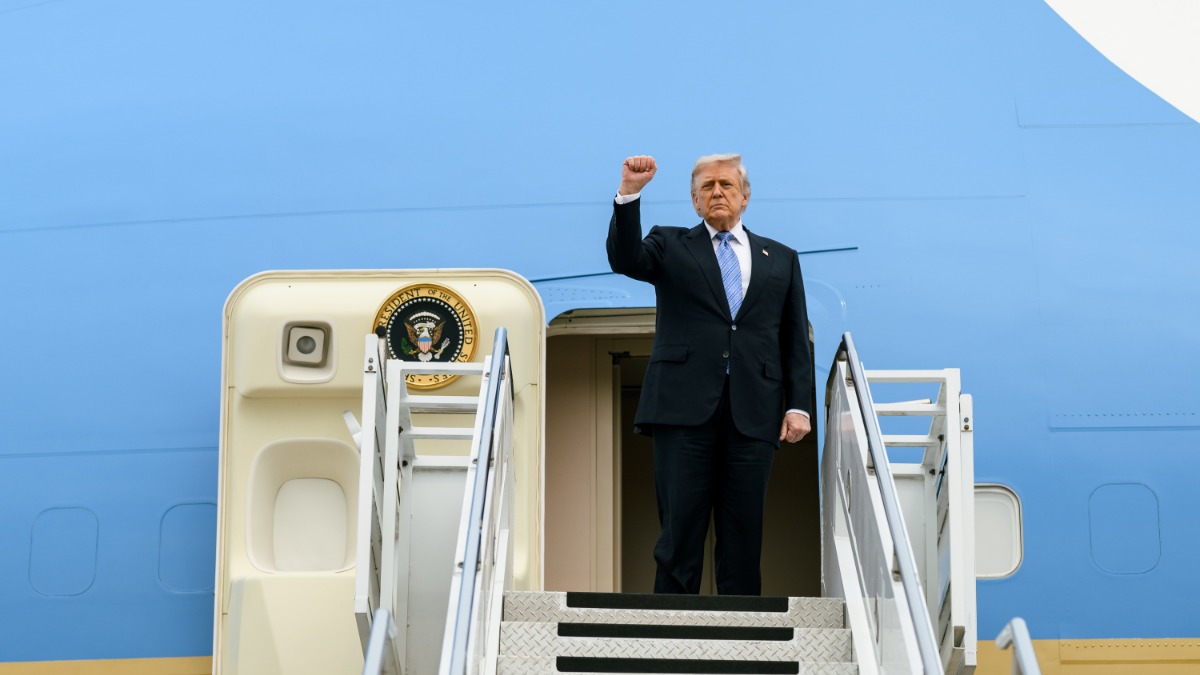
The newest Air Force One jet, a lavish Boeing 747 gifted to Donald Trump by Qatar, touched down at Joint Base Andrews on Friday, June 19, 2026, marking a major milestone in the controversial upgrade of the presidential fleet. Trump wasted no time praising the aircraft, calling it the “world’s most luxurious plane,” according to NPR, and boasting about its rapid transformation.
But while the president celebrated the jet’s opulence, ethics experts and military officials are quietly raising concerns about the hidden trade-offs and potential strings attached to the foreign gift. Trump’s enthusiasm for the plane was on full display during a Friday afternoon tour, where he stood in front of the newly repainted aircraft to thank the Emir of Qatar.
The jet’s exterior, once a familiar light blue, silver, and white scheme dating back to the Kennedy administration, now sports a bold red, white, and blue design inspired by the American flag. Trump called the new look “my taste,” adding, “It was time for a change.” He also said the plane’s rapid 10-month transformation was a feat “nobody thought possible.”
The aircraft will undergo a ‘final exam’
The aircraft, a modified VC-25B Bridge jet, will now undergo commissioning flights – a final exam of sorts – to ensure it meets the rigorous standards required for presidential missions. Once completed, the plane will join the active executive airlift fleet, providing a temporary solution until the long-term VC-25B is delivered.
The U.S. Air Force originally expected the Bridge aircraft to arrive in 2028, but by adjusting requirements, they accelerated the timeline to 2027. Those adjustments, however, came with compromises. According to Air Force officials, the modifications prioritized “mission over aesthetics,” leaving much of the jet’s original Qatari interior layout intact.
That means the plane retains some of the luxury touches from its previous life as the Qatari Head of State’s aircraft, though the Air Force insists no corners were cut on security or communications. The jet is equipped with the latest secure technologies, ensuring the president remains connected and protected mid-flight. But the trade-offs raise questions about how much of the original opulence remains, and whether that comes with unspoken expectations.
The gift itself has been a point of contention
Qatar first offered to replace the aging Air Force One fleet last year. Trump famously called the offer “too good to pass up,” saying in May that he’d be “stupid” not to accept it. Industry estimates pegged the plane’s value at around $400 million, making it one of the largest foreign gifts ever received by the U.S. government.
While the State Department approved the transfer, ethics watchdogs have warned that such high-value gifts from foreign governments could create conflicts of interest, even if they’re technically legal. The Air Force, however, has been quick to defend the program, framing it as a necessary stopgap to relieve pressure on the aging VC-25A fleet.
Those older planes have been in service for decades, and their maintenance cycles are stretching thin. Air Force Chief of Staff Gen. Ken Wilsbach called the delivery a “secure, reliable airborne command post on an accelerated timeline,” praising the team’s ability to meet the ambitious deadline.
Behind the scenes, the Air Force took a disciplined approach to ensure the jet met the president’s security and operational needs. An elite group of interagency experts developed protocols to detect and neutralize potential technical hazards, while a full three-dimensional mock-up of the interior allowed White House staff to begin familiarization training months before the plane’s arrival.
The training pipeline kicked off last October with the lease of an Atlas Air 747-8F, followed by the purchase of a Lufthansa 747-8i as a full-time training asset. Logistics support was also a priority, with the Air Force procuring spare parts and establishing a supply chain to support not just this aircraft but the entire future 747-8 fleet.
Balancing speed with security
Secretary of the Air Force Troy Meink emphasized that the program’s success hinged on balancing speed with security. “From the beginning, we meticulously evaluated every requirement to accelerate delivery while maintaining the high standards expected of the presidential mission,” he said.
“This effort proves that the U.S. Air Force can move fast without sacrificing quality, security, or reliability.” Meink’s comments underscore the military’s focus on operational readiness, which depends on three key components: mission capability, highly trained personnel, and adequate logistics support.
Still, the plane’s arrival has reignited debates about the intersection of luxury and national security. Trump’s description of the jet as a “flying White House at a level of luxury that nobody’s ever seen before” contrasts sharply with the Air Force’s insistence that aesthetics took a backseat to functionality.
The disconnect highlights a broader tension – one where the president’s personal tastes clash with the military’s mission-driven priorities. The red, white, and blue livery, for example, may be a patriotic nod, but it’s also a very public departure from decades of tradition.
(Featured image: The White House)
Have a tip we should know? [email protected]
Follow The Mary Sue:
