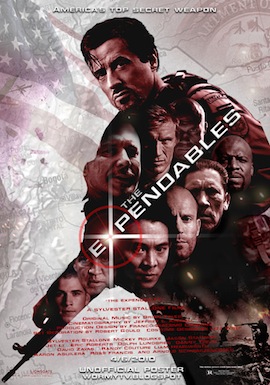
10 Clichés That Are Older Than You Think Power Grid by The Mary Sue Staff | 11:59 am, March 8th, 2011 You are seeing this message because you have javascript disabled. To use our slideshows you need to enable javascript. There's no cross domain hackery or tracking voodoo, it's just some sweet jQuery animations. Please, think of the animations. In the meantime, enjoy the html version below. I guess. If that's your thing. Allow Us To Explain... Classics Majors, this one's for you. See, it turns out, there's are a lot of ideas out there that aren't original... and haven't been for quite a bit longer than you might expect. Hiccuping Means You're Drunk How do you know a character is drunk on-screen? We can’t smell alcohol on them, and if their words are slurring, they might just be tired. If they stumble, they might just be clumsy. What's left? The drunken hiccup. The earliest known drunken hiccup occurred in Plato’s The Symposium, when Aristophanes shows up to deliver his speech and lets loose a resounding singultus. (Ancient Greeks were known for their parties.) Nowadays, the drunken hiccup shows up in almost every Warner Brothers cartoon that involves drinking, and even Disney's non-speaking dog Pluto gets drunk on more than one occasion. (Mickey really should have kept his booze locked up. My goodness.) Other Disney hiccupping drunks include Also Hiss (Robin Hood), Dumbo (who was actually hiccupping before he guzzled some champagne), Gideon (Pinnochio), and Uncle Waldo (The AristoCats). Scarlett O'Hara let one slip in Gone With the Wind, which is most unladylike. And the guy who got too drunk to play Santa in Miracle on 34th Street also made himself very inconspicuous when he hiccupped on his Thanksgiving Day Parade float. But in what could be an example of trying to pull a fast one on the censors, programmers for World of Warcraft, which is rated "T" for "Teen," somehow got the word "sit" to sound, er, slightly different when characters got drunk and hiccupped. (Even though cursing and drinking are not exactly mutually exclusive.) The Coven An ancient trope that dates back to the existence of gender is the trifecta of three women of different generations, each offering different perspectives and attitudes, and often referred to as the maiden, the mother, and the crone. They are also known as the Hecate Sisters and the Three Fates, who, in Greek mythology, controlled the lives of mortals. Sometimes, they appear as three sisters, or women around the same age. Such as in ... Macbeth. Before “modern” modern times, the most popular version of this trope appeared in the Shakespearean play in the form of the Wyrd Sisters. In different film versions of “the Scottish play,” the witches have all been crones or all maids. Worshipers of Hecate, they predict that Macbeth will become a king and are best known for the line “Double, double, toil and trouble.” Ironic, since there are three of them. Hehe, little number joke. In The Sandman, the trio shows up in several incarnations, including as the Fates, the Furies, witches, and regular women. In the Sandman universe, Eve explains that Adam had three wives who all embody the coven lineup: There was Eve herself, the crone and third wife, whose death was never explicitly spelled out, so she’s grown old without ever dying. A second unnamed wife was the maid, but she didn’t last very long after Adam witnessed her “construction” by God and was thoroughly grossed out. And finally Lillith, the first wife, who was designed as the “original human being” -- a hermaphrodite, the mother. The Discworld series of novels also featured the coven, but never referred to the crone as such (“the maiden, the mother, and the … other one”) because it was considered impolite. Because who wants to know they’re a crone? Women still show up in trios faithful to this trope pretty often, sometimes even as witches. In Hocus Pocus, there was a clear representation of the three personalities in the Sanderson sisters. Also consider Charmed, even though one of the three witch sisters was replaced, and The Witches of Eastwick. Even the “ladies” in To Wong Fu: Thanks For Everything. Julie Newmarr can be considered the “young naive one,” the “mom,” and the “jaded hag.” Think along the lines of the first wife, the second wife, and the first wife’s mother. Yeah, as long as humans exist, that form of the trope will too. Death Takes A Holiday I think we can all agree that while death is guaranteed, it generally makes us very sad. Therefore, we would like to prevent it. However, if humans stop dying but keep reproducing, this spells trouble. Especially if death cannot kill a dictator, murderer, etc. So trying to “trap” death, as Sisyphus did in Greek mythology, is not a great move. Sisyphus trapped Thanatos, the god of death, after being punished by Zeus, whose secrets Sisyphus had revealed in an attempt to prove himself on par with the gods. After being imprisoned by Zeus, Sisyphus tricked Thanatos and bound him with his own chains, rendering Death “out of commission.” This angered Ares, who liked to see his opponents die in battle, so Thanatos ended up freed and Sisyphus was immediately turned over to him and asked to push a boulder up a mountain for the rest of his “death.” This trope doesn’t necessarily refer to immortality for an individual as much as refers to immortality for all individuals. Because the entity responsible for causing death is not around to do the job. It can also refer to people/mortals trying to achieve just that by preventing Death from doing its job. This was the case in the play/novel/movie On Borrowed Time, which involved an elderly man trying to prevent Death from taking him away from his orphaned grandson. But in the Marvel Universe, there was the Cancerverse. When Captain Marvel found himself dying of cancer, he made a deal with the Many Angled Ones to kill Death and allow them to conquer the universe. This did not turn out as well as he’d hoped -- the Many Angled Ones destroyed the planet, completely overwhelmed the universe and forced an unnatural expansion so they could continue to exist. But the absence of Death doesn’t necessarily have to be such a downer. In the Kids in the Hall miniseries Death Comes to Town, Death sleeps in, allowing Ricky, who was supposed to be aborted, to survive. Death now has a vendetta against Ricky, and that’s why he was in town. Terry Pratchett’s Discworld novels feature a few instances of Death playing hooky from taking souls, like when he hires an apprentice so he (Death) can go get drunk and go fishing (Mort) and when he stands in for Hogfather (Hogfather). Then there was the series Dead Like Me, in which Death is an 18-year old girl named George, who becomes a Reaper after her own death. So, she isn’t the only Death, but still tries to get around doing what ultimately has to be done. Lesson: Death is an essential part of life. The Improbably Large Sword Honestly, what better way to scare an enemy than with a gigantic sword? How about a sword that couldn’t possibly be carried by just any man? How about a sword like that of Gilgamesh? “Their blades were 120 pounds each/ The cross guards of their handles 30 pounds each/ They carried daggers made with 30 pounds of gold”! “Gilgamesh and Enkidu bore 10 times 60 pounds each”! That’s impossible! -- If you’re some kind of wimp! So, who has been wielding a BFS in modern pop culture? They’re huge in anime, especially in Bleach. Ichigo, however, doesn’t have total control over his gigantic sword, so he trades it in for a less huge one. Ichimaru’s sword is of normal width but can extend to the length of 100 swords. But Komamaru’s sword is 13 km long. That’s about 8 miles. An 8-mile long sword. And you know what? I’ll bet it holds up for all 8 miles. Otherwise it would be a pretty lame BFS. And that doesn’t exist. Thor’s Odinsword is also your standard BFS, but he could only throw it. Because removing it from its sheath would cause the end of the universe. Probably because it was so BIG that it would poke and deflate it, causing it to implode. Whoops! Deadpool also had a BFS coming out of both his hands in X-Men Origins: Wolverine. Technically, they would have been longer than the length of his arms, but what kind of BFS-wielder is going to be stopped by a silly technicality? The BFS does not answer to your pitiful logic. It can pierce your heart from a bajillion miles away. Yes -- a bajillion. Lotus Eating If given the chance to live in a world where everything goes right, everything is wonderful, and your every desire was fulfilled … A trope as old as the first time someone stubbed their toe or had a minor disagreement, the Lotus Eater Machine is a plot device used to show characters that living in a perfect world, free of strife or conflict, is not only way too good to be true, but strongly advised against. The first known appearance is in Homer’s Odyssey, in which the Lotus Eaters were controlled by the very lotus plants they subsisted on, which kept them in a constant trance of peaceful apathy. As lovely as that sounds, it caused them to shirk their responsibilities, which, let’s face it, just means trouble. Inception is a very recent example of Lotus Eating, namely in the case of Cobb trying to hold on to the memory of his wife by constantly returning to that dream of her. But a classic example is The Last Temptation of Christ, when, while being crucified, Jesus is approached by a little girl (who turns out to be Satan) who offers him the chance to go on living his life as a regular guy. After living the quiet family life he thought he wanted, Jerusalem ends up in ruins because Jesus never died on the cross to save mankind. Similarly, in Donnie Darko, Donnie avoids being killed when a jet engine crashes into his house, but his survival meant the end of the world and death to his loved ones. So, yeah, better to just be killed. Generally, characters who have experienced the death of a loved one wish to live in a world where that person never died. But then, the grieving party never becomes who they were meant to be, and someone less than worthy takes their place. And also, it’s all fake, and something far weirder is happening. This was the case in Batman: The Animated Series when Batman imagines a world where his parents were never killed and he never became Batman … but he can’t read. And someone else is Batman. Hmm. Turns out that the Mad Hatter put Batman in this dream so he could go on with his evil business without being bothered by Batman. In a really heartbreaking/frustrating example, the Justice League Unlimited comic book featured a story entitled “For the Man Who Has Everything,” in which Batman, Robin, and Wonder Woman visit Superman on his birthday, only to discover he’s comatose with a plant called the Black Mercy sucking away at his chest, feeding him dreams of his “heart’s desire.” This is all due to the alien Mongul. The plant also adheres itself to Batman. During the fight, Batman has to witness, then retreat, from his father disarming and fighting his own would-be killer, and Superman has to watch his birth family fall apart. And in the end, the Black Mercy attaches itself to Mongul, whose heart’s desire involves conquering the world. So, if you’re keeping score, if you’re a good guy, eating the lotus will mean a deluded fantasy that proves itself too good to be true. But if you’re a bad guy, eating the lotus means … getting exactly what you want without consequence, albeit in a fantasy world. Extra-Dimensional Space Hammer space is exactly what it sounds like. What? No, it’s not a space where you can’t touch things! God. It’s that thing where cartoon characters pull absurdly large objects out of impossibly small containers. Or, perhaps they pull absurdly large objects out of thin air. What is up with Mary Poppins’ bag of holding? How does Link hang onto all those “swords, bigger swords, bows and arrows, slingshots, pointy sticks, nuts, boomerangs, bombs, chickens, extra clothes, fairies, instruments, fishing poles, masks, metal boots?” Exactly how big is Wakko’s sack? The answers remain unclear. But we can tell you that one of the earliest adopters of hammerspace was none other than the God of Thunder himself, Thor. When he wanted it to, his mighty hammer Mjölnir “would be so small that it could be carried inside his tunic.” To make it bigger again he would stroke the handle, giving him access to officially the most legitimate and most creepy pick up line in the history of myth. New Media is Evil Completely new forms of expression don’t come along too often, and so it might seem like video games and the Internet are bearing the brunt of society’s unfounded fears. But new media has been around for a very long time. And outrage has been around for even longer. So get a load of this ... I cannot help feeling, Phaedrus, that writing is unfortunately like painting; for the creations of the painter have the attitude of life, and yet if you ask them a question they preserve a solemn silence. And the same may be said of speeches. You would imagine that they had intelligence, but if you want to know anything and put a question to one of them, the speaker always gives one unvarying answer. And when they have been once written down they are tumbled about anywhere among those who may or may not understand them, and know not to whom they should reply, to whom not: and, if they are maltreated or abused, they have no parent to protect them; and they cannot protect or defend themselves.” That’s old Socrates himself, talking about why he thinks that the reading and writing (if not particularly new at the time, still the youngest form of expression) are fundamentally bankrupt. The Flashback Another example from Homer’s Odyssey, the flashback comes in handy when developing characters and explaining the plot. In Odysseus’ case, readers find out about his adventures back to Troy via flashback. (His entire journey home, actually, is told in flashback.) Flashbacks serve vampires particularly well, since they can be hundreds of years old. On True Blood and Buffy: The Vampire Slayer, the audience is shown how characters like Bill and Angel became vampires, or, in Angel’s case, were first cursed with a soul. Lost developed all of its ensemble characters with flashbacks, showing their lives before the plane crash and how they were destined to connect. But sometimes, it just acts as a device to quickly fill us in on what a character is remembering something, like in Airplane!. Sometimes, flashbacks are used when the end of the story is written first and you need to explain how you got there. This is the case with classic movies such as Citizen Kane, when the movie opens with the death of Kane. The Godfather II is a prequel to the original, which could also be considered a flashback. But this can also be the premise of an entire TV series, as in the case of How I Met Your Mother. The show isn’t really about the lives of young New Yorkers looking for/finding love as much as it about the mystery of who the main character eventually falls in love with, something we probably won’t find out until the end of the series. So, if you’re looking for the answer to how that happened, just look to the past. Because there is always something there to explain almost everything. Building A Robot Girlfriend If you thought that the nerdy guy who builds himself a robot companion was a new phenomenon, occurring in Weird Science, a slew of webcomics, Serenity, Futurama, and Batman Beyond, to name but a few, you were wrong. Turn the clock back to the socially ill-adjusted crafting god of the Greeks, lame because his mother Hera threw him off of Olympus ... basically because he wasn’t much to look at. Is it any wonder that the ugliest and physically weakest of the Olympians decided to make himself some automatons to help him around the forge as he made all of the other gods' signature stuff, weapons and armor? And since he wasn’t getting much obedience out of his wife Aphrodite (who was awarded to him by Zeus so that none of the other gods would fight over marrying the goddess of Love, and pretty much immediately started cheating on him with Ares), why not make them female automatons? One out of gold, and one out of silver? After all, it’s not like he had all of Zeus’ free time to go wooing maidens as bulls, swans, showers of gold, etc. The Intra-Genre Crossover As you might have noticed, if there’s one culture that could tell a good story, the Greeks were it. And there’s not much better than the Argosy (except maybe for the Odyssey or the Iliad, but we’ve already talked about them quite a bit). The Argosy, perhaps more popularly known as the one where Jason goes to get the Golden Fleece, is The Expendables of Greek mythology. This is not actually an exaggeration. Wikipedia’s list of people who rowed out with Jason to bring back the Fleece is 82 members long, and includes such names as: Ascelpius, who would become the god of medecine; Atalanta, the girl who would only marry a man who could outrun her; Bellerophron, killer of the Chimera, rider of Pegasus; Castor and Pollux, siblings of Helen of Troy and sons of Zeus; Heracles and his lover Iolaus; Laertes, Odysseus’ dad; Nestor, who would become a veteran of Troy; Orpheus, the musician; Philoctetes, another famous Greek veteran of Troy; and Theseus, killer of the Minotaur, king of Athens. Possible continuity errors created by this scenario include that if Castor and Pollux are heroes, then Helen is probably also an adult, which would indicate that the Trojan war has to happen at some time, but Laertes and Nestor are still young men and not the dads and grizzled advisors they are during the Illiad and Odyssey. Ancient Greece, can I introduce you to the concept of the continuity restart? Follow The Mary Sue Follow @TheMarySue Like us on Facebook filed under Batman (character), Superman, The Expendables, Thor