


We’re Living in the Sci-Fi Future We Feared
From facial recognition to doorbell cameras and AI-powered surveillance, the technologies once reserved for dystopian fiction have quietly become part of everyday life.
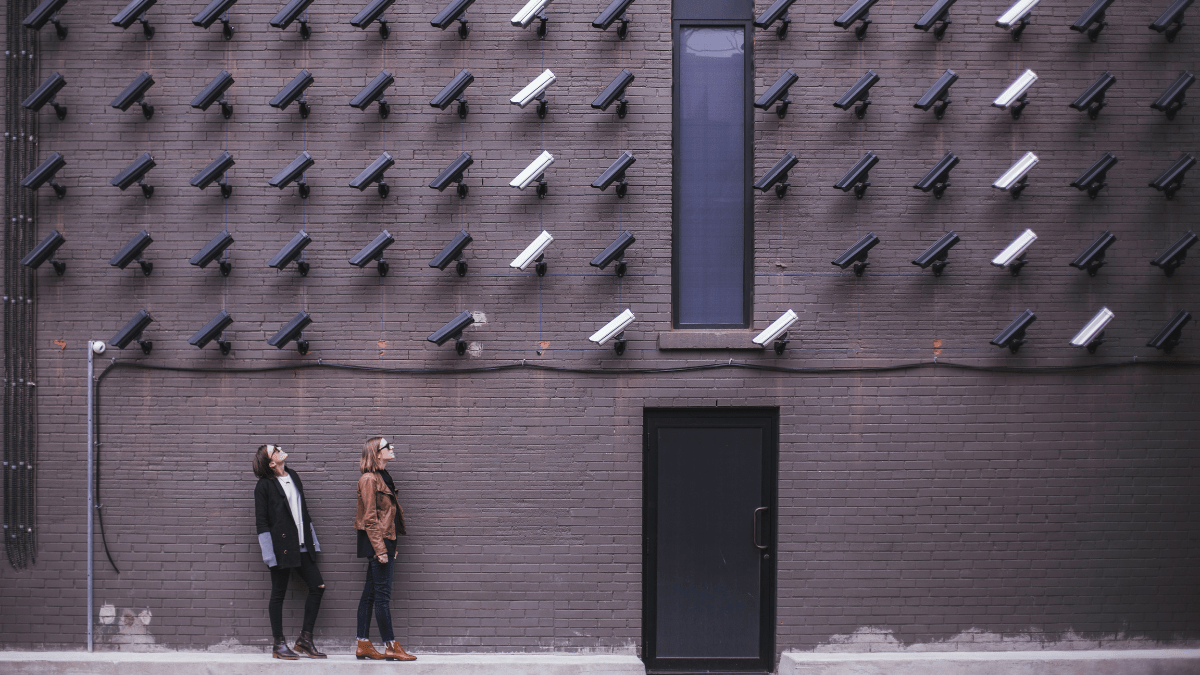
George Orwell’s “1984” provided an exaggerated insight into what the future might look like with “Thought Police” and intense surveillance. Movies like “Minority Report” introduced a real future with retinal scans and biometric tracking. The Sci-Fi genre as a whole gave us oppressive governments, omnipresent cameras, facial recognition, and machines that knew everything about us.
This dystopian future was to come with major dramatic shifts or announcements, and instead surveillance crept through the back door disguised as convenience.
Madison Square Garden is just a symptom
In a July 2026 Wired article, Madison Square Garden was alleged to have a database of celebrities that included labels, risk levels, and an intensive media search across the net. According to Wired, “The talent database also tracks some celebrities’ race, gender identity, and sexual orientation; 93 entries are marked as ‘LGBTQIA.’”
We are increasingly surrounded by surveillance technologies, but the rules governing their use aren’t always obvious to the average person. And, perhaps most importantly, did anyone meaningfully consent to being watched? With MSG utilizing its software to deny entry or pick label risk levels for certain patrons and the laws not catching up with technology, who is to tell the owners of the Garden how much is too much?
Corporate surveillance isn’t the only issue. We have willingly brought surveillance devices into our own homes, with smart doorbells and home security cameras marketed as tools for safety and convenience.
A camera pointed at your front door can also capture your neighbors, pedestrians, delivery workers, or anyone else walking down the street. We often object to being watched while simultaneously purchasing devices that make it easier to watch everyone around us.
Major security companies like Ring have faced scrutiny by the FTC (Federal Trade Commission) due to privacy issues that led to stalking and harassment charges, but little has been done about it.
AI makes surveillance even more invisible
Traditional surveillance required a human to sit and watch. AI changes the equation by allowing systems to analyze images, identify patterns, detect objects, or flag people and behaviors.
Nobody has to be actively watching you as the system passively collects information. AI makes surveillance easier to ignore because the technology is increasingly automated and embedded into existing systems.
Take license plate scanners. The average person may not think twice about driving past a camera, but license plate readers can potentially create records of where vehicles have been and when.
For instance, in Schmidt v. City of Norfolk, backed by the Institute for Justice, several San Jose, CA residents brought a case arguing that police databanks of scanned information without a warrant violate the Fourth Amendment. The lower courts ruled against the residents, and the case is now in appellate courts. There are currently no clear-cut answers, and the government is flying by the seat of its pants while technology advances faster than laws can be made.
Trading privacy for convenience
We routinely make privacy trade-offs because the benefits feel worth it. We accept cookies to read an article. We allow apps to track our locations. We use facial recognition to unlock our phones. We install cameras to protect our homes.
The issue isn’t that every individual decision is unreasonable. It’s that millions of small decisions have created a world where constant data collection is routine.
Science fiction has spent decades imagining surveillance societies, but real life is less dramatic. There’s no ominous announcement that “Big Brother” has arrived. Instead, the surveillance technology has a sleek logo, a friendly app, a subscription plan, and a reassuring promise that it’s all for your safety: oppression sold as convenience, entertainment, security, and progress.
The question isn’t “Are we being watched?”
How much surveillance are we willing to accept before we stop noticing it? The MSG controversy is just part of a much larger conversation about the world we’ve already built. We don’t need to wait for a dystopian future in which every street corner has a camera and every movement is tracked – we’re already living in it. The real sci-fi twist is that nobody forced us into it. We just got used to it.
The future we were warned about didn’t arrive with a robot uprising or a dystopian government takeover. It arrived quietly, asked us to click “Accept,” and promised to make our lives easier, and we gladly went along with it without a care in the world. Heed this warning, read the fine print, and never click “accept” without fully understanding what you are signing up for.
Image by Matthew Henry on Unsplash
This is an opinion piece. The views expressed in this article are those of just the author.
Follow The Mary Sue:
