



‘We are a country lost to treason’: Trump destroyed by the internet for allegedly admitting treasonous activity

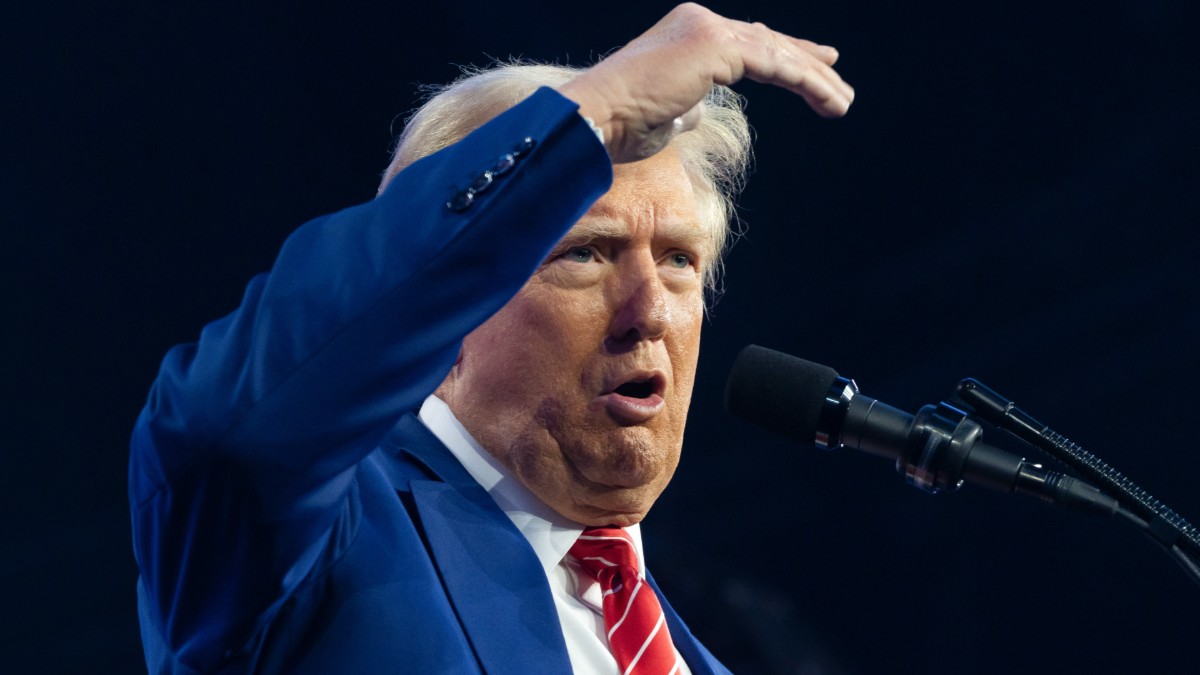
Donald Trump’s pre-inauguration rally on Sunday crystallized the growing concerns about technology’s role in American democracy, as the incoming president made alarming and unnecessary insinuations about Elon Musk’s involvement with Pennsylvania’s voting systems. The man—who just pledged to change the name of the Gulf of Mexico to the “Gulf of America” in his inaugural speech Monday—loves the idea of telling on himself like he’s gotten away with something.
“He knows those computers better than anybody. All those computers. Those vote-counting computers,” Trump declared to 20,000 supporters, referring to Musk’s purported expertise with election machinery. “And we ended up winning Pennsylvania like in a landslide.”
The reality stands in contrast to Trump’s problematic characterization, given what we know about voting machines and the voting process. Official records, per CNN, show he won Pennsylvania by less than two percentage points—hardly the landslide he claims. The lie is as mindless as the implied connection between Musk, the Tesla/ billionaire who campaigned extensively for Trump, and the state’s voting infrastructure.
Pennsylvania employs diverse voting systems across its 67 counties, all producing verifiable paper records that make widespread manipulation virtually impossible. When one county experienced a software malfunction in November 2024, the solution was straightforward: manual counting by election officials.
Yet Trump’s casual linking of Musk to voting systems feeds into a larger pattern of undermining electoral integrity. The suggestion that a wealthy tech magnate even could somehow influence well-secured voting computers plays directly into existing, even conspiratorial, anxieties about technology’s role in democracy—which makes for an unusual dissonance required for Trump voters. On the one hand, they often believe the woke liberals are cheating through technology, and then, on the other hand, find themselves hand-in-hand, in league with tech oligarchy.
Even during remarks on the Olympics and World Cup selections during his pre-inaugural event, he claimed straightaway, “It’s only because they rigged the election that I’ll be your president representing you there.”
This unhinged narrative gains more weight internationally with Musk’s growing influence on a European continent in great economic and political flux in all corners. He’s actively endorsed far-right parties and attacked established democratic leaders, prompting French President Emmanuel Macron to warn about oncoming destabilization of democratic institutions.
“Who could have imagined, 10 years ago, that the owner of one of the world’s largest social networks would intervene directly in elections, including in Germany?” Macron recently observed.
Greek Health Minister Adonis Georgiadis put it more bluntly: “Someone cannot simply use their platform, wealth and connections to try to dictate how governments are formed in each nation. This is becoming increasingly dangerous.”
The predictable convergence of big tech and political power presents unprecedented challenges to democratic systems. When a president-elect casually suggests that a tech billionaire’s knowledge of “vote-counting computers” somehow contributed to electoral victory, it deserves serious scrutiny.
These statements arrive as Trump’s team prepares to implement an aggressive, Heritage Foundation-linked agenda that will absolutely stretch constitutional boundaries in every way possible. His campaign promises include reinterpreting birthright citizenship—even by executive order—despite the 14th Amendment’s clear language and attempting to invoke emergency powers to militarize the border.
The combination of technological influence, concentrated wealth, and political power creates a potentially toxic and expanding cesspool seeking to engulf and drown what we consider democratic institutions. When the incoming president boasts about a tech titan’s familiarity with voting systems—even if meant as campaign hyperbole—it demands attention.
As America hunkers down and collectively blows into a paper bag for Trump’s second term, the relationship between big tech, political power, and democratic institutions will require more monitoring than ever before. The problem, of course, is that Trump, Musk, and the Heritage Foundation are seeking to turn off all the cameras, body cams, and CCTV. In an era where oligarch influence will absolutely shape all political outcomes coming forward, maintaining unambiguous boundaries between private tech power and electoral systems becomes more crucial than ever. Trump’s comments, however, suggest those boundaries may be more porous than a true-blue democracy requires.
Have a tip we should know? [email protected]
