



‘This is so dystopian’: Man heads into Walmart to look at dishware. Then he notices the prices changing in front of him

Walking through a store and seeing price tags update in real time sounds truly dystopian. You want the assurance that the price will be stable instead of jumping around because of factors like the weather, time of day, or scarcity.
But as dynamic pricing is starting to enter some stores, shoppers feel unsettled by this new reality.
Man Catches Price Tags Updating in Real Time
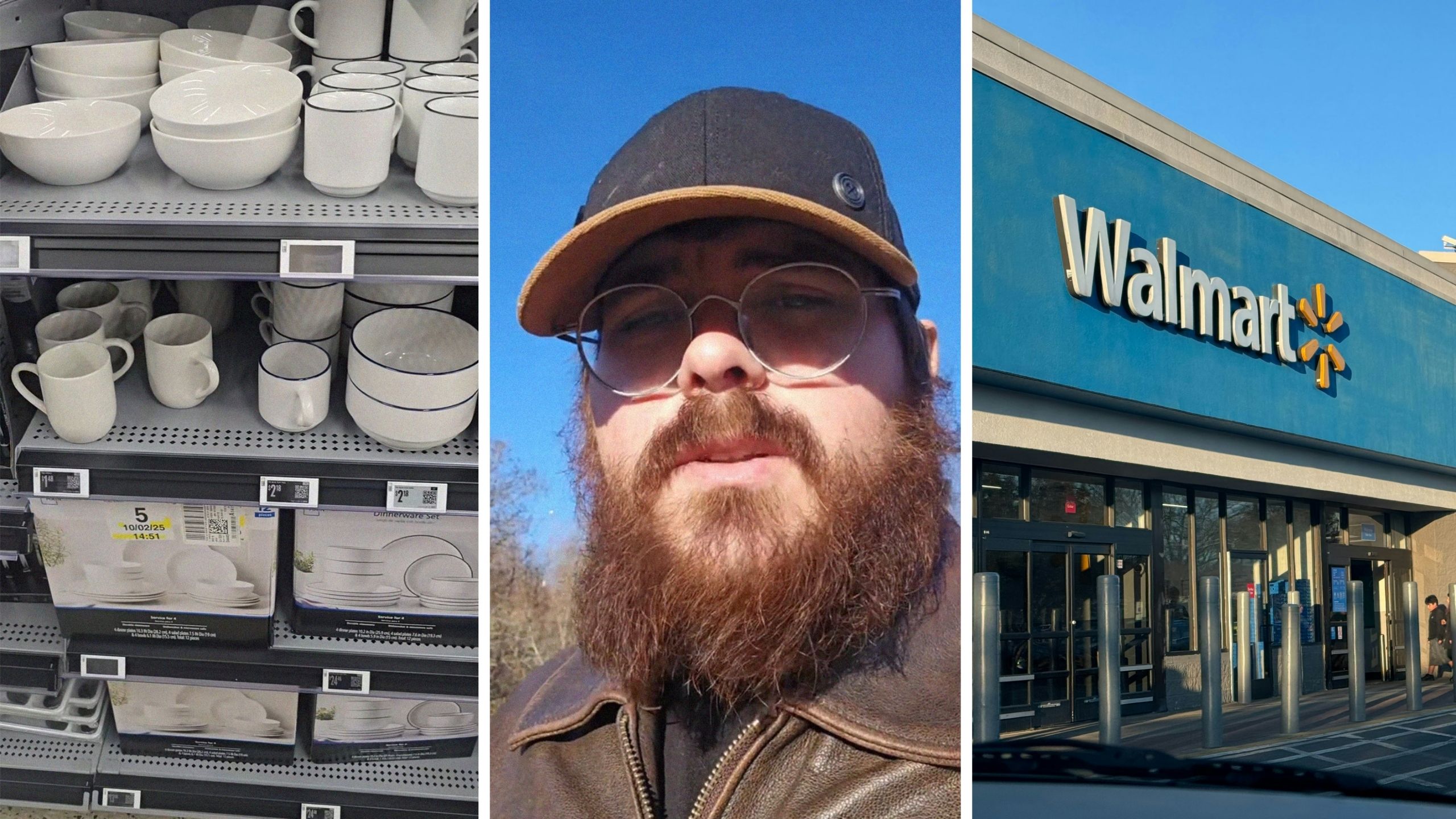
In a viral video with more than 353,000 views, shopper Blake (@electricblake) was standing in front of a shelf full of white plates, bowls, mugs, and boxed dinnerware sets at Walmart.
Instead of normal paper price tags, there are little electronic ones.
“Oh my god, look,” Blake says in the video as he points his camera at the shelf. “These price tags started updating right in front of me. This is crazy, dude.”
He zooms in on a coffee cup.
“That cup went up in price. I wish I would’ve, I had to, like, get my camera going, right? So there was a delay,” he explains. “Dude, this was under $2. I don’t know, I don’t remember exactly. Maybe it was like $1.98. Now it’s $2.18.”
Blake watches intently, trying to catch another price change on camera. The tag on the cup then glitches out and stops showing the price altogether before eventually stabilizing at $2.18.
“I’ve never been in a store and actually watched the price of something go up right in front of me as I walked up to buy it,” he says.
Blake Gets Suspicious
In a follow-up video, Blake explains that he went back to the same Walmart location to speak with a manager about the electronic price tags.
“I walked around until I found a manager, and I said, ‘Can you help me with something?'” Blake recounts. “And he said, ‘Sure.’ And I said, ‘I just wanted to ask you about these new electronic price tags.'”
Blake told the manager about his experience seeing prices change in real time. He asked what would happen if he picked up an item and then the price went up on the tag before he reached checkout. Would he pay the original price or the updated one?
The Walmart manager’s response raised red flags. According to Blake, the manager claimed it’s impossible for the price tags to update without an employee manually doing it with a handheld device that must be held up to each individual tag.
“And I said, ‘Well, they updated right in front of me out of nowhere,’ and he said, ‘They don’t do that,'” Blake says.
But Blake did his homework. He looked up the website for the company that manufactures these electronic price tags. There, he found that they can be updated remotely within a 100-foot radius of an antenna mounted on the ceiling.
“So he lied to me,” Blake concludes. “That’s probably not a good sign if the employee straight up lies to you when you ask about the electronic price tags.”
What to Know About Electronic Price Tags and Dynamic Pricing
Electronic shelf labels—digital price tags that can be updated wirelessly—are spreading across U.S. grocery stores and big-box retailers.
Walmart announced plans to install them in 2,300 stores by the end of 2025, following a test at a Texas location, CNBC reported. The technology can already be found at Whole Foods, Amazon Fresh, and Kroger.
The company says the labels will cut the time it takes workers to change prices from two days to just a few minutes. But that speed is exactly what’s making some people nervous.
In August 2024, senators Elizabeth Warren and Bob Casey sent a letter to Kroger warning that digital price tags could enable “surge pricing” similar to what Uber uses, raising prices during periods of high demand. They worried stores might jack up the cost of ice cream on hot days or turkeys before Thanksgiving.
Kroger pushed back hard, stating it “does not and has never engaged in surge pricing.” The company told USA Today that any testing of electronic shelf tags is designed to lower prices for customers, not raise them.
Research backs that up—so far. A study by professors from Northwestern, UC San Diego, and the University of Texas at Austin tracked transaction data from a U.S. grocery chain that rolled out electronic labels in over 100 stores and found “virtually no surge pricing” before or after adoption. But the capability to change prices instantly still exists. That’s led lawmakers in 24 states to introduce 51 bills in 2025 seeking to regulate algorithmic pricing.
As for Blake’s manager claiming the tags can only be updated manually, that directly contradicts how the technology actually works. According to CNBC, the labels connect wirelessly and can be updated using a mobile app.
@electricblake ♬ original sound – ElectricBlake
Viewers side-eye Walmart and dynamic pricing
“I refuse to shop anywhere that does this,” a top comment read.
“This is so dystopian,” a person said.
“Those price tags are financially profiling you…” another wrote.
“Uh what if it changes while it’s in your cart? this is some dystopian blade runner sh!t,” a commenter added.
The Mary Sue reached out to Blake via email and TikTok direct message and Walmart via contact form for comment.
Have a tip we should know? [email protected]
