


‘Unrestricted power’: Trump has frighteningly been given near-total immunity

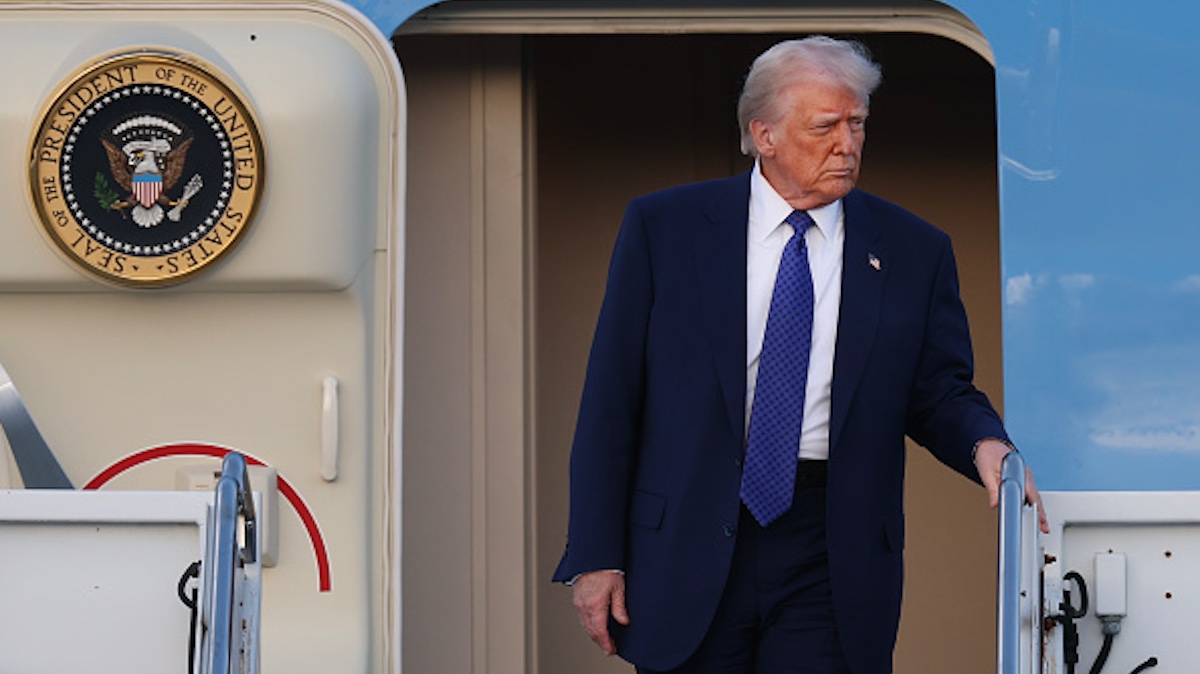
Does President Donald Trump have supreme power to do whatever he wants, whenever he wants? Trump seems to think so, and the Supreme Court’s ruling in July gives him a lot of ammo to make his case. In fact, he’s arguing he has “unrestricted power” to fire anyone he doesn’t like.
Trump fired Hampton Dellinger in early February. Dellinger led the Office of Special Counsel, an independent office meant to enforce ethics laws and protect whistleblowers. The issue at hand is that there are Congress-enacted protections that require the president to show cause when he wants to fire someone before their term is over.
Because of this, a federal district court blocked the firing. Then, the US. Circuit Court of Appeals for the DC Circuit did not overturn the decision, which means the case is going to the Supreme Court.
This will be a true test of Trump’s power as the president. Back in July, the Supreme Court ruled that presidents had absolute immunity from criminal prosecution for all “official acts.” This ruling was in response to Trump’s attempts to dodge prosecution for alleged document theft and attempts to overturn the 2020 election. Now, he’s using that ruling to help him with the Dellinger issue.
Trump’s solicitor general Sarah M. Harris is arguing that the July decision means he’s totally in the right for firing Dellinger without Congressional approval. In a filing, Harris said the district court blocking Trump’s actions was, ironically, an “unprecedented assault on the separation of powers.”
She said the lower courts should not be able to “seize executive power” by telling Trump how long he has to keep Dellinger employed “against his will.” Regardless of the reason for the July ruling, it’s now seriously going to be put to the test. Should Trump prevail in this ruling, it would mean he could fire anyone. It would also help his attempts to radically purge the government from his enemies and also cancel government programs en masse, like he did with The U.S. Agency for International Development (USAID).
Dellinger was appointed by President Joe Biden in 2023 to lead the Office of Special Counsel, and he was confirmed by the Senate last year. When the position was created during the Carter administration, Congress specified the special counsel could be removed “by the president only for inefficiency, neglect of duty, or malfeasance in office.”
In a brief email from the White House Presidential Personnel Office to Dellinger on Feb. 7, none of those issues were cited as reasons for the firing. All it said was that the position was “terminated, effective immediately.” Should Trump prevail, it would give more credence to his firing of other officials with similar Congressional protections, such as the former chair of the National Labor Relations Board. Many government agencies are independent for this very reason, including the Federal Reserve and the Federal Trade Commission.
The purpose of these protections are so there’s one step between a president playing politics and a government worker getting to keep their job despite being in presidential crosshairs. It also means the president can’t influence the Federal Reserve to say, lower interest rates, something Trump tried to do in his first term.
Unfortunately, a lot of this comes down to politics. When the U.S. Circuit Court of Appeals for the DC Circuit denied Trump’s request to appeal Dellinger’s firing, it said an appeal would be “inconsistent with governing legal standards and ill-advised.” That decision was 2-1, with two of the judges being Biden appointees. The third judge was appointed by Trump and said he would have granted the request.
Have a tip we should know? [email protected]
