


“There is another way”: The ‘No Other Land’ filmmakers’ Oscar acceptance speech highlight the many ways in which the film is important
"We call on the world to take serious actions to stop the injustice and to stop the ethnic cleansing of Palestinian people."

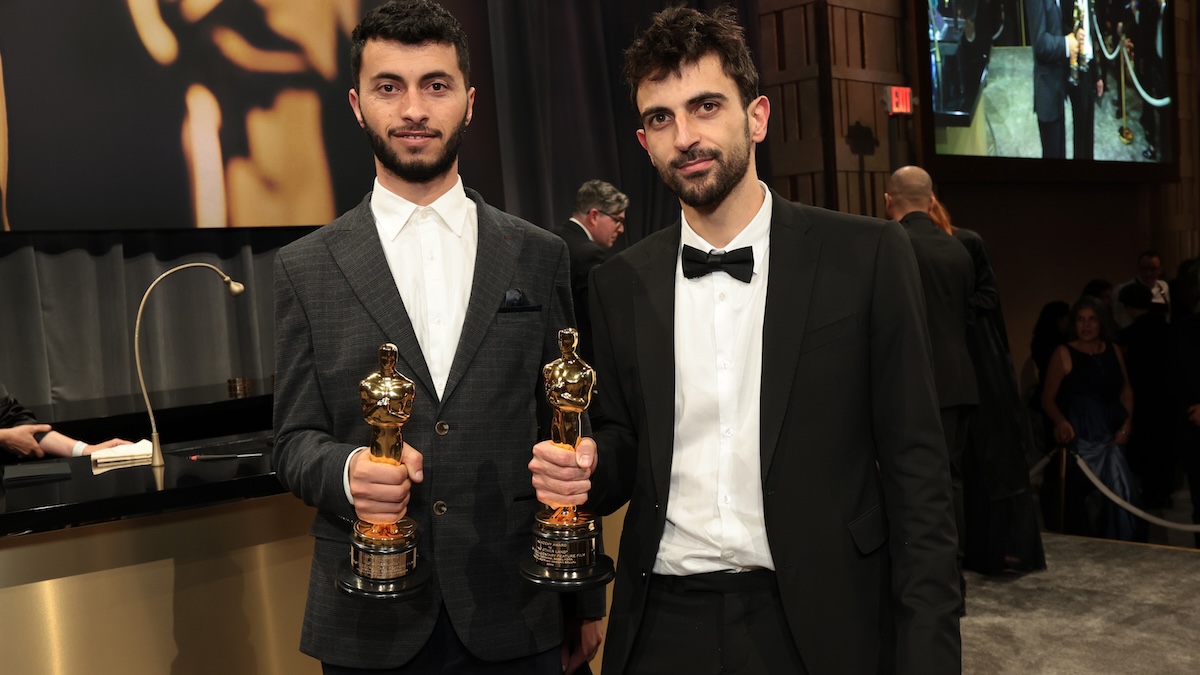
The cogent duel speeches given by the filmmakers and subjects of No Other Land as they accepted the 2025 Academy Award for Best Documentary stood out in a largely apolitical night. The words Basel Adra and Yuval Abraham said demand to be heard, and also underline why this film and their story demands to be seen.
No Other Land documents the last five or so years of Israeli military occupation in the West Bank and the systematic eviction of the Masafer Yatta community’s Palestinian citizens. Its four co-directors are Palestinian filmmakers Adra and Hamdan Ballal and Israeli filmmakers Abraham and Rachel Szor.
The film also documents Adra and Abraham’s partnership/friendship. The two of them spoke to a standing ovation.
Unfortunately, No Other Land does not have official distribution in the United States. But it is still playing in limited theaters–and not just in New York City and Los Angeles. Hopefully the Best Documentary Oscar win and these impactful speeches will make the film even more accessible.
Speeches we all should listen to
Adra, also a lawyer, comes from a family of organizers and activists. He has been filming the demolition of his community in the West Bank since he was a teenager. He spoke first:
Thank you to the Academy for the award. It’s such a big honor for the four of us and everybody who supported us for this documentary. About two months ago, I became a father. And my hope to my daughter [is] that she will not have to live the same life I am living now, always fearing settlers’ violence, home demolitions and forceful displacements that my community Masafer Yatta is living and facing every day under the Israeli occupation. No Other Land reflects the harsh reality that we have been enduring for decades and still resist as we call on the world to take serious actions to stop the injustice and to stop the ethnic cleansing of Palestinian people.
Abraham spoke next, including a direct appeal to the United States government:
We made this film, Palestinians and Israelis, because together our voices are stronger. We see each other. The atrocious destruction of Gaza and its people, which must end; the Israeli hostages brutally taken in the crime of October 7th, which must be freed. When I look at Basel, I see my brother. But we are unequal. We live in a regime where I am free under civilian law and Basel is under military laws that destroy his life and he cannot control. There is a different path, a political solution without ethnic supremacy, with national rights for both of our people. And I have to say, as I am here: The foreign policy in this country is helping to block this path. And, you know, why? Can’t you see that we are intertwined, that my people can be truly safe if Basel’s people are truly free and safe? There is another way. It’s not too late for life, for the living. There is no other way. Thank you.
“I see my brother. But we are unequal.”
Your milage may vary on how Abraham used his half of the speech. But it does mirror one of the many stories that the film tells. In No Other Land, Abraham learning to recognize the inequality between him and Adra is a narrative running in the background. And he is a real person, not a fictional character, so that journey is ongoing.
When Abraham enters the film as a young Israeli journalist and activist hoping to shed light on the situation and do good, his good intentions and optimism feels naïve. The film doesn’t shy away from portraying it frankly as such. He’s not a savior. Adra, his family and the members of his community repeatedly remind him that he’s in a privileged position starting with his simple ability to drive home at the end of the day.
Even as Adra and Abraham form a friendship over the course of the documentary, there is a real and uneasy barrier between them. This is one of many reasons why it’s important for audiences everywhere see this film. No Other Land is not about the urgency of togetherness in a candy-coated “power of friendship” way.
People need to see what’s happening in Masafer Yatta and the surrounding area and sit in that tension between Adra’s reality and Abraham’s wishful thinking. Allow yourself to be uncomfortable. That’s something you can only really get with documentary as a medium and why it won the top prize.
Have a tip we should know? [email protected]
