



Meta’s VR Metaverse Shutting Down: Here’s why it was doomed from the start

Meta’s VR experiment with the Metaverse is coming to a close. Not too long ago the social media giant laid off a bunch of workers. Meta closed three VR studios. The writing is on the wall for the Metaverse as it pertains to VR.
When presented with the idea of digital avatars inside of this space, a good number of consumers shrugged and went about their day. Now, most rational observers predicted this exact outcome. But, Meta was bullish on the potential of VR in this particular space. Most people knew that VR in the Metaverse was doomed before it even started. Likely because technology adoption is a tricky thing.
We are years on into the current crop of VR experiences and the results have been mostly murky. They also cut 10% of their Reality Labs division. And, they quietly stopped producing new content for their Supernatural. (That’s a VR fitness app for the unaware.) The Horizon Worlds experience will now be “almost exclusively mobile” according to a blog post from Meta. All of these flailing efforts have a common theme. Namely, no one really wanted to get down with this technology from the get go.
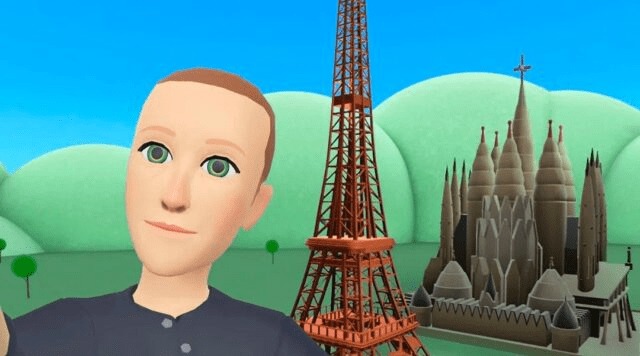
Rebrandings are usually an effort to distance a company from their previous output. Facebook deciding to ditch their association, after a ton of data leaks and drama, could have worked! But, it turns out that everyone has access to your previous history anyway. All of that plus a new found tech skepticism amongst American audiences meant that VR in the Metaverse was going to be a tough sell. And that prognostication ended up being right. The idea of living in a virtual world is still alluring for a lot of people. But, as Wii Sports looking avatars with no feet? Yeah, they went ahead and passed on that.
Why did Meta’s VR Metaverse fail?
Consumers’ lack of interest is a strong contender for the single biggest reason why the VR metaverse never picked up Steam. But, there is another worthy contender that deserves some shine here too. The pricing for a lot of VR setups is frankly wild. It was worse a couple years ago. However, these setups are still out of the realm of possibility for a ton of people out there. It’s no secret that the cost of living has gone up precipitously over the last two to three years. Or, At least that’s the story we all tell ourselves on social media.
Meta’s lower-end VR headset packages begin at about $249 dollars. Which doesn’t sound that outrageous when we’re talking about consumer electronics. This is a country that was just fawning over a $600 MacBook recently. But, that Macbook can be used for work, watching shows or chatting with friends. The Matter headset requires friends who are also willing to spend that $249. And if you’re serious about graphics, a computer that can run these programs well. It’s important to remember that Meta is a hardware provider for this whole thing too. Meta’s VP of Content for Reality Labs wrote that blog post. And, she argues that VR is actually growing. But, her statements also give the game away.
“The VR industry hasn’t grown as much or as quickly as we’d hoped. But it is growing — thanks to the years of dedication and creativity from the developer community,” Ryan argues. “It’s no secret that we’re still in the hardware game. We have a robust roadmap of future VR headsets that will be tailored to different audience segments as the market grows and matures.”
What does the future look like?

Well, if it’s anything like the present, it doesn’t look like VR. There’s a strong argument that the only technological developments of the last five to eight years have been companies finding increasingly different ways to sell you a subscription. That sort of rhetoric has provided a deep customer sentiment of dissatisfaction amongst consumers. Asking someone to plop down nearly $300 on a piece of kit is a tough sell, even in the best of times.
Darkly humorous to think that VR might end up outlasting AI. That supposition is built entirely on the fact that VR actually yields a product that people can use socially? Who knows. But, at the time of talking, we can stick the Metaverse into the digital locker of irrelevancy along with NFTs.
(featured image: Chesnot/Getty Images)
Have a tip we should know? [email protected]
