


Man Reveals His New Truck Has a Hidden Device Tracking His Location, Mileage, and Braking. Then He Shows Where the Dealer Hid It: ‘Has a SIM Card’
It’s about control.
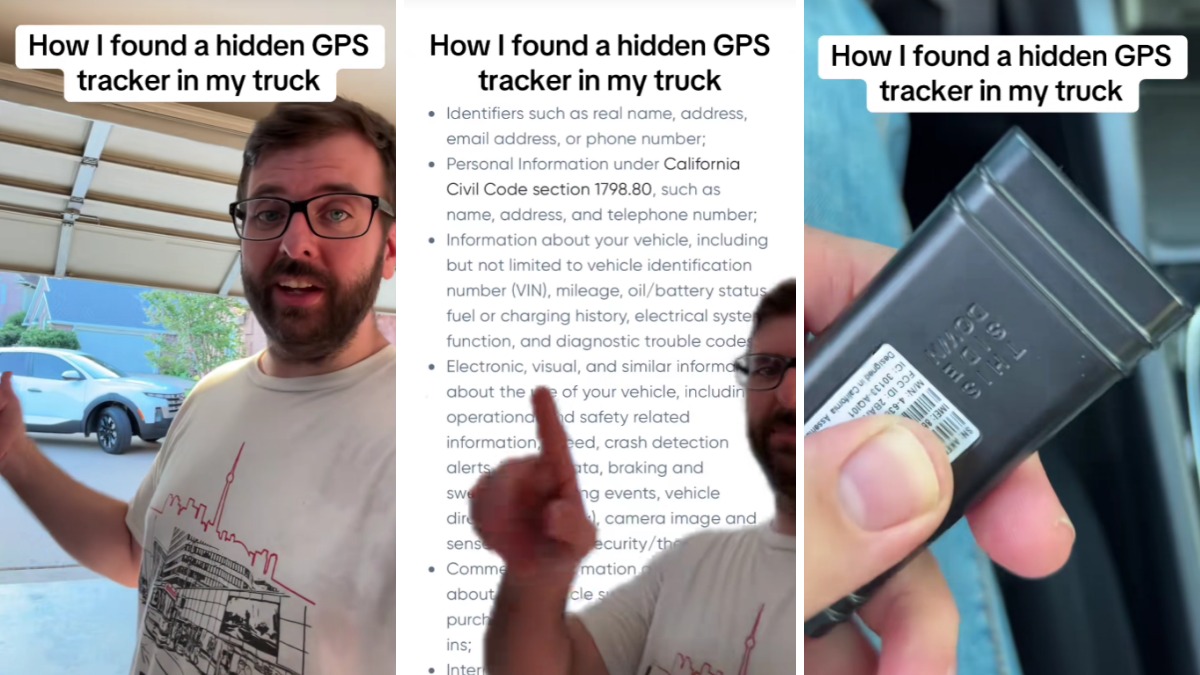
A man just pulled back the curtain on how dealerships secretly track your every move in a new truck, and the internet is losing it. In a viral video, ToTouchAnEmu @totouchanemu on TikTok, discovered a hidden GPS tracker tucked away in his brand-new ride. The device, linked to a third-party service called CarRx, monitors his location, mileage, and even how hard he brakes. Worse, the dealer never told him it was there.
The video starts with him reading an email from CarRx congratulating him on his new truck. The message says his dealer paid for a year of the service, but he quickly realizes the fine print reveals something far more invasive. The company collects data on his driving habits and sells it to marketers. His first thought? “How do they know all that information if they don’t have some sort of GPS tracker on it?” A quick Google search confirmed his suspicion, and the hunt was on.
The tracker wasn’t hard to find once he knew where to look. He checked the OBD port, a common spot for these devices, but came up empty. Then he noticed a suspicious Y-cable branching off the wiring. A little tugging later, he pulled out a small black box labeled “IMI.” The kicker? It had a SIM card. So it could track him anywhere. “The craziest part is that this was not sitting out for me to see,” he says. “It was tucked away and hidden. They didn’t want me to find this.”
The video has racked up millions of views, with commenters sharing their own stories
One former Hyundai employee admitted dealerships are told to install them on every car. Another pointed out that buyers with lower credit scores often get stuck with these trackers. “A lot of financial institutions will require dealers to install trackers based on the buyer’s credit,” one commenter said. “I used to work at a credit union, and our used car network required them for people with sub-600 credit scores.” The reasoning? If you default on the loan, the bank can repossess the car faster.
Others weren’t so forgiving. “So my question is, where in your sales contract did they charge you for it?” one user asked. “Because the dealer didn’t pay for it, you did.” Another raised a chilling possibility: “I would also be worried about the dealership reinstalling that tracker whenever I return the truck for service.” The lack of transparency hits. Dealerships aren’t just tracking your car; they’re doing it without your knowledge, and without your explicit consent.
This is part of a much larger trend where companies collect data on consumers without clear disclosure. Connected cars are becoming the norm, and with that comes a flood of personal information being harvested. Location data, driving habits, even how often you slam the brakes – it’s all up for grabs. Regulators are starting to take notice, but for now, it’s largely a free-for-all.
If you’re worried about a hidden tracker in your own vehicle, there are ways to check
According to Yahoo, start with the OBD port, but don’t stop there. Trackers can be tucked under the dashboard, inside the glove box, or even behind the seats. Some are magnetic and cling to the undercarriage or wheel wells.
If you suspect something’s off, look for physical signs like loose wiring, rattling sounds, or panels that seem tampered with. Your car’s electronics might also give it away – flickering dash lights, static on the radio, or an unfamiliar Bluetooth device paired to your phone.
There are tools to help, too. Apps like AirGuard can detect AirTags and other smart trackers, while RF detectors can sniff out hidden GPS devices. If you do find something, resist the urge to yank it out immediately. In cases of stalking or domestic violence, removing the tracker could tip off the abuser and escalate the situation. Instead, document it with photos, note the date and time, and contact law enforcement.
Legally, tracking someone without their consent is a violation of privacy in most states. Illinois, Minnesota, and New York have specific laws against it, while Oklahoma outright bans placing a GPS device on someone else’s vehicle without permission. Federal law also steps in if state lines are crossed. But there’s a catch – if you financed your car through a “buy here, pay here” dealership, you might have unwittingly signed away your rights in the fine print.
Law enforcement can legally track your car, too, but only with a warrant
The U.S. Supreme Court ruled in 2012 that attaching a GPS device without a court order violates the Fourth Amendment. If you suspect the police or a finance company put a tracker on your car illegally, your best bet is to contact an attorney.
Removing it yourself could land you in legal hot water, as one Indiana man found out in 2018. He took a police-installed tracker off his car and stored it in his garage, only for the cops to use it as probable cause to search his home. The Indiana Supreme Court later ruled in his favor, but it’s a risky move.
For most people, the bigger concern is dealerships and lenders using these devices to monitor financed vehicles. It’s about control. Banks want to make sure you don’t default on your loan, and dealerships want to keep tabs on their inventory. But the lack of transparency is what really grinds gears. If you’re buying a car, ask outright if a tracker will be installed. If the answer is yes, demand to see where it’s placed and how it can be removed.
Allen’s video is a reminder that in the age of connected everything, privacy is becoming a luxury. Your car isn’t just a way to get from point A to point B – it’s a rolling data collector, and companies are cashing in.
(Featured images: ToTouchAnEmu @totouchanemu on TikTok)
Have a tip we should know? [email protected]
Follow The Mary Sue:
