


Lake Michigan Lighthouse Keeper Tells One Last Tale Before His Death: ‘They’re What The Lake Makes From the People It Wants to Keep’
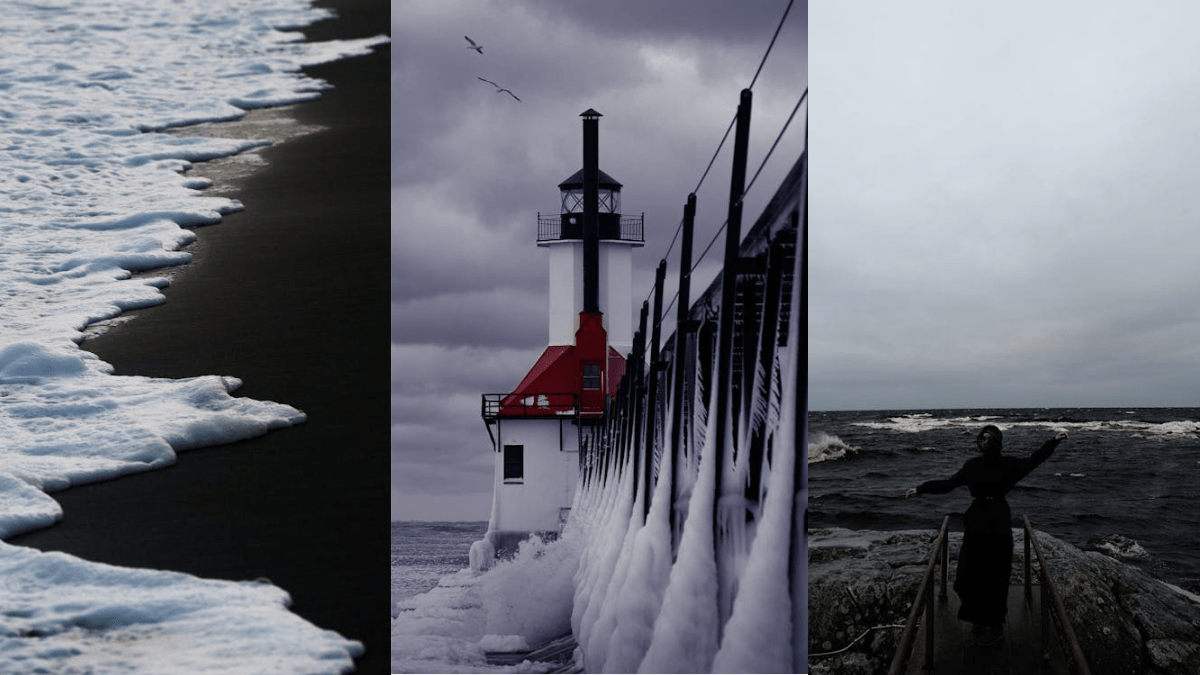
There are many mysteries that lie beneath the water, and a man who briefly worked as a lightkeeper in Lake Michigan just encountered one of them on the surface. Nick’s grandfather, who worked as a temporary assistant in the South Manitou Island Lighthouse, finally came forward about the haunting events that took place 53 years ago. This would be the last story he’d tell before his death.
Ashlee (@ashleeinc) shared the unsettling story on TikTok. According to the submission she received from Nick, his grandfather was not known to tell lies. Upon telling the story, Nick’s grandfather claimed that when he quit the lighthouse service, in the same year, Lake Michigan froze black instead of white.
Nick’s grandfather worked at a time where radar and other modern navigation systems became reliable. Thus, lighthouse keepers were essential in guiding ships and sailors to shore.
“You know, people forget how dangerous Lake Michigan truly is. Storms and water don’t behave like a normal lake there,” the dying man told his grandson. Lake Michigan may look serene, but it’s home to an estimate of 600 to 1,500 shipwrecks. Stormwaves can rise up to 20 feet in height, easily capsizing boats.
A sailor’s superstition
Because the lake has claimed many lives, old sailors believe that it is conscious. One superstition about the lake is that if it wants something, it will keep it.
Nick’s grandfather believes the superstition, too. When he was a 19-year-old in 1934, he was slated to replace the former assistant lighthouse keeper. Officially, the man was said to have disappeared after trying to retrieve a buoy line. But the young lighthouse keeper was told that the missing man was hearing singing for weeks before he vanished. He laughed at the story because back then, he wasn’t superstitious.
Then, winter came—it was so quiet at that time that they would hear the ice crack during their shift. The young lighthouse keeper worked with his senior, Earnest Hester, who was documented in the service logs. On the first night of the shift, Hester told him about the rules in the lighthouse.
Strangely, Earnest told him never to open the door of the lighthouse if he hears knocking after midnight. But the older man added, saying that if he saw a woman on the shoreline, he should leave her there.
Earnest was firm about the warning, asking him, “Do you understand me, boy?” The younger man agreed but didn’t take this warning seriously.
A strange woman lost in a snowstorm
It was unexpectedly stormy on February 2, 1934, and the lake vanished under ice and slate.
By midnight, they heard someone pounding on the lighthouse door. Earnest went pale and warned the younger lighthouse keeper not to open the door. But then, they heard the voice of a woman, desperately pleading for entry into the lighthouse.
Earnest said, “That isn’t a woman.” But the younger lightkeeper believed that he was being unreasonably superstitious. Against all advice, he opened the door. There was a thin, young woman who was wearing a white dress. Despite the frigid weather, she wasn’t wearing a coat. The young lightkeeper carried the woman near the fireplace.
He immediately noticed that there were no footprints in the snow but paid no mind to it. He simply thought that her tracks were immediately covered by the storm.
Earnest told his young assistant to send the woman back, but the latter refused. To him, this woman probably washed up from the shores or came from a shipwreck. Refusing to heed the advice, Earnest decided to hole up in his room and wouldn’t come out until after dawn.
Not a superstition after all
The woman eventually regained a healthy color. She asked him, “Did you call me?” The lightkeeper dismissed this as delirium and answered no.
But she told him, “You will.”
Sometime before dawn, he heard singing from the direction of the lake. He assumed that there were more survivors that washed up on the shore. Instead, he saw dozens of figures moving across the ice. Although they looked like women, they looked as though they were gliding through the snow. All of them had long, black hair, much like the woman who is currently in the lighthouse.
He thought that the figures must be seals. But that wouldn’t be possible, because there are no seals in Lake Michigan. As they got nearer, he reverted to his initial thought—that these were women.
Then, all of them began singing on the same note. The tower’s glass started vibrating along with the tower. Downstairs, the woman he rescued started speaking a language unfamiliar to him. He saw that she was standing by the door, with water pooling below her even though she dried up hours ago.
Earnest was already out of his room, and he was praying over the woman with a Bible. It didn’t seem to affect the woman, who then turned and smiled at the young lightkeeper. He saw that she had small, sharp teeth—too many to be human.
“Are you going to come with me?” She asked him. Instead of responding, the young lightkeeper and Earnest decided to make a bolt for the lighthouse lantern. When they destroyed it with a hot poker, all the singing stopped. Then, they heard the front door open. When they reached the bottom of the lighthouse, the woman was gone, and the storm had ended. All that remained was a trail—as if something had been dragged outside.
Are they mermaids?
Nick’s grandfather would resign that morning. His grandmother also told Nick that her husband refuses to eat fish from Lake Michigan. What adds a layer of mystery about the story is that the logs for the night of that winter are missing.
TikTok speculated that the seal-like women are most probably selkies. These are creatures from Norse myth who can shapeshift between seal and human.
But Nick asked his grandfather if he thought the women were mermaids anyway. He replied, “No. I think they’re what the lake makes from the people it decides it wants to keep.”
(featured images: Diego Giron, Mike Norris, Ekaterina Astakhova)
Have a tip we should know? [email protected]
Follow The Mary Sue:
