


How Girls Like Girls Uses Music and First Love to Make the Early 2000s Feel Timeless
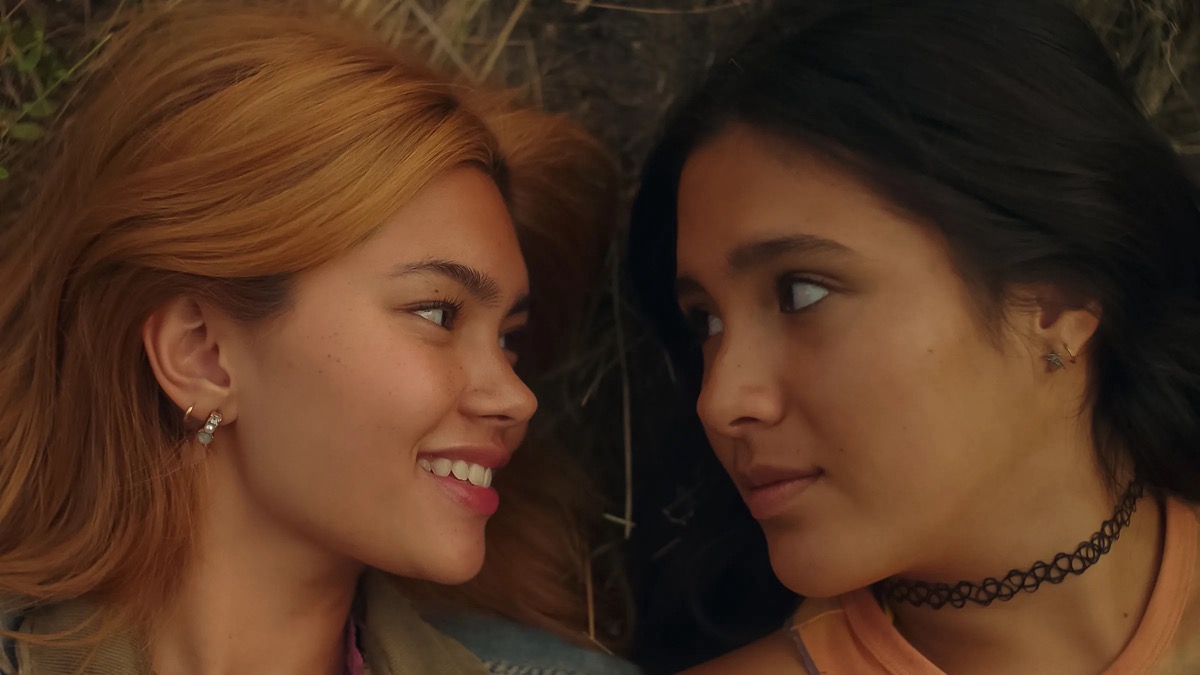
When audiences experience Girls Like Girls, they will undoubtedly notice its early-2000s aesthetic. From AIM messages to indie rock needle drops and lived-in fashion, the film captures a specific moment in time. But according to composer Jessica Rose Weiss and star Maya da Costa, recreating 2006 was never the real goal.
In a recent interview with Rachel Leishman, both artists described approaching the film from different creative perspectives while arriving at the same destination: capturing the emotional experience of first love.
Music That Serves the Story
For Weiss, that meant resisting the temptation to build a score around nostalgia. “My primary focus is always storytelling first and foremost,” she says. “Even though it takes place in a certain time… I was really trying to figure out strong themes for the characters and for the film.”
Instead of filling the score with sounds that immediately evoke the early 2000s, Weiss focused on creating an emotional palette that could support the romance at the heart of the story. “It’s a love story,” she explains. “So really it was about a palette that was cohesive and felt like it sounds and feels like a love story.”
That mindset shaped every aspect of the score. Weiss blended piano, strings, acoustic guitar, and synth textures while even incorporating Haley Kiyoko’s own voice into the music. After recording Kiyoko vocalizing in the studio, Weiss manipulated those recordings into atmospheric layers that sometimes disappear beneath the orchestration.
“Sometimes you actually hear her singing ‘oohs’ and ‘aahs,'” Weiss says. “Sometimes you don’t because I’ve masked it and manipulated it so it works as an underlayer.” The collaboration extended beyond those recordings. Because Kiyoko is an accomplished musician herself, Weiss says they were able to communicate creatively in a way that isn’t always possible on film projects.
“She would come to my studio a lot,” Weiss recalls. “Because she’s a great musician, she’d be like, ‘Can we try a different piano sound?’ or ‘Can you mute that percussion thing?’ It was collaborative, and it made the process that much easier.”
That restraint became one of Weiss’ guiding principles throughout the score. While she jokes that romantic comedies deserve the title of “not my first romcom,” she also argues they’re among the most difficult genres to compose for.
“You don’t want to put a hat on a hat,” she says. Rather than telling audiences what to feel, the music should quietly support the story that’s already unfolding on screen.
Finding First Love Through Coley
That same mindset of subtlety carried into Maya da Costa’s performance as Coley. During the conversation, Leishman admitted she immediately viewed Coley as “too cool” for the small town where she lives. Da Costa couldn’t help but laugh.
“I took it as she’s dressing awkward as hell,” she says. “Coley does not see herself as cool.” Instead of viewing Coley’s wardrobe as effortlessly stylish, da Costa imagined an entirely different backstory. She pictured a teenager wearing clothes her mother had bought years earlier because no one had paid much attention to replacing them.
“It looks cool and vintage to someone else,” she explains, “but to her, she just feels awkward as hell.” That perspective became central to her understanding of the character. While audiences may see confidence, Coley experiences insecurity. This being a large contrast that makes her first love with Sonia feel all the more authentic.
Da Costa believes the romance works because it grows out of friendship rather than replacing it. “Relationships are usually – and hopefully – based off of friendship,” she says. “At its core… there’s love.” The difference, she explains, comes with the overwhelming sensations that accompany first love.
“It feels like everything is going in slow motion,” she says. “You feel the hairs on the back of your neck prick up. You feel butterflies in your stomach.” Because Coley rarely verbalizes those emotions, da Costa focused on expressing them physically. “She rather just feels it and internalizes it.”
Why Girls Like Girls Resonates Beyond Its Time Period
Although Girls Like Girls is firmly rooted in the mid-2000s, da Costa found that many of those experiences still translate today. While AIM messaging may have been replaced by newer platforms, she sees similar anxieties in modern communication.
“I guess Snapchat is kind of similar in the way that you can tell when they’re active or not,” she says with a laugh. “Oh my God, do I snap this person or not?” Watching the completed film also gave her a new appreciation for how Weiss’ score and Kiyoko’s carefully selected soundtrack work together.
“We didn’t know a lot of what other songs were going to be put in the movie,” da Costa says. “Watching it now… the way Haley was able to blend and mix and match the scenes perfectly to the type of score she chose was so rewarding.”
For her, music doesn’t simply accompany the story, it amplifies it. “They’re two pieces of media, two pieces of art, that can convey so much emotion,” she says. “Putting them together is like, boom, double.”
As different as their jobs were, Weiss and da Costa ultimately describe the same creative objective. One built the emotional landscape through music. The other inhabited it through performance.
Neither was trying to recreate the early 2000s for nostalgia’s sake. Instead, they wanted audiences to reconnect with something much more universal. The shared goal of bringing uncertainty, excitement, vulnerability, and quiet confidence that make first love unforgettable to the screen.
While Girls Like Girls wears its early-2000s influences proudly, both Weiss and da Costa approached the film with a different priority. Rather than recreating an era, they focused on capturing the exhilaration, uncertainty, and vulnerability of first love. All of which are feelings that resonate no matter when the story takes place.
(feature image: Focus Features)
Have a tip we should know? [email protected]
Follow The Mary Sue:
