


Donald Trump proves he blurts out imaginary numbers to boast about drug prices, claims ‘you could say whatever you want’
Yes, right.
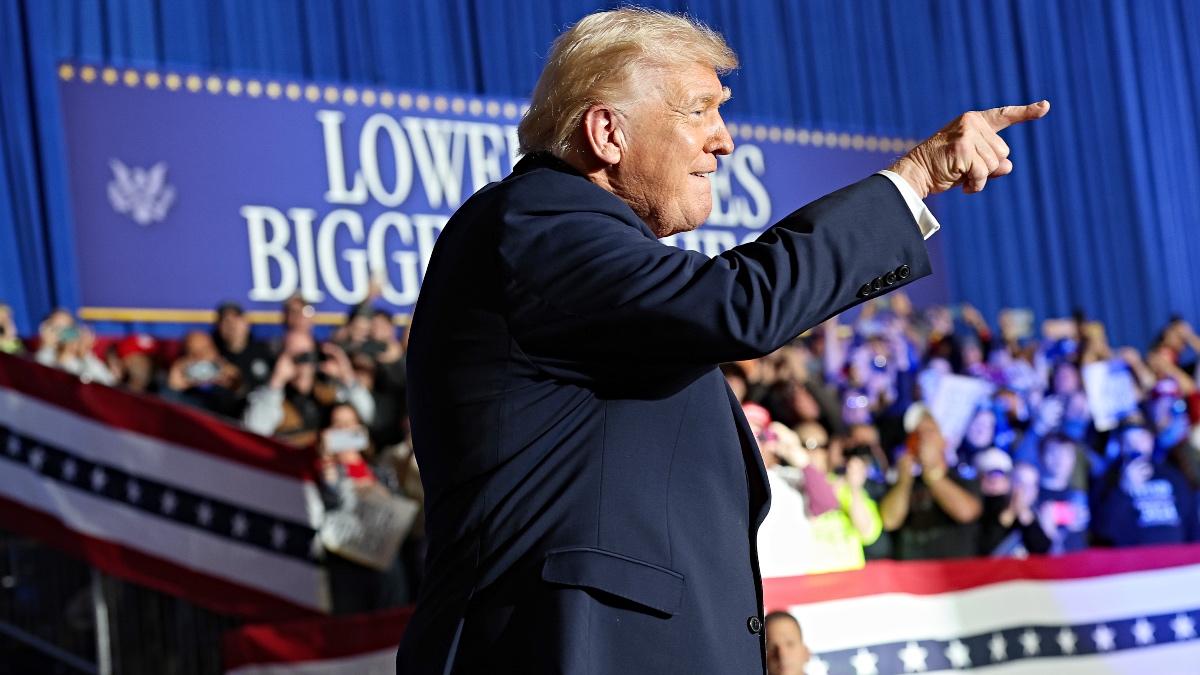
Roughly 20 minutes into Donald Trump’s Iowa speech on Jan. 27, he revived one of his favorite policy claims. According to the president, he alone cracked the code on lowering drug prices through “Most Favored Nation” pricing. But right after, Trump gave a live demonstration of how he treats numbers as improv props.
Trump claimed his administration had forced pharmaceutical companies and foreign governments to agree to match the lowest drug prices in the world. He described a hypothetical pill that costs $10 in London and $130 in Des Moines, insisting his policy would drop the U.S. price to $20. He called it “the biggest price reduction of prescription drugs in history” and said he was “very proud of it.”
But the factual problem begins immediately. While Trump has repeatedly touted “Most Favored Nation” pricing, it has never functioned as a universal system that forces drugmakers to sell at the global lowest prices. Past versions of the policy were limited, challenged in court, or applied narrowly to certain Medicare drugs. Even current iterations rely heavily on voluntary agreements and negotiations, not blanket global compliance. (via Truveris)
But Trump didn’t stop at overstating policy impact. He moved directly into numerical free-fall. “I can’t believe it,” he said, complaining about media coverage. Then, he went all in on boasting imaginary drug price reduction numbers:
“If a Democrat got half a point down… This is like hundreds depending on where you want to calculate it. You could say it is an 80% reduction or you could say it is a 1000% reduction. You can say whatever you want.”
That line wasn’t a misstatement. It was a confession. An 80% reduction is mathematically possible if a drug drops from $100 to $20. But a “1000% reduction,” is not a thing, no matter how you calculate it. Prices cannot fall by more than 100% without becoming negative. Trump wasn’t just exaggerating, he was openly admitting that the numbers are interchangeable, subjective, and untethered from reality.
And this wasn’t accidental. Trump regularly uses extreme, flexible figures rather than accurate data to signal dominance. The purpose isn’t to inform listeners how drug pricing works; it’s to overwhelm scrutiny by flooding the conversation with superlatives. And when he’s challenged, the fallback is always the same: critics are “fake news.”
His Iowa remarks also glossed over key realities the speech never addressed. Even as his administration announced drug pricing deals, multiple pharmaceutical companies raised list prices at the start of 2026. Any real consumer savings depend on insurance structures, pharmacy benefit managers, and eligibility. And Trump mentioned exactly none of them.
Instead, he framed the story as a personal conquest. According to him, other presidents “didn’t try very hard.” But he threatened tariffs and foreign countries suddenly agreed. And it doesn’t end there. The media anyway buried his success story while Democrats would’ve been praised for “half a point.”
Yet, the most revealing moment wasn’t the boast itself. It was Trump’s casual admission that the scale of his success depends on “where you want to calculate it.” In other words: pick the number that sounds best. Eighty percent. A thousand percent. Whatever sells.
Have a tip we should know? [email protected]
Follow The Mary Sue:
