


Delcy Rodriguez, who? Donald Trump couldn’t resist declaring himself the real ‘in charge’ of Venezuela after overthrowing Maduro
He's using imperial language out loud now.

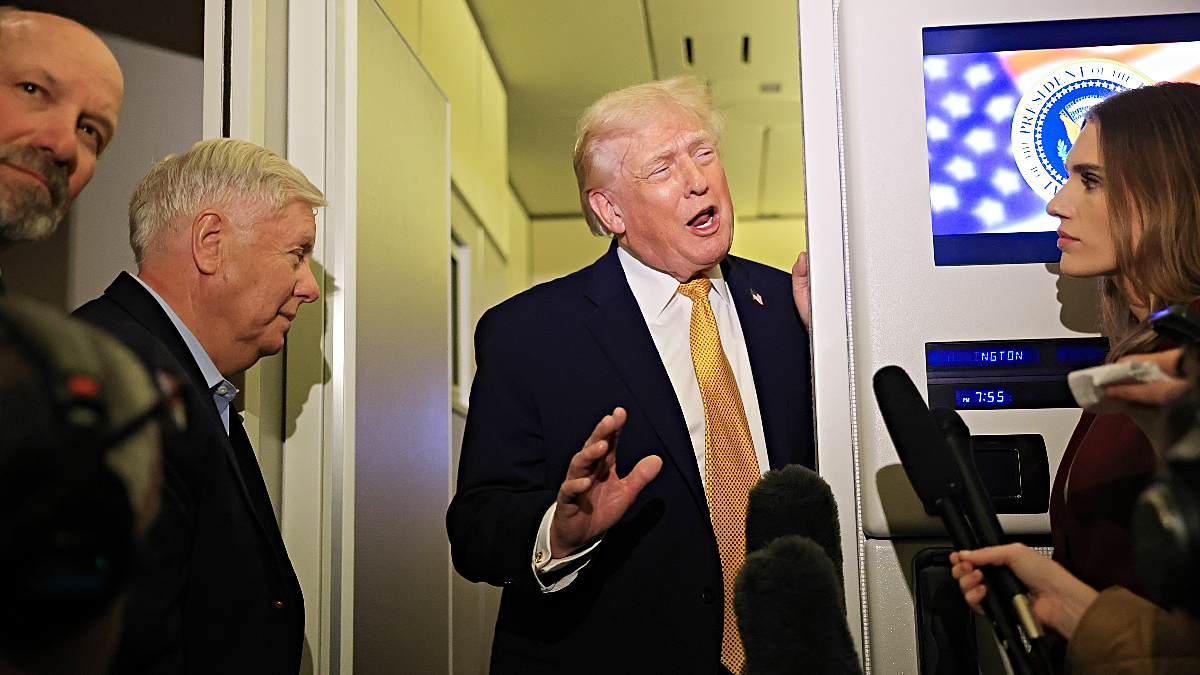
After the U.S. strikes on Venezuela and the capture of Nicolas Maduro, a big question mark hung over the country’s future. Naturally, the press asked President Donald Trump about the new leadership order in Venezuela. His answer? A shot-off version of “I’m the new king”: We’re in charge.
After a global military action, leaders usually practice restraint with careful language and deference to process. At the very least, they acknowledge that international law exists somewhere in the background. But Trump chose none of that. Aboard Air Force One on January 4, reporters asked Trump, “Who’s in charge of Venezuela right now? You would think he probably named the newly sworn-in interim president, Delcy Rodriguez, like a normal man. But he didn’t.
Trump did not say her name or confirm contact with her. Instead, he paused and teased controversy, saying, “Don’t ask me who’s in charge. Because I’ll give you an answer, and it’ll be very controversial.” And the very next moment, he delivered the line he clearly enjoyed most. “We’re in charge.” Not “supporting,” “working with,” “recognizing,” or other cooperative terms. In charge. And he said that twice just to make sure it was loud and clear to everyone.
The reporters also asked him if he had spoken to Rodriguez, and Trump admitted he had not. “No, I haven’t, but other people have,” he said. When asked the obvious follow-up question, would he speak to her? he replied, “At the right time.” So, to recap, the U.S. removed a foreign head of State, and an interim president was sworn in. Next, Trump never spoke to her, but has nonetheless declared himself in charge of the country. Are we living in imperial times?
The President’s leaving Delcy Rodriguez out of his answer is revealing. Naming her would have required him to acknowledge that Venezuela is supposed to have its own leadership, even in transition. Instead, Trump positioned himself as the authority above it all, hovering over a foreign nation of 28 million people. And don’t ask if any of those millions of people agreed to this.
The arrogance and casualness of Trump claiming “We’re in charge” of a nation he just sacked is striking. In a normal setup, officials avoid phrases that make them sound like colonial administration after a global conflict. Even when they exert overwhelming influence, presidents usually hide behind euphemisms like stabilization, assistance, partnership, and democratic transition. But Trump skipped all of that.
He offered no qualifiers, timeline, or explanation of what “We’re in charge” means legally or diplomatically. He simply asserted his ownership and went about his usual song of praises for himself.
Have a tip we should know? [email protected]
