


Mom Reveals a Hospital Wants $500K Before They Start Her Kid’s Chemo. She Explains What She’s Doing to Expedite Insurance at Ronald McDonald House
A wake-up call.
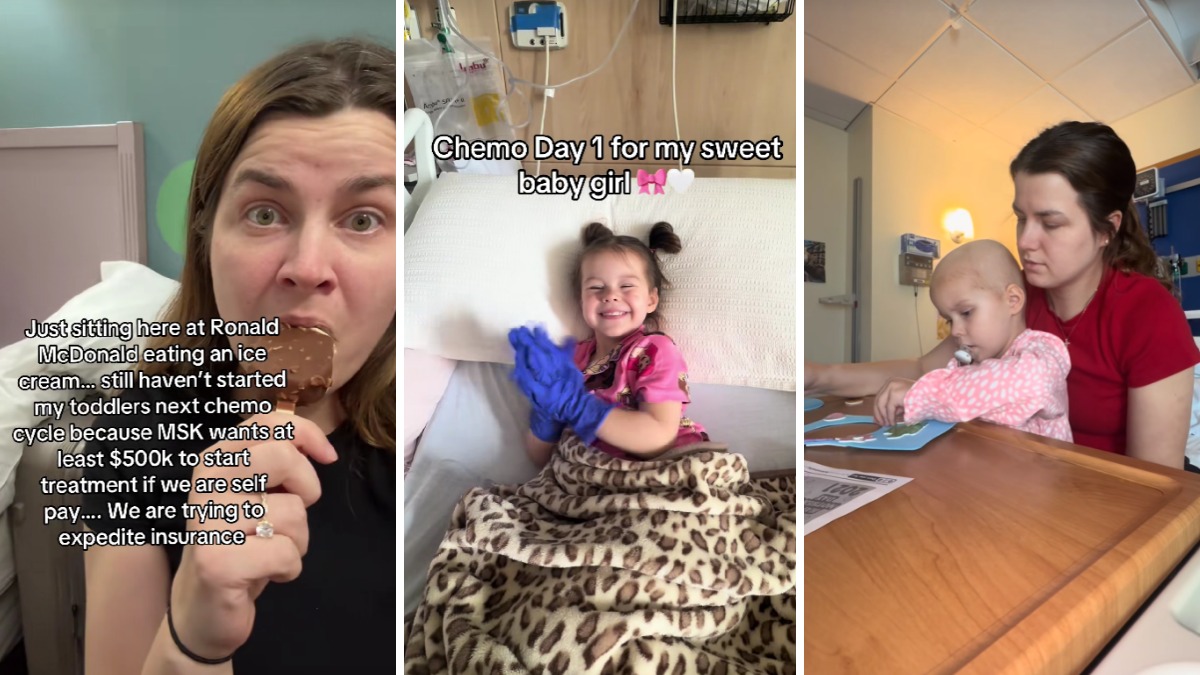
A young mom just revealed that a hospital is demanding half a million dollars upfront before starting her toddler’s next round of chemotherapy. Elena, @elena.headrick on TikTok, posted a video from Ronald McDonald House with a heartbreaking update. She’s sitting there eating ice cream while her daughter Everlee waits for treatment because the hospital won’t begin chemo until they see at least $500,000 in self-pay funds.
In the caption, she asks the obvious question, “Who in the heck has at least 500k laying around?” This isn’t just a financial nightmare, it’s a life-or-death delay for a child battling Stage 4 metastatic neuroblastoma. Elena’s videos document the raw reality of navigating childhood cancer in a country where healthcare costs can bankrupt families overnight. She’s racing against time to get insurance to cover the bills so treatment can finally start.
The video has already sparked an outpouring of support, with viewers sending prayers and sharing resources, but the core issue remains. Families like Elena’s are forced to choose between financial ruin and life-saving care.
The situation is even more infuriating when you realize how common this struggle is
A 2025 study led by Dana-Farber Cancer Institute found that one in three families dealing with childhood leukemia ends up in serious financial hardship during treatment. That’s not just a statistic. By the time chemotherapy wraps up, about a third of parents report struggling to afford food, rent, or utilities.
Another third experience catastrophic income loss, losing at least 25% of their household earnings because they’ve had to miss work to care for their child. Even families who weren’t struggling before the diagnosis often find themselves in dire straits by the end of treatment.
Kira Bona, a pediatric oncologist at Dana-Farber, said. “For many families whose child is diagnosed with cancer, that cancer diagnosis may actually not be the hardest thing they’re facing.” The study, which tracked families over two years, found that one in four families who weren’t facing hardship at diagnosis developed severe financial struggles by the end of treatment.
The study also revealed that financial hardship isn’t distributed evenly
Non-Hispanic Black families, single-parent households, non-English-speaking families, and those with lower incomes are hit the hardest. This isn’t just about money, it’s about equity. If you’re already vulnerable, a cancer diagnosis can push you over the edge.
The research team embedded questions about food, housing, and utility insecurity directly into their leukemia trial, making it the first pediatric oncology study to track these real-world struggles over time. Almost 90% of parents in the trial participated, showing just how critical this issue is. By six months into treatment, one in five families had developed a new unmet basic need or lost a significant chunk of their income.
By two years, roughly one in three faced food, housing, or utility insecurity. These aren’t abstract problems, they’re daily realities. Parents are choosing between paying for groceries or keeping the lights on, all while their child fights for their life. The study’s findings were presented at the American Society for Hematology Annual Meeting, and they should be a wake-up call for the entire healthcare system.
Dana-Farber is already testing solutions
Their RISE program provides temporary cash support during the first six months of chemotherapy to help families stabilize. The next trial will test whether this kind of support can reduce financial toxicity and even improve outcomes, like reducing the number of days a child spends in the hospital.
Dr. Bona is optimistic. “If we can figure out how to cure childhood cancer, we can absolutely figure out how to address poverty caused by a child’s cancer treatment,” she said. The goal isn’t just to save lives, it’s to ensure those lives are stable and secure after treatment ends.
Elena’s story is a perfect example of why these programs are so necessary. She’s not just dealing with the emotional weight of her daughter’s diagnosis, she’s also fighting a bureaucratic and financial battle just to get the care Everlee needs. The healthcare system is supposed to help, not hinder, but right now, it’s doing both. Families are being forced to crowdfund, beg for donations, and pray for Medicaid to come through just to keep their children alive.
The broader conversation about healthcare affordability in America often feels abstract, but stories like Elena’s make it painfully real. When a hospital demands half a million dollars upfront, it’s a barrier to treatment. And when one in three families ends up in financial ruin because of childhood cancer, it’s a systemic failure.
Elena’s advocacy is turning her personal pain into a wider conversation
Her videos mix vulnerability with calls for change, using hashtags like #childhoodcancer and #neuroblastoma to connect with others. The support she’s received shows how many people are affected by this issue, whether directly or indirectly. But support alone isn’t enough. We need systemic changes.
The healthcare system should be a safety net, not a minefield of financial obstacles. Until that changes, families like Elena’s will keep fighting battles on two fronts, one for their child’s health and one for their survival.
(Featured images: Elena @elena.headrick on TikTok)
Have a tip we should know? [email protected]
Follow The Mary Sue:
