


Ohio Woman Warns To Check Toothpaste for ‘Xylitol’. She Slams Companies for Catering to Men: ‘Women’s Saliva Is 5-6 Times More Acidic’
Gender bias in toothpaste?!
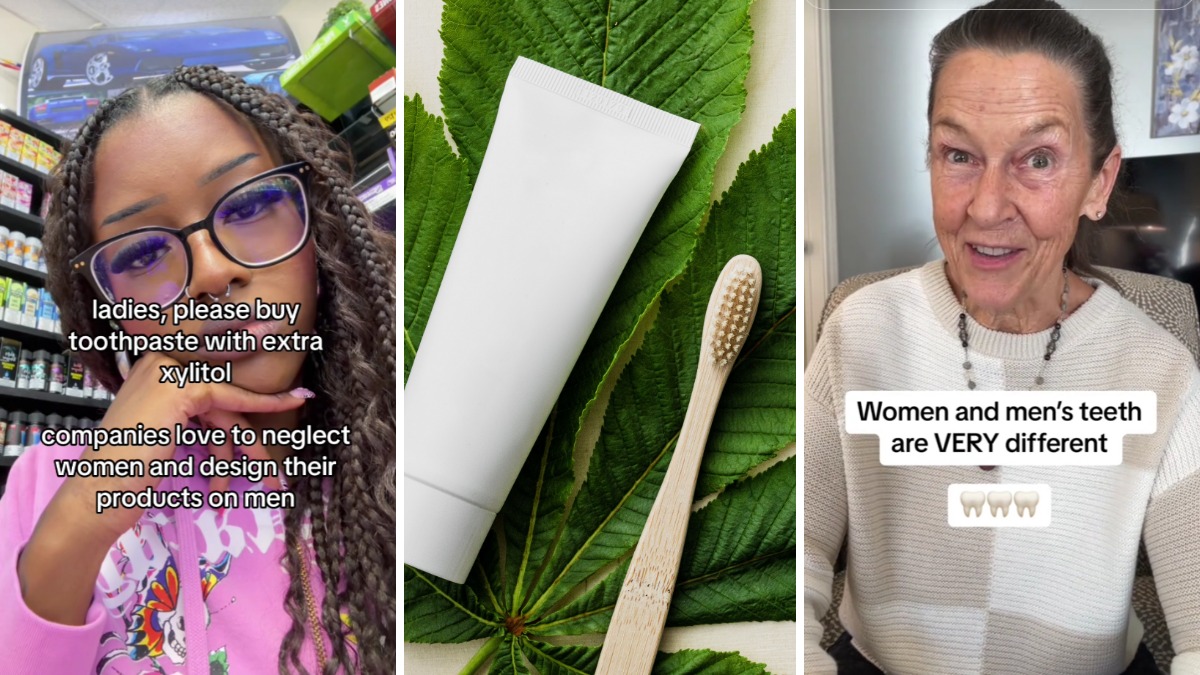
A TikTok video by Mariah Sampsonn, who goes by @scoochthatcooch, has blown up with a simple but eye-opening message. In an eight-second clip, she drops a fact that’s got nearly 1.7 million views and counting. Women’s saliva is five to six times more acidic than men’s, and she’s calling out toothpaste companies for not doing enough about it. The video has sparked a wave of comments from women who feel like their dental struggles have been ignored for way too long.
Sampson’s claim isn’t random. A 2015 paper in the European Journal of Oral Sciences and research by Li-Hui et al. in 2016 found that women tend to have lower salivary pH and less buffering capacity than men. Hormones, saliva flow rates, and basic physiology all play a role. That means women are more likely to deal with enamel erosion, cavities, and gum issues, even if they brush and floss like champs. It’s a frustrating reality.
Sampsonn’s video also brings attention back to Dr. Ellie Phillips, a dentist who spoke about this exact issue in 2024. According to Fox News, Phillips pointed out that women’s saliva often measures between 5.5 and 6 pH, while a neutral pH is 7. That might not sound like a huge difference, but in the world of oral health, it’s a game-changer.
Older dental research has been skewed toward men
Phillips has been vocal about how older dental research was skewed toward men, leaving women’s unique needs out of the equation. She’s not alone in this fight, either. Dr. Dominik Nischwitz, a specialist in biological dentistry, confirmed that studies show women often have significantly lower pH levels in their mouths. That acidity, combined with a lower saliva flow rate, can lead to demineralized enamel and a higher risk of tooth decay.
Phillips’ own journey with this issue started back in dental school in the 1960s, when she was taught that everyone’s saliva had a pH of 7. It wasn’t until she started testing people herself that she realized women’s saliva was often way more acidic. She’s spent decades trying to get the dental industry to pay attention, and thanks to TikTok, her message is finally reaching a wider audience.
It’s wild to think that something as basic as saliva could be so different between men and women, but the science doesn’t lie. Women’s mouths are just more acidic, and that’s a problem when it comes to keeping teeth healthy. So, what’s the solution? Phillips has a few ideas, and one of them involves xylitol. That’s the sugar alcohol she’s been recommending to her patients for years. She suggests taking a tiny 1-gram dose of xylitol, like a Zellie’s dental mint, after meals.
The xylitol stimulates saliva flow, which brings in minerals and reparative cells that help protect your teeth and gums. The catch? You’ve got to wait an hour after taking it before eating or drinking anything else. It’s a small step, but Phillips swears by it. Dr. Brandon Mack, a cosmetic dentist, agrees that xylitol is a solid tool. It doesn’t feed the acid-loving bacteria in your mouth, and it helps buffer pH when saliva flow is low.
But xylitol in toothpaste isn’t the only answer
Nischwitz says lifestyle changes matter just as much. Eating nutrient-rich foods and cutting out processed junk can make a big difference. He recommends focusing on key micronutrients like vitamins D3 and K2, magnesium, phosphorus, boron, and essential amino acids to help remineralize teeth. And if you’re still using harsh, chemical mouthwashes, it might be time to switch things up since they can mess with your oral microbiome and make your saliva even more acidic.
Phillips has been pushing for more research on women’s oral health for years, and she’s not backing down. She points out that hormonal fluctuations, menstrual cycles, and other biological nuances make women’s dental needs different from men’s. And it’s not just about the women themselves.
A mother’s oral health during pregnancy can directly impact her baby’s dental health. Phillips says the microbiome that develops before the age of 4 contributes to up to 40% of the mouth bacteria we have as adults. If we can help moms create a healthier mouth for themselves, we might actually start making a dent in the global epidemic of dental disease.
It’s clear that dental health needs more gender-specific research
It’s crazy to think that more than half of Americans deal with dental issues that are probably preventable. But if we start paying attention to the differences between men’s and women’s oral health, we might finally see some real change. Phillips is calling for a shift in the dental industry, one that asks the right questions and expands research on gender differences to eliminate bias and come up with better effective oral care strategies for everyone.
And it’s about time. Women have been dealing with these issues for decades, and it’s only now, thanks to platforms like TikTok, that their voices are finally being heard.
If you’re a woman who’s struggled with dental problems despite taking good care of your teeth, you’re not alone. The issue might not be your habits – it could be your saliva. Checking your toothpaste for xylitol and making some small tweaks to your routine could make a big difference. And if you’re feeling frustrated, you’re in good company. The conversation is finally picking up pace.
(Featured images: scoochthatcooch on TikTok, www.kaboompics.com on Pexels, and Dr. Ellie Phillips on TikTok)
Have a tip we should know? [email protected]
Follow The Mary Sue:
