


The Supreme Court Just Dismantled a 91-Year-Old Guardrail, Handing Trump Total Control Over Once-Independent Federal Agencies
About turn.
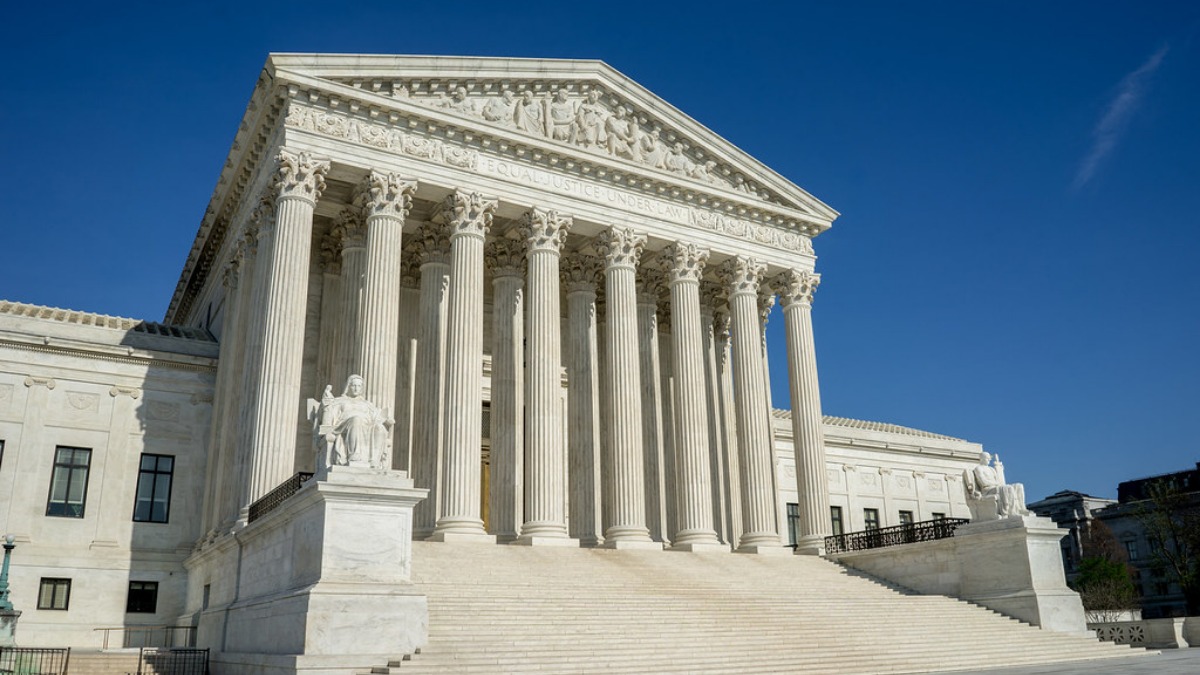
The Supreme Court just handed Donald Trump sweeping new authority over federal agencies that were designed to operate independently from the White House. According to NPR, in a 6-3 decision on June 25, 2026, the court overturned a 91-year-old precedent that had shielded commissioners of agencies like the Federal Trade Commission from being fired without cause.
The ruling means Trump can now remove members of these agencies at will, a move that effectively dismantles the bipartisan structure Congress built to keep them free from political interference. The case centered on Trump’s firing of FTC Commissioner Rebecca Kelly Slaughter in March 2025. Slaughter, a Democrat, was told her removal was due to her “continued service on the FTC” being “inconsistent with [the Trump] Administration’s priorities.”
No allegations of misconduct or neglect were made. A lower court initially ruled the firing unlawful, citing Humphrey’s Executor, a 1935 decision that barred presidents from firing FTC commissioners over ideological disagreements. That precedent had stood for nearly a century, ensuring that agencies like the FTC, the Equal Employment Opportunity Commission, and the Consumer Product Safety Commission could operate without fear of political retaliation.
Those protections have been dismissed as unconstitutional
Chief Justice John Roberts, writing for the majority, dismissed those protections as unconstitutional. “Although it is up to the Senate to decide whether to confirm those with whom the President would prefer to work, neither Congress nor the courts may saddle him with those with whom he cannot work,” Roberts wrote.
“Subordinates who exercise the President’s power are subject to removal by him. Then, and only then, can they remain accountable to the President, and the President to the people.” The decision effectively erases the distinction between purely executive agencies and those designed to be independent, arguing that all federal power ultimately flows from the president.
The three liberal justices dissented sharply. Justice Sonia Sotomayor called the ruling “grievously wrong.” She warned it gives the president “a power unknown even to the English Crown against which the Founders revolted.”
She argued the decision elevates the president above the other branches of government, turning the constitutional duty to “faithfully execute” the laws into a license to ignore them. “The Court today transforms that duty into a power to act in defiance of those very laws,” Sotomayor wrote.
This isn’t the first time the Supreme Court has chipped away at Humphrey’s Executor
During Trump’s first term, the court allowed him to fire the director of the Consumer Financial Protection Bureau, ruling that the agency’s single-director structure made it more susceptible to presidential control. At the time, Roberts suggested Humphrey’s only applied to multimember agencies like the FTC.
Now, the court has abandoned that distinction entirely. Roberts pointed to the FTC’s broad authority over antitrust enforcement, consumer protection, and economic regulation, arguing its work is “the very essence of ‘execution’ of the law.” If the FTC is executing the law, the logic goes, its leaders must answer to the president.
The practical consequences are immediate and far-reaching. The FTC, which oversees everything from big tech mergers to deceptive advertising, is now effectively an arm of the White House. Congress designed the agency to be bipartisan, with no more than three of its five commissioners from the same political party. That balance is already gone. After Trump fired two Democratic commissioners last year, the FTC is now entirely Republican.
With the court’s blessing, Trump can keep those seats vacant or fill them with loyalists, ensuring the agency reflects his priorities. The same logic applies to other independent agencies. The Equal Employment Opportunity Commission, which enforces workplace discrimination laws, and the Consumer Product Safety Commission, which keeps dangerous toys and products off the market, could soon face similar purges.
The ruling also raises questions about the future of the Federal Reserve
However, its independence got a temporary reprieve. In a separate 5-4 decision, the court allowed Federal Reserve Governor Lisa Cook to remain in her position while lower courts resolve a legal challenge to her appointment.
But the writing is on the wall. If the Fed’s governors are deemed to exercise executive power, they too could become at-will employees of the president. That would mark a seismic shift for an institution that has long prided itself on making monetary policy free from political pressure.
For critics, the stakes couldn’t be higher. Slaughter warned last fall that independent agencies exist to make decisions “on the merits, about the facts, and about protecting the interests of the American people.” Without those protections, she argued, agencies become tools of political agendas rather than impartial regulators.
Attorney James M. Burnham, who has worked in both Trump administrations, argued that independent agencies were never truly independent to begin with. “I don’t think there is such a thing as an independent agency because everything has to be in one of the three branches of government,” he said.
Roberts echoed that sentiment in his majority opinion
“Despite what Humphrey’s may say, independent agencies are not ‘independent’ in the sense that they are free of the President and thus responsive ‘only to the people of the United States,'” Roberts wrote. The message is clear: in the eyes of the Supreme Court’s conservative majority, the president’s authority over the executive branch is nearly absolute. Congress can create agencies, but it can’t shield them from the White House’s political whims.
For everyday Americans, the fallout could be significant. The FTC has been a key player in reining in big tech, cracking down on deceptive business practices, and protecting consumers from fraud. If the agency becomes a partisan weapon, those efforts could stall.
The same goes for the EEOC, which handles workplace discrimination cases, or the Consumer Product Safety Commission, which recalls dangerous products. These agencies were designed to operate above the political fray. Now, they’re squarely in the president’s crosshairs.
(Featured image: John Brighenti)
Have a tip we should know? [email protected]
Follow The Mary Sue:
