


The Supreme Court just gutted the Voting Rights Act and Louisiana’s Black voters are the first casualty
Punch to the gut.
The Supreme Court just delivered a crushing blow to the Voting Rights Act, and Louisiana’s Black voters are feeling the impact first. According to The Guardian, in a 6-3 decision split along partisan lines, the court effectively dismantled Section 2 of the landmark 1965 law, the last stronghold preventing racial discrimination in redistricting.
The ruling forces Louisiana to redraw its congressional map, but the damage goes far beyond one state. This decision gives lawmakers a green light to weaken the political power of Black and other minority voters, and some states may scramble to redraw districts before this year’s elections.
The court’s majority opinion, written by Justice Samuel Alito, argues that considering race in government decisions, even to prevent discrimination, is unconstitutional. “Compliance with section 2 thus could not justify the state’s use of race-based redistricting here,” Alito wrote. “The state’s attempt to satisfy the middle district’s ruling, although understandable, was an unconstitutional racial gerrymander.”
The ruling makes the path ahead more difficult
The decision doesn’t outright declare Section 2 unconstitutional, but it rewrites the rules for proving discrimination under the law, making it nearly impossible for plaintiffs to win future cases. Justice Elena Kagan, in a blistering dissent joined by Justices Sonia Sotomayor and Ketanji Brown Jackson, didn’t hold back. She called the ruling a “demolition of the Voting Rights Act” and warned that the court’s changes eviscerate the law.
“Today’s decision renders section 2 all but a dead letter,” Kagan wrote. “The decision here is about Louisiana’s district 6. But so too it is about Louisiana’s district 2. And so too it is about the many other districts, particularly in the south, that in the last half-century have given minority citizens, and particularly African Americans, a meaningful political voice. After today, those districts exist only on sufferance, and probably not for long.”
The case, Louisiana v. Callais, centered on how much lawmakers can consider race when redrawing districts to ensure Black voters have fair representation. The court’s new test for Section 2 cases is a minefield for plaintiffs. First, they must show a minority group is large and compact enough to form a majority in a district. But now, they can’t consider race when drawing a hypothetical alternative map.
They also have to ensure the map meets the state’s traditional districting criteria and partisan goals. That’s a problem in the South, where voting is highly racially polarized. If a state’s partisan goals clash with fair representation for Black voters, the law now sides with the state.
Kagan highlights the absurdity of the new standard
“Suppose the state asserted that it drew the lines to protect an incumbent, who just so happened to be favored by Black residents,” she wrote. “The possibilities are endless. And each would have the same result.” The court’s test also requires plaintiffs to prove intentional racial discrimination, a nearly impossible burden. Alito dismissed the ongoing effects of historical discrimination, writing that such evidence “is entitled to much less weight.”
The fallout from this decision is already rippling across the country. According to The Hill, Florida, which was expected to be the last state to redraw its maps this cycle, may now see even more aggressive gerrymandering. Gov. Ron DeSantis cited the Supreme Court’s ruling as he pushed for a new map that could give Republicans up to four additional House seats.
This could offset Democratic gains in Virginia, where voters just approved a new map that could net the party four more seats. Texas, California, and other states have already redrawn their maps in a high-stakes battle for House control, with Republicans currently poised to gain as many as nine seats from redistricting alone.
Democrats need just three more seats to flip the House, so every district counts
In Texas, Republicans secured five new GOP-favored seats after a mid-decade redistricting push. California Democrats countered with a map that could give them five more seats. Ohio Republicans squeezed two Democratic incumbents into vulnerable positions, while North Carolina’s GOP-drawn map targets a heavily Black district. Even in deep-red Utah, Democrats snagged a surprise pickup after a court-ordered redraw.
The Supreme Court’s decision reshapes the entire redistricting landscape. States that have already redrawn their maps may now revisit them, and those that haven’t could rush to do so before November. The ruling also emboldens lawmakers to prioritize partisan gains over fair representation, knowing the courts will be far less likely to intervene.
For Black voters in Louisiana and beyond, this decision is a gut punch. The districts that gave them a voice for decades are now on life support, and the Voting Rights Act’s last line of defense has been all but erased. This is a seismic shift in how voting rights are protected in America.
The court’s conservative majority has made it clear: race can’t be a factor in redistricting, even if the goal is to prevent discrimination. That’s a radical departure from the Voting Rights Act’s original intent, and the consequences will be felt for years to come. If you’re a voter in a state with a history of racial discrimination, this ruling just made it a lot harder to have your voice heard.
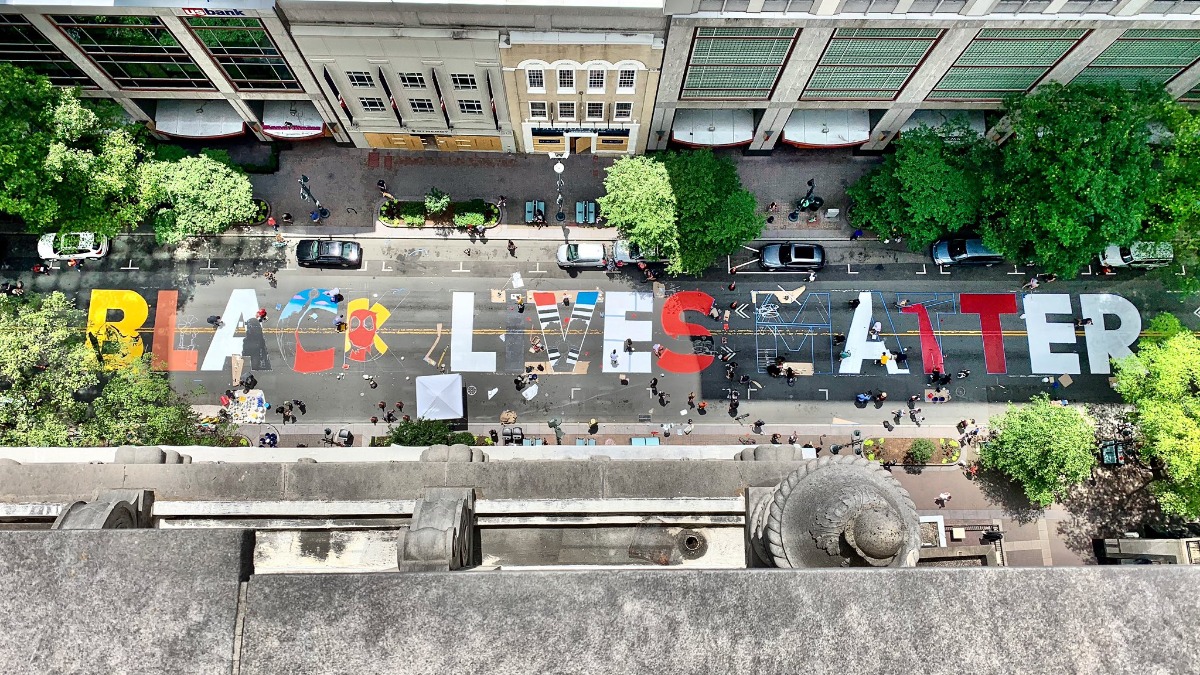
(Featured image: Office of Congresswoman Alma S. Adams)
Have a tip we should know? [email protected]
Follow The Mary Sue:
