


‘A weakness’: Canadian PM Carney unveils shocking plan to break free from the US
‘Hope isn’t a plan and nostalgia is not a strategy.’
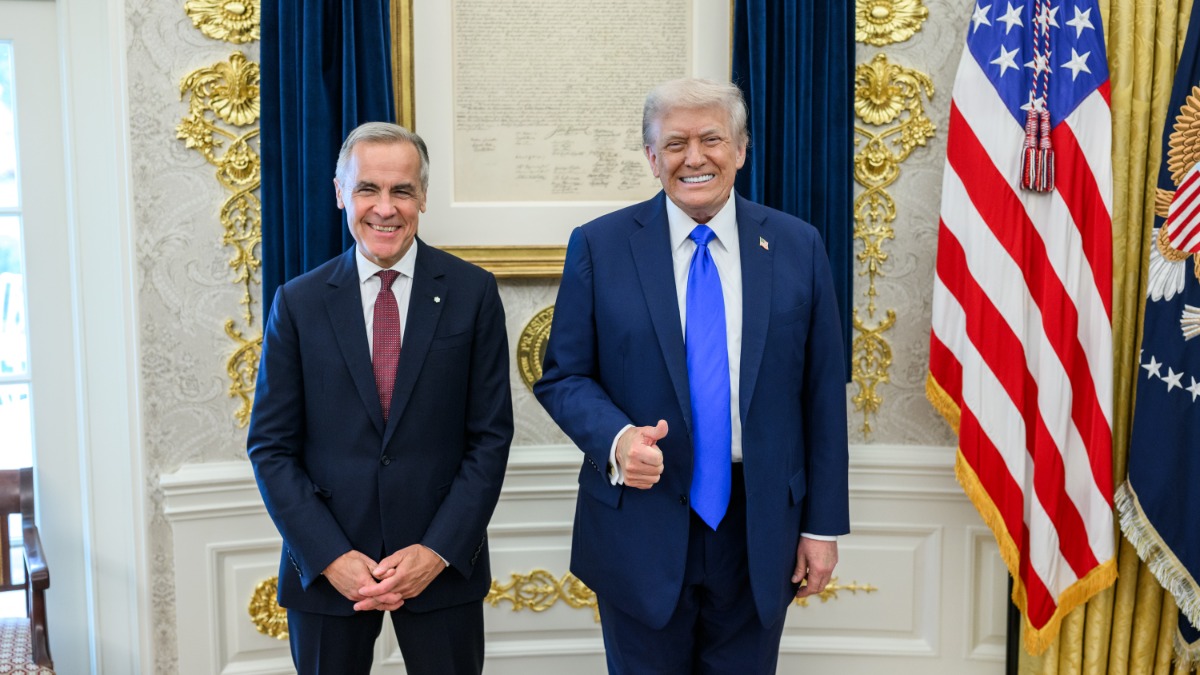
Canada’s Prime Minister just dropped a bombshell. He’s calling the country’s deep economic ties to the U.S. a “weakness” that needs fixing. In a 10-minute video address on April 20, 2026, Mark Carney laid out a plan to break free from America’s shadow, warning that relying too much on one partner is a risk Canada can’t afford anymore. The world is more divided, he said, and the U.S. has changed its approach to trade in ways that are hurting Canadian workers.
Now, Carney is pushing for new investments, trade deals, and a stronger domestic economy to reduce that dependence. According to The Guardian, Carney said U.S. tariffs have hit Canada’s auto and steel industries hard, and businesses are holding back on investments because of the “pall of uncertainty” hanging over everything. It’s not just about economics, either. Many Canadians are still fuming over comments suggesting Canada should become the 51st state.
In January at the World Economic Forum in Davos, he called out economic coercion by major powers against smaller countries, earning praise from some and a sharp rebuke from the U.S. “Canada lives because of the United States,” Trump shot back. “Remember that, Mark, the next time you make your statements.”
This time, though, there was no immediate response from the White House
Carney’s address came just days after his government secured a majority, and as the opposition Conservatives push him to deliver on a U.S. trade deal, a promise he made during last year’s election. But Carney isn’t waiting around.
A review of the North American Free Trade Agreement (NAFTA) is scheduled for July, and he’s already making moves to diversify Canada’s economy. His plan includes attracting new investments, doubling clean energy capacity, cutting trade barriers within Canada, and boosting defense spending. He’s also pushing to make housing more affordable – a major pain point for Canadians.
“We have to take care of ourselves because we can’t rely on one foreign partner,” Carney said. He added, “We can’t control the disruption coming from our neighbors. We can’t control our future on the hope it will suddenly stop. We can control what happens here. We can build a stronger country that can withstand disruptions from abroad.”
Carney is making it clear that hoping the U.S. will “return to normal” isn’t a strategy. “Hope isn’t a plan and nostalgia is not a strategy,” he said.
It’s a bold shift that could reshape Canada’s economy for decades
Canada has a long history of standing with the U.S. in conflicts, from Afghanistan to the two world wars. But Carney’s message is that the U.S. has changed, and Canada needs to change with it. “It’s about taking back control of our security, our borders, and our future,” Carney said. That means looking beyond the U.S. for trade, investment, and partnerships.
Carney’s focus on Arctic security is another big part of this strategy. Earlier this month, according to BNN Bloomberg, he reaffirmed Canada’s commitment to NATO, even as Trump has been slamming the alliance for not doing enough in its military campaign in Iran. Trump even took a shot at Greenland, calling it a “big, poorly run, piece of ice.” Greenland, which is part of Denmark, fired back, saying, “We are not some piece of ice.”
Carney didn’t directly respond to Trump’s Greenland jab, but he did highlight Canada’s recent military spending, which hit the NATO target of 2% of GDP. That number isn’t the point, though, he said. “What’s important, first and foremost, is protecting Canadians.” To do that, Canada is working more closely with NATO allies like the Nordic countries, the U.K., the Netherlands, and Germany to secure the Arctic. That’s critical, he said, “regardless of how NATO itself evolves.”
NATO’s future has been a hot topic in Washington of late
White House spokesperson Karoline Leavitt was recently asked about a joint statement from Carney and other NATO leaders supporting the reopening of the Strait of Hormuz, a key oil shipping route. Leavitt didn’t mince words. “I have a direct quote from the president of the United States on NATO,” she said.
“‘They were tested and they failed.’ And I would add it’s quite sad that NATO turned their backs on the American people over the course of the last six weeks when it’s the American people who have been funding their defense.”
Trump’s rhetoric has raised concerns about whether he could pull the U.S. out of NATO if he wins another term. Kerry Buck, a former Canadian ambassador to NATO, says it’s not that simple. Thanks to the 2024 National Defense Authorization Act, Trump would need congressional approval to withdraw from the treaty. “Most lawyers in the U.S. agree,” she said, that he can’t just drop out without the Senate or an act of Congress.
That doesn’t mean Trump’s words aren’t damaging, though
Buck pointed out that NATO’s strength comes from the understanding that member states will stand together in an attack. Trump’s criticisms, she said, are misguided because NATO as an organization wasn’t asked to join the U.S.-Israel strikes on Iran. Some member states chose not to get involved, but others, like the U.K., allowed the U.S. to use their bases for strikes.
Carney’s push to diversify Canada’s economy and strengthen its defenses isn’t just about reacting to Trump. It’s about preparing for a future where the U.S. might not be the reliable partner it once was. His message resonates beyond Canada’s borders.
(Featured image: White House)
Have a tip we should know? [email protected]
Follow The Mary Sue:
