


Sen. Cory Booker Points at Voters for Harris’ 2024 Presidential Campaign Loss
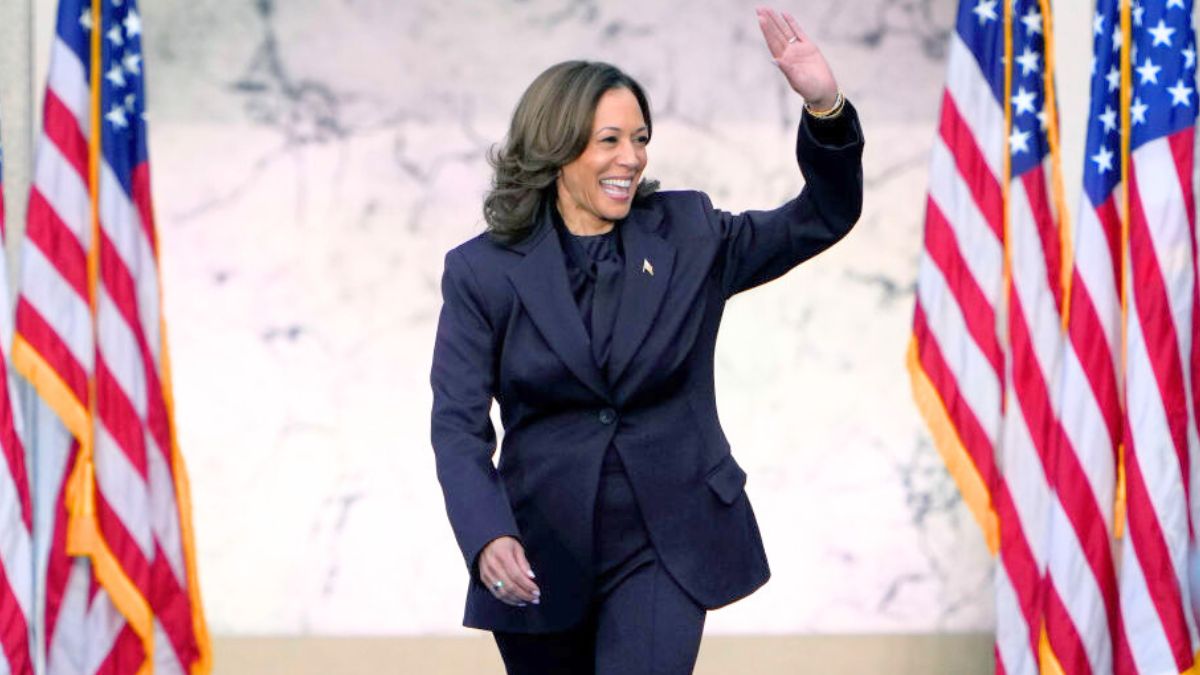
Sen. Cory Booker had a bone to pick with voters who chose against former Vice President Kamala Harris in the 2024 presidential election. He believes that a small number of disagreements should not have led voters to pick President Donald Trump.
“There were some people, not all people—not even most people. Some people said, ‘I don’t like her. I don’t agree with everything she says,'” Booker said about the polls on former Secretary of State Hillary Clinton when she ran for president. The senator from DC claims that the same scenario happened with Harris.
In his speech, Booker proceeded to point out that a demographic in the voter base may disagree with “ten things out of ninety” that Harris said. But because of those ten things, Harris lost the vote. He continued, “Well, you may disagree with her on ten percent of her views, but you let someone get in office who you disagree with on everything.”
Booker proceeded to blame those who didn’t vote for Harris for letting Trump win. He accused Trump of locking up children, gutting healthcare, curtailing workers’ rights, and dismantling the Department of Education.
Booker draws flak online over his speech
The clip of Booker went viral online, with several critics disagreeing with the senator.
Journalist Mehdi Hasan wrote on X, “Here’s Booker pushing a ‘vote blue no matter who’ argument while hoping we all forget that he (hypocritically) refused to endorse his own party’s New York mayoral candidate Zohran Mamdani.”
News of Booker evading endorsing Mamdani made headlines back then. Granted, not every member needs to speak on the race of another party mate. But Booker can’t be making calls for party solidarity when he refused to promote Mamdani, whose platforms are popular with the working class.
Another social media user weighed in, “The “we didn’t fail, the voters did” mentality has destroyed the Democratic Party.”
Because if the party has failed to win the last election—which it did—then it must mean that the messaging was not successful. Regardless of the truth or the facts, Trump’s campaign message won.
Democrats need to earn the votes of their constituents
But votes must be earned, they are not owed. For the Democratic Party’s candidate to prove themselves worthy of a vote, they can’t simply criticize their opponent in hopes that it will suffice to win. Former President Joe Biden has become an unpopular president by the last leg of his term, holding on to a 33% approval rating. This meant that distancing would have been a strategic choice for Harris, who, in hindsight, has failed to distinguish herself from her predecessor.
Many moderate and right-wing spaces often revive a clip of Harris during an interview with The View. Harris said that “there’s not a thing that comes to mind” when asked if she would have done something differently compared to Biden.
She proceeded to explain that she was already involved with other initiatives. Notably, she claimed to help in bringing down the cost of prescriptions. Perhaps the better phrasing would have been to highlight the latter half of her statement—because who wouldn’t want lower prices on prescription medication aside from pharmaceutical giants? But most concerning of all was Harris’ stance on Israel and Palestine.
Her failure to delineate from Biden on the matter has also been a central discussion during the 2024 presidential campaigns. Yet, it seems that the Democratic Party failed to address the issue.
Expecting historical demographics to cast their next vote for the same party is a grave underestimation of voters. The bottomline is, the next candidate for president—the challenger—has to stand out and court a wider group of people, including the home base. And in standing out, virtue signaling won’t be enough to win, either. The challenger needs to prove that they are committed to resolving common-ground issues that affect the day-to-day lives of Americans.
Have a tip we should know? [email protected]
Follow The Mary Sue:
