


Donald Trump wanted ‘America First’ but got ‘America Alone’ as Spain announces closer EU-China ties
It's all about strategy.
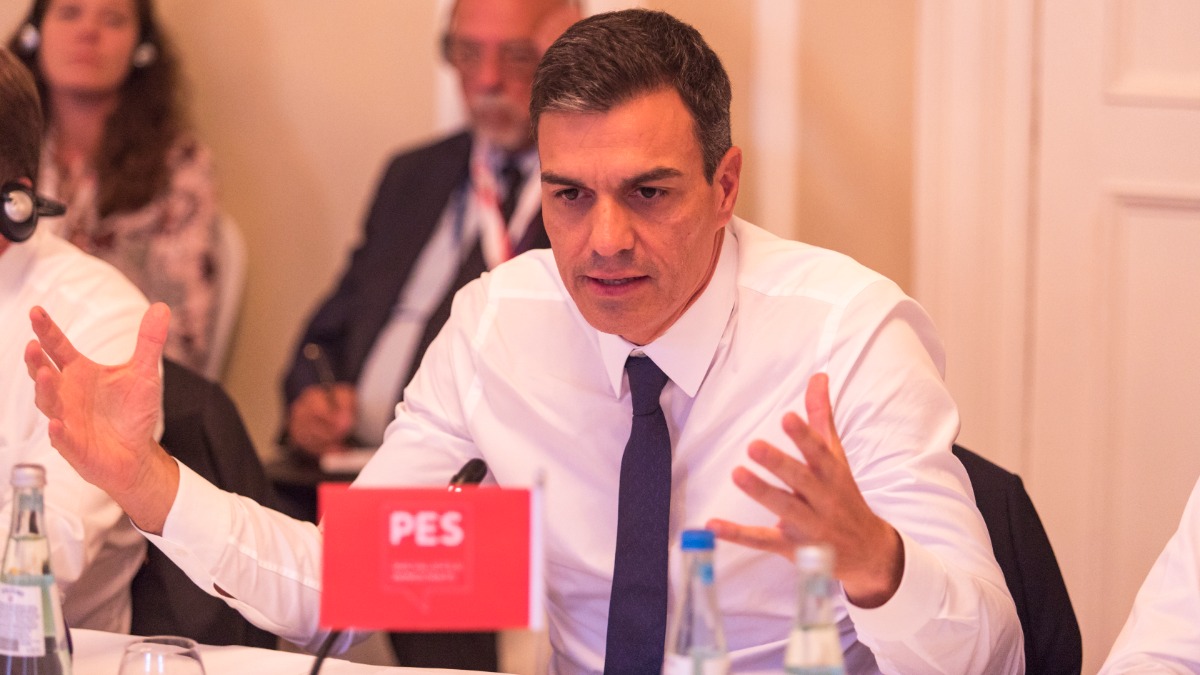
Donald Trump’s vision of America First is looking more like ‘America Alone’ after Spain just doubled down on its push for closer EU-China ties. During a high-profile meeting in Beijing on April 14, 2026, Chinese President Xi Jinping openly praised Spanish Prime Minister Pedro Sánchez as a key bridge between China and the European Union, committing to stronger relations with Europe while taking a clear shot at the U.S. leadership.
The move signals a growing rift between Washington and Madrid, with Spain positioning itself as a vocal opponent of Trump’s foreign policy and a champion of multilateralism — even if it means defying American pressure. Xi’s remarks at the Great Hall of the People were anything but subtle. He called for a “stronger bond between China and the European Union,” arguing that cooperation between the two powers would stabilize global peace and prosperity.
More pointedly, he praised Spain for acting “with moral rectitude” and standing “on the right side of history,” a not-so-veiled critique of Trump’s approach to international conflicts, per Politico. The Chinese leader also pledged to work with Sánchez to “reject the world’s return to the law of the jungle” and defend “genuine multilateralism,” language that directly contrasts with the Trump administration’s go-it-alone strategy.
The meeting was the latest in a series of moves to distance Spain from Washington’s orbit
The Spanish prime minister has made four trips to Beijing in as many years, advocating for deeper EU-China ties as the transatlantic relationship frays. His stance has drawn sharp criticism from the Trump administration, with U.S. Treasury Secretary Scott Bessent last year comparing Spain’s trade overtures to China to “cutting your own throat.”
But Sánchez hasn’t backed down. During Tuesday’s press conference, he doubled down on his vision of a “EU-China relationship based on trust, dialogue, and stability,” framing it as the foundation for a “multipolar order built from respect and pragmatism.”
Brussels appears to be increasingly on board with Sánchez’s approach. At a recent forum in Barcelona, European Commission Vice President Stéphane Séjourné argued that the EU needs Chinese investment and shouldn’t follow the U.S. into isolationism. “It’s a good thing to talk and to keep discussing with China,” he said, a statement that would’ve been unthinkable just a few years ago when the EU was still debating whether to label China a “systemic rival.”
Leaders are weighing the costs of alienating China against siding too closely with the U.S.
Spain’s defiance isn’t just about trade, it’s also about war. Sánchez has emerged as one of the most outspoken critics of Trump’s military actions in the Middle East, particularly the U.S.-backed strikes against Iran. He has condemned the attacks as “unjustified, dangerous, and illegal,” drawing a direct comparison to the 2003 Iraq War, which he said only brought “misery and increased global instability.”
His refusal to allow U.S. forces to use Spanish military bases for the strikes prompted Trump to threaten to “cut off all trade with Spain” and consider an embargo. Sánchez didn’t flinch. “We are not going to take a position that goes against our values and principles out of fear of reprisals from others,” he said, framing Spain’s stance as a matter of moral and legal principle.
The economic fallout from the standoff has been a mixed bag. Spain’s trade with the U.S. totaled €30 billion in 2025, with American exports to Spain outweighing Spanish exports to the U.S. by about €16 billion. That deficit means the U.S. would theoretically have more to lose in a full-blown trade war, but Spain isn’t without vulnerabilities.
About 15% of the country’s oil and gas imports come from the U.S., a dependency that could become problematic if the Middle East conflict disrupts alternative supply routes. Still, Economy Minister Carlos Cuerpo downplayed the risks, insisting that Spain’s membership in the EU’s commercial bloc provides a buffer. “Our bilateral relations are governed by the agreement we reached in August of last year,” he said.
Sánchez’s defiance has resonated domestically, where his approval ratings have ticked up
In March, he urged Spaniards to remain calm despite Iran’s threats and Trump’s warnings, declaring, “We have absolute confidence in the economic, institutional, and I would also say moral strength of our country.” The PM even leaned into patriotism, adding, “In moments like this, we feel prouder than ever to be Spanish.”
It’s a far cry from the early days of Trump’s presidency, when European leaders were still trying to find common ground with Washington. Now, Spain is betting that the future lies in a multipolar world – one where the EU, not the U.S., calls the shots. The question is whether other European countries will follow Spain’s lead. So far, Sánchez has been the most vocal critic of Trump’s foreign policy, but cracks are forming.
The European Commission’s Séjourné has already signaled that Brussels is open to deeper engagement with China, and other leaders may soon find themselves forced to choose between Washington’s demands and their own economic interests. For now, Spain is leading the charge, and if Xi’s warm reception in Beijing is any indication, China is more than happy to have Madrid on its side.
Trump’s ‘America First’ doctrine was always going to ruffle feathers, but few expected it to push key allies into the arms of rivals. If Spain’s pivot toward China and its defiance of U.S. pressure are any indication, the strategy might end up isolating Washington more than it empowers it. For Sánchez, the message is clear: if the U.S. won’t play by the rules of multilateralism, Spain will find partners who will. And right now, that partner is Beijing.
Have a tip we should know? [email protected]
Follow The Mary Sue:
