


‘It’s a very basic question’: Under Secretary of State for Arms Control faces heated questioning over Israel’s nuclear program
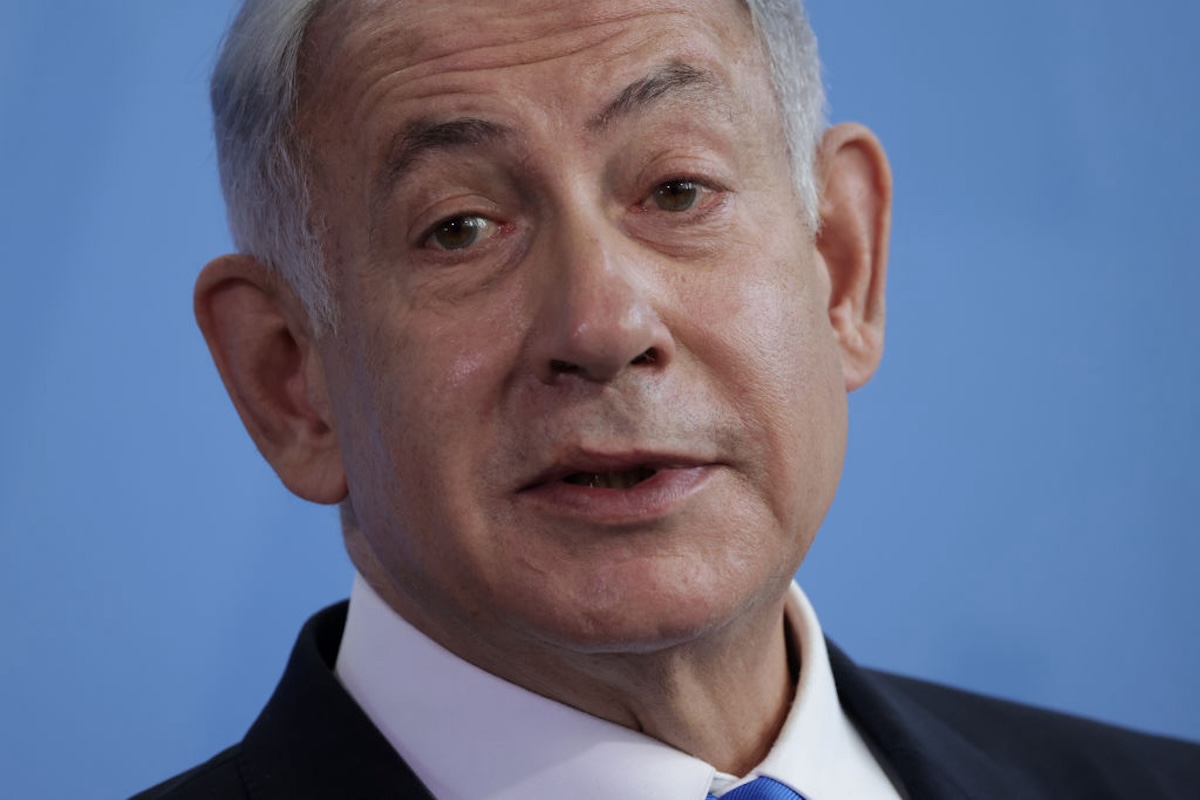
Democrat Rep. Joaquin Castro grilled Undersecretary Thomas DiNanno over Israel’s nuclear capabilities. Although DiNanno is the Undersecretary of State for Arms Control and International Security, he refused to answer Castro’s inquiry.
“What is Israel’s nuclear capability in terms of weapons?” Castro asked in an intelligence committee. “I can’t comment on that specific question. I’d have to refer you to the Israelis on that,” DiNanno replied. “Does Israel have nuclear weapons?” Castro reasserted the question. “I’m not prepared to comment on that,” DiNanno insisted.
“You’re not prepared to comment on it? It’s a very basic question. We are with an ally conducting a war against Iran. This war continues to escalate,” Castro reminded those in the briefing. When he clarified if DiNanno is unaware of Israel’s nuclear status, the latter said that he couldn’t comment on it either.
“You’re the main person in charge of knowing this and understanding it. Will you not give us an answer? I don’t understand why this issue is so taboo when it’s a basic question, and we’re in a war alongside Israel against Iran. We are dealing with the potential of a nuclear fallout,” Castro warned.
“Again, it would be outside my purview, as the arms control non-proliferation undersecretary, to discuss that specific question,” DiNanno replied again, giving no answer to the initial question. Castro called this a “derelection of duty.”
Should Israel have nuclear weapons?
In recent history, Israel has been bombarding neighboring countries to fight militia groups in the Middle East. The country had no qualms in destroying Gaza’s universities, schools, and hospitals—civilian infrastructures—all to eradicate Hamas in the tunnels. Moreover, Israel has expanded its campaign to Lebanon to defeat Hezbollah. But even for the sake of national security, to what extent is Israel willing to justify its onslaught and the mounting civilian casualties?
Perhaps there are better questions to ask. Namely, why should Israel be the sole power in the Middle East allowed to have nuclear weapons? Assume that the answer rests in quelling terrorism. But even if nuclear weapons are considered an ‘existential’ safeguard, could Israel be trusted as a level-headed actor when handling these weapons of mass destruction? Based on the country’s brutal, genocidal campaign in Gaza, it would be difficult to support Israel’s nuclearization.
Does Israel have nuclear weapons?
The Arms Control Association believes that Israel has 80-90 nuclear warheads. These weapons are reportedly in a disassembled state. Nevertheless, Israel never signed the Treaty on the Non-Proliferation of Nuclear Weapons. If true, further escalation in the war against Iran could possibly result in Israel using nuclear weapons for the sake of national security. Needless to say, the results would be devastating for the civilians. But the chaos wouldn’t be isolated to one region—the rest of the world would also suffer the brunt of a nuclear fallout.
Israel allegedly had plans to attack Iran first, based on a statement Secretary of State Marco Rubio gave. But the United States struck Iran, and it’s currently locked in a war that Trump does not know how to end. It’s imperative for the United States to restrain Israel, should a ceasefire be reached. But most importantly, the United States should root out whether or not Israel poses a nuclear threat to the region. It doesn’t matter if DiNanno refuses to answer questions—someone competent in the administration must get to the bottom of it.
Have a tip we should know? [email protected]
Follow The Mary Sue:
