comScore
  1. Mediaite
  2. Gossip Cop
  3. Geekosystem
  4. Styleite
  5. SportsGrid
  6. The Mary Sue
  7. The Jane Dough
  8. The Braiser

Our Adorable Past

World’s Most Prolific Novelist Still Had Time to be a Daredevil Aviator; Meet Barbara Cartland


Barbara Cartland is best known for penning “risqué” (though they rarely contained anything of an, ah, suggestive nature) thrillers, plays, and romance novels with titles like The Bitter Winds of Love, and The Wicked Marquis, and penning a lot of them. She holds the world record for most books written in a single year (twenty-three, in 1983 when she was fifty-eight), and has been named the top selling author in the world by Guinness. She sold more than a billion books over her career, with a total of nearly nine hundred novels, one hundred and sixty of which were published posthumously.

But what she isn’t well known for, as io9 shows us today, is her contributions to aviation and, relatedly, the war effort in England during WWII.

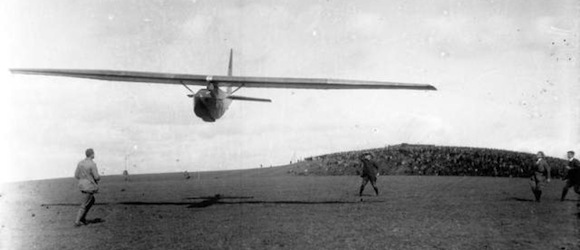
Cartland was at the forefront of gliders, which, as io9 puts it “are what planes would be if you removed a lot of the stuff that kept them from crashing, like engines.” Flying a glider is not unlike having a gas powered plane tow you up into the sky on a giant paper airplane, and then cutting the towline. Gliders were a fun diversion in the 1920s and ’30s, but didn’t seem to have much practical application, as they couldn’t get off the ground by themselves, weren’t particularly fast, didn’t go very far, and couldn’t carry much.

It was Cartland who decided that a long-range glider was a goal worth pursuing, and built her very own plane to prove it, named, what else, the Barbara Carland. She completed a two-hundred mile flight carrying the first glider-carried sack of airmail, a feat that would eventually culminate in gliders being used as troop transports in World War II. What they lacked in power and maneuverability, they made up for in being completely silent, I’m guessing.

Cartland’s work was primarily in the genre of historical romance, so no gliders to be found there. While she didn’t fly for the war effort, she was still active, as io9 explains.

TAGS: | | |


  • Anonymous

    Troop-carrying gliders were an integral part of D-Day, carrying the troops that would land at, and secure, Pegasus bridge: http://www.youtube.com/watch?v=ODez_Fw8xmg 
    Crazy to think it all stemmed from Barbara Cartland.

  • chris ackerley

    Hi there,

    I hope you are well. Just spotted this post and thought I would tell you about the Cartland inspired art project which I thought you may be of interested in hearing about. ‘The Cartland Institute for Romance Research’ (CIFRR) is a new art installation exploring the life and work of the celebrity romance novelist, political activist and aviator Dame Barbara Cartland.
    Inspired by this extraordinary woman, art collective UHC have created a new work which is part sculpture, part shrine, and part romance novel.

    We have set aside Dame Barbara’s caricatured pink gown and mascara image, choosing instead to explore the author’s record breaking output as a writer, her status as a champion of midwifery and traveller’s rights, her Tatton connections, personal wartime tragedies and perhaps her least known accolade as the co-inventor of the passenger carrying towed glider.

    CIFRR is currently on show in the grounds of Tatton Park http://www.tattonparkbiennial.org and features an exact 1/2 scale replica of the glider; the Colditz Cock, which also lends its name to our limited edition novel.

    The novel is inspired by the works of Barbara Cartland and tells the story of Mary, a British woman trapped in war torn Germany and based on a young Barbara Cartland. After an unexpected encounter with a British airman, they create a daring escape plan echoing the true story of the famous glider built by prisoners of war at Colditz. The story draws on real people and events to create an imagined account of aviation, romance, escape and wartime Tatton. The character of Mary is based on the young Cartland.

    You can enjoy the first chapter of this book for free at http://www.tattonparkbiennial.org/detail/4380/

    It is also available for purchase from

    http://tinyurl.com/bwep9f4

X