



Woman notices wrong prices on Walmart items. Then she gets them for free: ‘What is label accuracy law?’

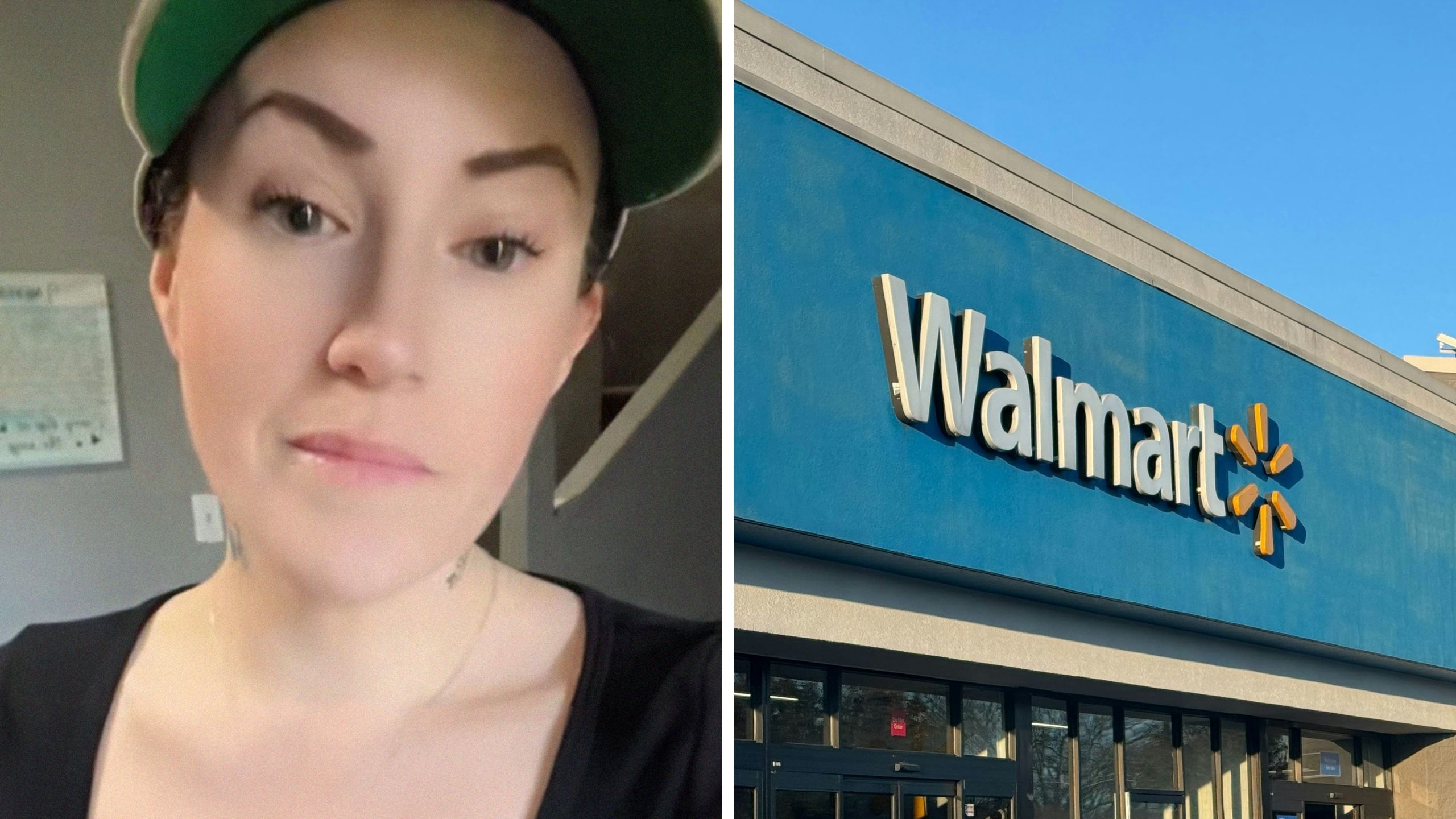
Some countries take price accuracy more seriously than others. In Canada, for example, retailers voluntarily operate under the country’s Scanner Price Accuracy Code (SPAC).
The code requires retailers to give an item for free if it rings up higher than the posted price and costs under $10. For items priced above that, customers usually receive a bonus discount on the lowest advertised price. Many shoppers take advantage of the law, specifically scouring grocery aisles for pricing errors.
Recently, Canada-based TikToker Theandra (@theandrah250) posted a video showing how the code works in real life while shopping at two local Walmart locations. Her video has garnered over 93,000 views.
Canadian Shopper ‘Does Scanning Code’
“I’m going into my local Walmart that hates me,” she begins. “It is the only Walmart out of the three in my city that fights me every time I find an item that is priced wrong.”
She says she had been in the same location two days earlier, pointing out incorrect price labels to employees. “He didn’t take them off, so I’m gonna see if he did it after or if I’m gonna get the same stuff,” she says. “And if I do, not my problem.”
The first pricing errors she shows involve a sale for a carton of Lipton Lemon Brisk iced tea, which was supposed to be discounted from $7.98 to $6.97, and Fuze Lemon tea, which was listed as $7.47 to $8.47.
The claim appears to be that while the sale had expired, the store hadn’t removed the discount notice from the shelf. “We spent five minutes here,” she says, referring to her visit two days earlier, when she pointed out the mistake to employees. “It’s still like this.”
Theandra then shows a cart full of groceries. “Took me 30 minutes to find everything,” she says. “And it took me another 20 minutes to check out.”
She says only one employee acted rudely. “One guy was like, ‘So did you just come in here and target this?’” she recounts. “And the main manager was like, ‘No, don’t say that,’ because he’s dealt with me many times before and he knows.”
She Continues Her Mission at Another Walmart Location
Theandra moves on to a second location to find more pricing errors. “This is my local one, really close to my house,” she explains. “I’m in here a lot, so they’re pretty on it.”
Immediately, she finds an error she says she had previously informed employees about: Rascal’s diapers priced at $28.88, discounted from $32.88.
“So this is what you’re looking for,” she says, showing the shelf price labels up close. “You can see that these are $32.88, but they’re on the skid for $28.88.”
According to Canada’s SPAC, Theandra gets $10 off the lower advertised price because the item costs more than $10. “I’ll get those for $18.88,” she says.
She continues with another error. “This is double-ticketing,” she says, filming the large price display at the top that reads $8.68. “But then they put it like this,” she adds, zooming in on the item below priced at $9.94.
Another example involves Blue Diamond dried fruits, which are priced differently on two separate shelves for the same items: $1.57 on the top shelf and $1.78 on the bottom.
She then shows another shopping cart full of items. “This is my second haul,” she says, showing diapers, cleaning supplies, a water bottle, iced tea, nuts, and more.
The video then cuts to the next day, when she says she also got peanut butter for free after noticing it was priced incorrectly on her receipt.
She then shows her final haul: multiple jars of peanut butter, drinks, nuts, snacks, and more. “I paid $5 for this,” she says, pointing to a bottle of vitamin gummies. “I paid $1.20 for the recycling deposit for each of the pops, and then everything else except for the diapers. The diapers were $18.88. Everything else was free under the scanning accuracy code.”
@theandrah250 Let me show you what to look for when doing scanning code ??♀️ #walmart #deal #couponing #fyp ♬ original sound – Theandra
Does the United States have a similar law?
Similar laws do exist in some states, but not at the federal level. Consumers in Connecticut, for example, can get an item for free if it’s priced incorrectly, though only up to a $20 value.
Michigan has its Scanner Law, which requires retailers to refund the difference between prices, plus a “bonus” to the customer if the posted price was lower than the price that rang up. Under the law, the bonus must be at least $1 but no more than $5.
In California, while customers don’t receive a free item, retailers must honor the lowest displayed price, as set forth by the Weights and Measures Division.
Commenters Share Stories of Their Own
In the comments, some users said they tried to do the same, but didn’t go far. Others criticized employees.
“Everytime I try they fight me!” one user wrote. “The cashiers act like they have no idea what I’m talking about and the managers are confrontational. How do you mention it? Do you always use self check out?”
“Omg this just happened to me, the head and shoulder said 5.97 and it rang up 6.97 and took an employee and got my $1 back,” another shared.
“The way some employees defend Walmarts money like it’s coming out of their cheque, is wild,” a third chimed in.
The Mary Sue has reached out to Walmart via contact form, Walmart Canada via email, and Theandra via TikTok messages.
Have a tip we should know? [email protected]
