



Trump says ‘the dollar is doing great,’ but facts say it is at a four-year low against major currencies

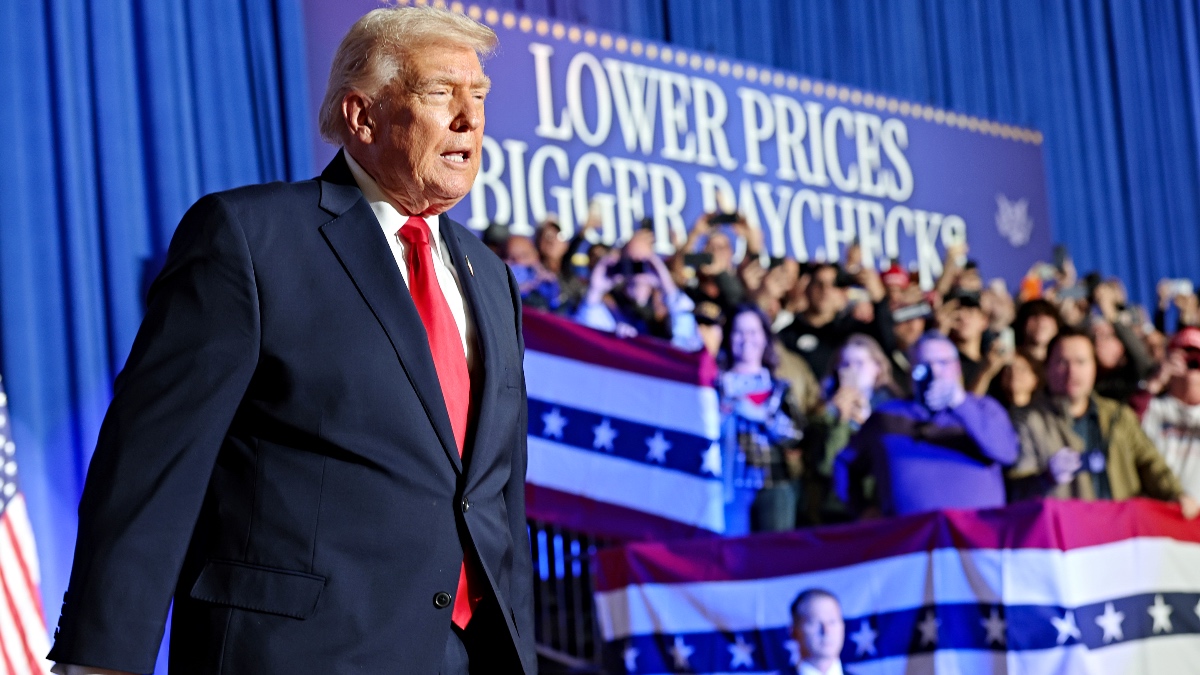
Donald Trump declared the U.S. dollar was “doing great” on Jan. 27, 2026, while speaking to reporters during a visit to Iowa. But on the same day, the U.S. dollar had fallen to its lowest level in four years against a basket of major global currencies. Someone please turn the TV on for the president.
On Tuesday, reporters asked Trump about the dollar’s ongoing downward trend and whether he thinks it has declined too much. But Trump dismissed the question outright, saying, “I think it’s great.” He even cited “the business we’re doing” to prove that the dollar’s value is strong.
But Trump didn’t time his comment well. Or, maybe he forgot to look at the data. On the morning he gave the statement, charts show that the dollar had fallen to its four-year low against currencies like the euro and the Swiss franc. Market data tracked by Reuters and other financial outlets all reported on the decline. But when has Trump ever bothered with facts?
Trump’s exact words were blunt: “No, I think it’s great. The value of the dollar — the dollar’s doing great.” He then framed the issue as a familiar grievance, pointing again to foreign countries like China and Japan. He recounted that he has long accused the two of manipulating their currencies to gain trade advantages:
If you look at China in Japan, I used to fight like hell with them because they always want to value their Yen. You know that? The Yen and the Yuan. And they’d always want to devalue it. They’d devalue, devalue, devalue.
Trump even slipped in an egoistic boast in that comment. He added that “it’s not fair” that they devalue because “it’s hard to compete when they devalue.” In essense, Trump suggested that there’s no competitor against the dollar’s value. But Financial markets did not share the president’s optimism.
The dollar has weakened even more after Trump’s statement
Following Trump’s comments, the dollar weakened further. This continued the slide that analysts attributed to investor unease over U.S. fiscal policy, trade uncertainty, and the administration’s increasingly erratic economic messaging. Naturally, the decline pushed investors toward traditional safe-haven assets. And now, gold prices have surged to record highs, while currencies like the Swiss franc and euro strengthened (via Benzinga)
The market reaction underscored a widening gap between Trump’s rhetoric and real-world financial indicators. Treasury Secretary Scott Bessent attempted to reassure markets later, reiterating that the U.S. maintains a “strong dollar” policy and has not intervened directly in currency markets (via Trading View). Still, verbal signals from the president matter, and Trump’s apparent indifference to the dollar’s slide sent the opposite message.
Regardless, it’s important to note that a weaker dollar is not universally negative. It can make U.S. exports more competitive abroad. But it also raises import costs, adds inflationary pressure, and can undermine global confidence in U.S. economic leadership. Especially paired with Trump’s volatile trade threats and tariff brinkmanship.
Trump’s remark fits his broader pattern of delivering confident declarations in defiance of measurable data. While he insists the dollar is “doing great,” the numbers say it is weaker than it has been in four years. And in global markets, facts move money, not unsupported confidence.
Have a tip we should know? [email protected]
