



Woman finds Le Creuset Dutch Oven at T.J. Maxx for $29. Then the cashier rings it up: ‘Pretty sure that’s illegal’

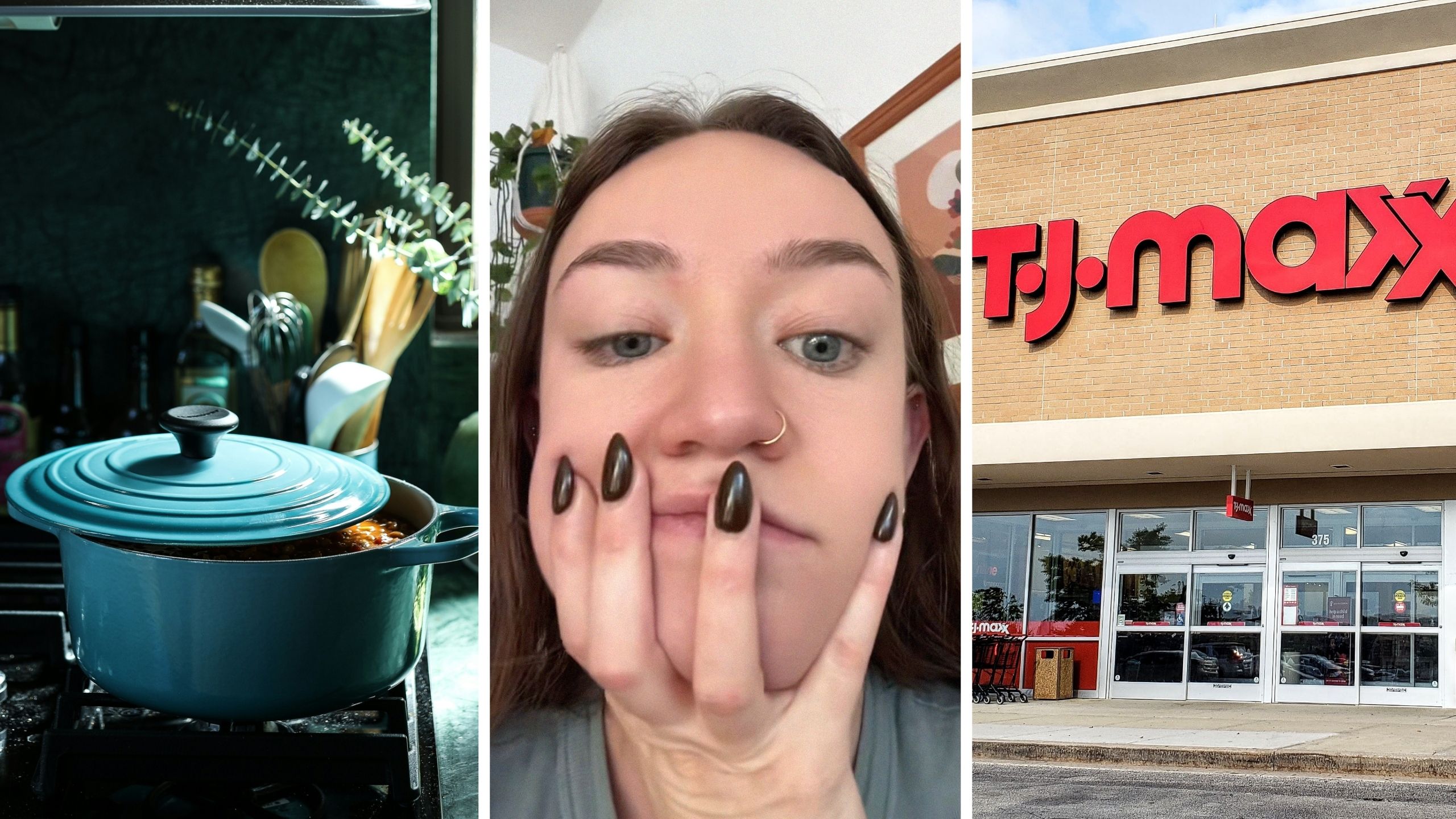
A full-size Dutch oven from Le Creuset usually runs a few hundred dollars, even on a good day. So when one shopper spotted one at T.J. Maxx for $29, it felt like winning the lottery.
That’s exactly how TikToker Nicole (@nicoleandchuck) felt when she came across the bright blue Dutch oven while shopping at T.J. Maxx. In a clip with 72,500 views, Nicole shared how fast that excitement disappeared once she got to the register.
What Went Wrong at T.J. Maxx?
In the video, Nicole sits at a table with her head in her hands. In front of her sits a Le Creuset cocotte, a mini version of the classic Dutch Oven.
“When you find the PERFECT full-size Le Creuset DUTCH OVEN that matches your cocotte at TJ Maxx for $29,” the on-screen text reads, “and when they ring you up they tell you it’s supposed to be $199.”
According to Nicole, the cashier stopped the transaction once the item was scanned and flagged the price discrepancy. Instead of honoring the sticker, the employee told her they had mislabeled the Dutch oven, which should have been marked at $199.
Commenters Have Strong Opinions
The comments quickly filled up with people debating what should have happened next, and what they would’ve done in Nicole’s place.
“Pretty sure that’s illegal for them to not sell it at the sticker price,” one person wrote.
Another viewer said they would’ve escalated it immediately. They wrote, “I would’ve been speaking to the manager to get them to honor the price.”
Nicole responded to that comment, saying the manager did come over but looked at her “like I changed the stickers.”
“I’d be slapping the $30 on the counter and walking out,” one commenter joked.
@nicoleandchuck would have been the deal of a lifetime ? #lecreuset #tjmaxx #tjmaxxfinds @TJ Maxx @Le Creuset ♬ original sound – ?
Do Stores Actually Have to Honor a Mislabeled Price?
Despite how common the belief is, stores generally don’t have to honor a price that was clearly marked by mistake.
Legally speaking, most retailers are allowed to correct pricing errors, especially when the difference is dramatic. A $150–$400 item marked at $29 usually falls into the category of an obvious mistake, not a binding offer. In many states, displayed prices are considered an invitation to purchase, not a guarantee.
That said, consumer protection laws do exist for a reason. If a store intentionally advertises a low price to draw customers in, then switches it at the register, that can cross into bait-and-switch territory. Laws like the Florida Deceptive and Unfair Trade Practices Act aim to prevent that kind of behavior.
The key difference comes down to intent. If the price was an honest error, stores can fix it. If it was deceptive on purpose, that’s where legal trouble can start.
Some retailers also have internal policies that allow managers to honor incorrect prices as a goodwill gesture, especially if the customer noticed the issue in good faith. That’s why shoppers often suggest asking for a manager, not because the store has to comply, but because sometimes they will.
The Mary Sue has reached out to T.J. Maxx via email for comment. We also reached out to Nicole via TikTok message.
Have a tip we should know? [email protected]
