


‘Mr. Nobody Against Putin’ Oscar win delivers the most important message of the night

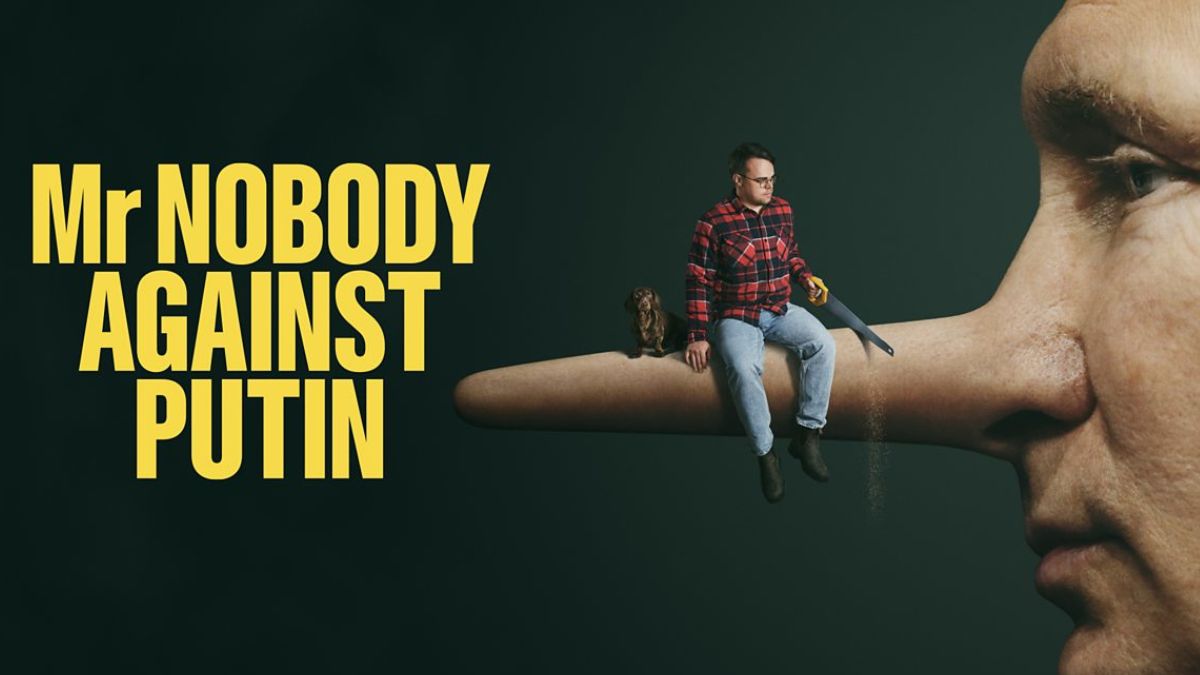
Mr. Nobody Against Putin won the Best Feature Film category at the 2026 Oscars. Although it’s a film about Russia and war propaganda, the film’s message resonates in the current political climate.
“This Oscar is for documentary feature film, which is like a documentary short film but longer,” Jimmy Kimmel introduces the category. Perhaps it’s most appropriate, since the Federal Communications Commission has actively attempted to censor Kimmel over a comedy skit.
The nominees were The Alabama Solution, Come See Me in a Good Light, Cutting Through Rocks, Mr. Nobody Against Putin, and The Perfect Neighbor.
Kimmel announced that Mr. Nobody Against Putin won the category.
David Borenstein, the director of the film, gave a brief speech.
“Mr. Nobody Against Putin is about how you lose your country, and what we saw when working with this footage is that you lose it through countless small acts of complicity,” Borenstein says.
“When we act complicit when a government murders people on the streets of our major cities. When we don’t say anything when oligarchs take over the media and control how we produce it and consume it.”
Borenstein ties it all together by reminding individuals that they are not powerless in the face of oppression. He finishes with, “We all face a moral choice, but luckily, even a nobody is more powerful than you think.”
Although Borenstein spoke of Russia in this speech, it was also a warning against apathy. Dictatorships don’t happen overnight—the system relies on the silence and indifference of the people. Censorship didn’t prevail because people pushed back when Jimmy Kimmel Live! was pulled off air. ICE agents are being pulled out of Minnesota after weeks of consistent protest.
Borenstein’s speech arguably carries the most important message of the night—governments test what their citizens can tolerate. When citizens feel powerless and fail to use their freedom to oppose reprehensible policies, governments will continue to encroach on rights.
A call to stop the war
“For four years, we look at the sky for shooting stars to make a very important wish,” Pavel Talankin said in his speech.
He continues, “But there are countries where, instead of stars, they have shooting bombs and shooting drones. In the name of our future, in the name of our children, stop all of these wars now.”
Talankin is a teacher from Karabash, a rural mining town near the Ural Mountains. Talankin, as a videographer, documented how children were militarized and recruited to fight in the ongoing Russo-Ukrainian War.
He would eventually submit these films to Borenstein as an act of rebellion against the Kremlin’s war machine. Talankin’s decision to become a whistleblower was a costly one. When he reportedly spotted a police vehicle outside of his home, Talankin decided to flee Russia for good.
Russia understands the power of dissenting opinions, which is why it holds tight to repressive tactics. For a government to justify a war, the reasons have to be airtight—but with the record of defection and low morale, it appears that the government is failing in its propaganda. Adding dissenters into the mix, the government would have more difficulty convincing its people to die for a cause that they did not choose.
Mr. Nobody Against Putin proves that even the effort of one person can cause an impactful disruption to the system. If the Russian government didn’t see Talankin as a threat, there would be no incentive to drive him out of his home.
Have a tip we should know? [email protected]
