


Lena Dunham’s New Book Dives Into ‘Girls’ and Adam Driver, But Does It Explore Her Own Problematic Past?
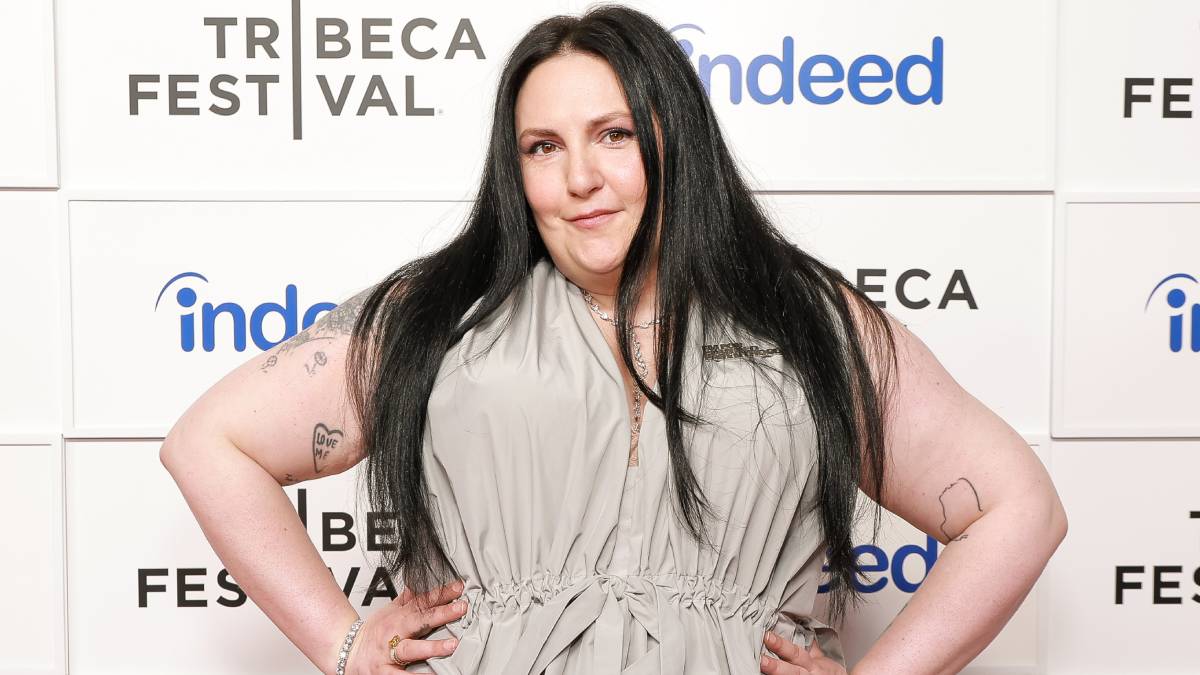
Once again, Lena Dunham is making headlines… but not necessarily for the reasons that some might be expecting. This week brought the release of Dunham’s newest memoir Famesick, which chronicles a number of chapters in her life, including her rise to fame amid the success of her HBO series Girls.
As those who have even casually been aware of Dunham across the past decade know, there is no shortage of salacious subject matter for Famesick to cover. The book definitely seems to deliver in that regard, including diving into her previous relationship with musician Jack Antonoff, which she says deteriorated amid her struggles with chronic illness. Additionally, she admits to having cheated on Antonoff with a former “middle school boyfriend” named Nick, and alludes to long-running rumors that Antonoff also had a relationship with fellow musician Lorde.
Famesick also delves heavily into Dunham’s experience on Girls, and the insecurities she felt while being the star and showrunner of the show. She also alleges some volatile interactions with Adam Driver, who starred on the series as her character’s love interest. She claims that, while filming a sex scene between their two characters, her “careful blocking went out the window and [Driver] hurled me this way and that.”
“Stunned, I couldn’t speak for a moment, unsure of what had happened — had I lost directorial authority, allowed the scene to go off the rails, not given proper instructions?” Dunham writes. “Would I be removed from my command post immediately? It wasn’t that I felt violated — and I also wouldn’t know if I had, as there was little in my sexual life that I hadn’t allowed to happen, and for no pay. But I felt that something intimate, confusing and primal had played out in a scenario I was meant to control.”
She also alleges that, after she forgot her lines during a rehearsal, Driver “hurled a chair at the wall next to” her.
“I remember doing a fight scene with Adam and how scary it was to meet someone so totally present with such absence,” Dunham writes. “Late one night, as we practiced lines in my trailer, I found that mine were suddenly gone. I knew I’d written them. I’d known them only minutes before. But when I opened my mouth, all that came out was a stammer — until finally, Adam screamed, ‘FUCKING SAY SOMETHING’ and hurled a chair at the wall next to me. ‘WAKE THE FUCK UP,’ he told me. ‘I’M SICK OF WATCHING YOU JUST STARE.’”
Why Is Lena Dunham Controversial?
But there’s one aspect of Dunham’s life that people have been curious to see tackled in Famesick: the allegations that she sexually abused her sibling, Cyrus, when they were both children. The allegations stemmed from Dunham’s own writing in her 2014 memoir Not That Kind of Girl, in which she recounted touching Cyrus’ genitals, masturbating next to her sibling, and giving him candy in exchange for a kiss. At the time of Not That Kind of Girl‘s release, outlets like The National Review interpreted these stories as child sexual abuse… and Dunham now writes that she was “initially unafraid” by these allegations. At the time, she thought that “any logical person” would see the situation “for what it was: an attempt to cherrypick sections to create a narrative that spoke to the idea that I — and by extension, the majority of feminists — were not crusaders for justice but, in fact, wanton perverts.”
“I didn’t consider what I’d written to be particularly salacious,” Dunham writes in Famesick. “And anyway, what about the things I hadn’t included? I’d decided against describing the time, age four, I announced to a group of near-strangers that my punishment at home for misbehavior was having ‘a fork stuck up my vagina.’ (It was not.) I don’t know where I came up with that, but I’ve always been confused by anyone who doesn’t recognize that children are inherently innocent, and yet their imaginations are endless and deranged.”
“I mounted every defense I could: I took to Twitter to cry smear campaign, male bulls—, to say YOU’re the creepy ones for even thinking this,” Dunham recalls. “And while I do believe there were people who were genuinely agitated by the phrasing and what it evoked for them, who felt betrayed by the words — and to them, I am sorry —I believe there were many more who saw the chance to eradicate someone who had heretofore been only a nuisance to them, whose picture they didn’t care to scroll past, a person they deemed unworthy of her accomplishments and her adulation, who was taking their chances and their cash in the zero-sum game of life.”
Ultimately, Dunham admits blame for how the revelations affected her relationship with Cyrus, who now identifies as transmasculine nonbinary.
“What I had been guilty of on the page, what the internet should have charged me with and given me a short sentence for, was poor phrasing — maybe a second count for TMI,” Dunham writes. “What I was now guilty of seemed to be a laissez-faire attitude about what was mine to confess, which had derailed the life of the person I had felt most tasked with protecting.”
Famesick is now available wherever books are sold.
(featured image: Jason Mendez/Getty Images for Tribeca Festival)
Have a tip we should know? [email protected]
Follow The Mary Sue:
