



Jeff Bezos is dropping billions on a doomsday fleet to face a dinosaur-level threat hurtling toward Earth
Another layer to our planetary defenses.

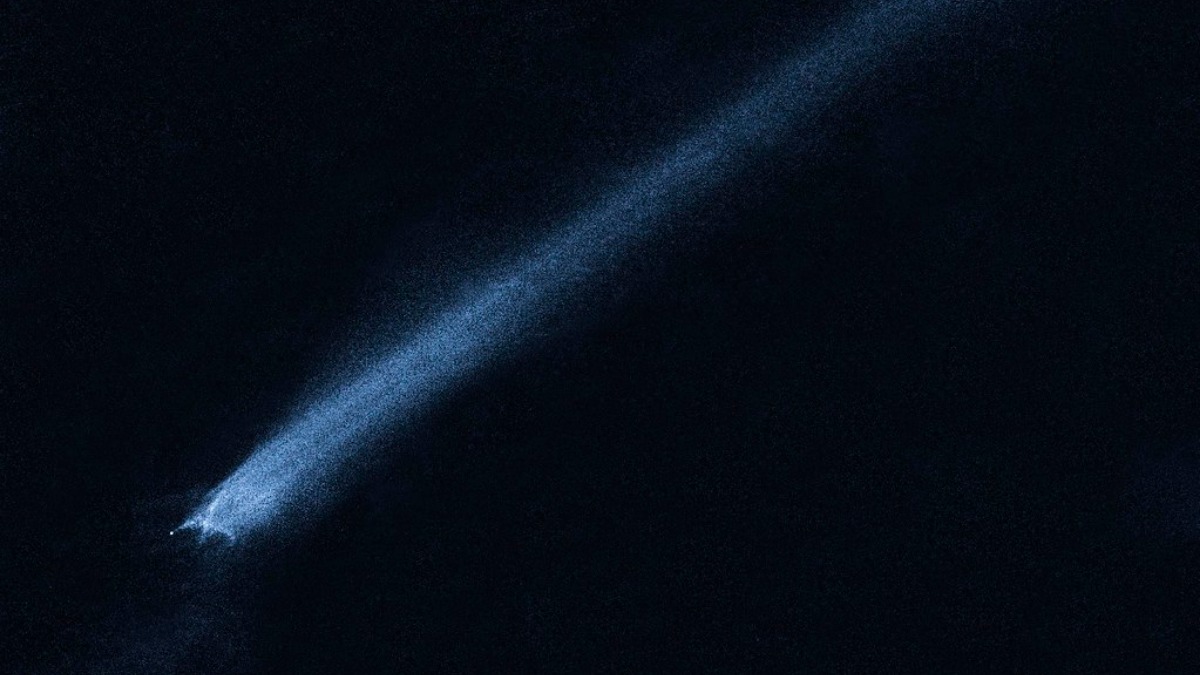
Blue Origin, Jeff Bezos’ aeronautics firm, is teaming up with NASA for a brand-new planetary defense mission called “Near-Earth Objects Hunter,” aiming to protect our planet from incoming asteroids. This high-tech initiative, which will utilize a new spacecraft named “Blue Ring,” is expected to launch sometime this year, though an official date hasn’t been announced yet.
The danger posed by space rocks isn’t just something out of a sci-fi movie. According to UNILAD, thousands of asteroids, some large enough to wipe out entire cities, pass alarmingly close to Earth every year.
While NASA and astronomers worldwide diligently track roughly 40,000 Near-Earth Objects (NEOs), including those truly massive, civilization-ending ones over one kilometer in diameter, the reality is that they can only keep tabs on about 60% of the smaller, but still incredibly dangerous, “city killer” asteroids. These can measure up to 200 feet across.
Jeff wants to help defend Earth from incoming, untracked space rocks
Those untracked space rocks are a real headache for Dr. Kelly Fast, NASA’s planetary defense officer. He’s openly stated that these unknown objects are what keep him “up at night.” Thankfully, the collaboration between NASA and Blue Origin, developed with NASA’s Jet Propulsion Laboratory, might help.
Blue Origin announced it would be working on this “Near-Earth Objects Hunter mission” to defend Earth from these incoming space rocks. The plan involves testing the new multi-purpose spacecraft, Blue Ring, which will stay in orbit. This craft is designed to potentially employ “multiple asteroid-deflection techniques.”
The company has shared that these techniques could include “ion beam deflection.” It’s a high-tech method using high-powered plasma ions to gently nudge an asteroid off its collision course. There’s also the more direct, “robust direct kinetic impact.” We’ve seen this kind of action before.
Remember the 2022 Double Asteroid Redirection Test (DART) mission? NASA basically rammed a spacecraft into an asteroid at a blazing 14,000 mph, successfully altering its path. It was a huge success, but it did also cause the mini-moon Dimorphos to shatter.
That’s why the experts are cautious; a report in the Planetary Science Journal warned that using a kinetic impact too close to our planet could turn a “sniper’s bullet into a shotgun blast.” It’s definitely something to consider carefully. Blue Origin shared more details about the mission on X on March 11, 2026, confirming its work with JPL/Caltech.
With roughly 15,000 asteroids constantly passing close to Earth, finding effective ways to protect our planet is absolutely essential. We certainly don’t want to end up like the dinosaurs. This is also why NASA is pushing forward with another critical initiative, the Near-Earth Object Surveyor mission.
The NEO Surveyor is the first space telescope specifically designed to track down dangerous objects heading our way. It uses infrared sensors to find objects that don’t reflect much light, instead looking for their “glow in the infrared spectrum as they’re heated by sunlight.” It’s a clever way to spot those stealthy space rocks. SpaceX will be launching the NEO Surveyor telescope on a Falcon 9 rocket sometime next year.
Have a tip we should know? [email protected]
