


‘Friend, he knew’: Woman days fiancé bought her lab-grown diamond engagement ring. Then they find out together it’s fake
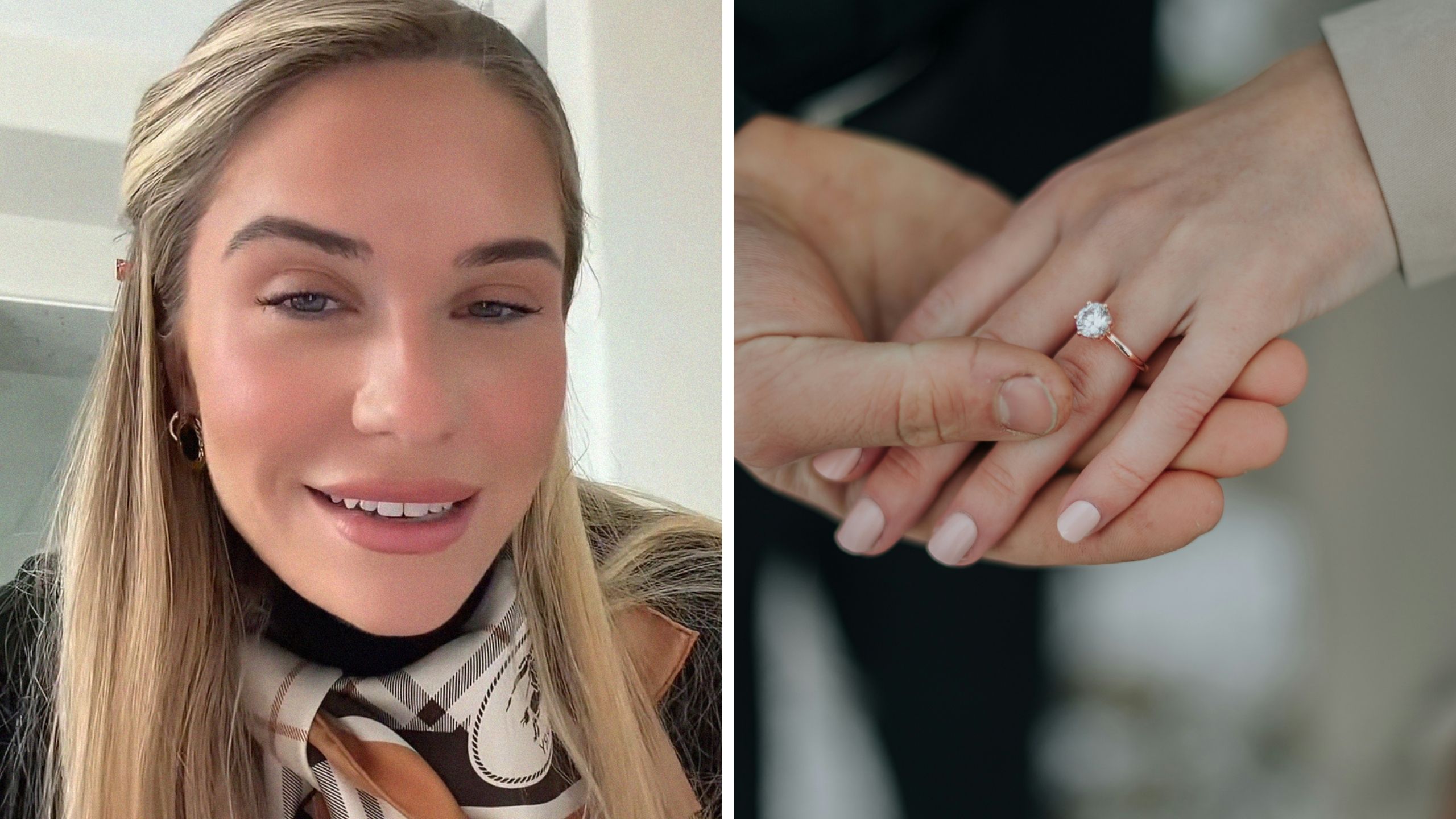
Lab-grown diamond rings have surged in popularity over the past few years.
The data backs that up. According to The Knot’s 2025 Real Weddings Study, for the first time, more than 52% of couples said they opted for a lab-grown stone rather than a natural one.
Cost appears to be a major driver of the trend. The average natural diamond engagement ring costs around $7,600; a comparable lab-grown diamond averages closer to $4,900.
While significantly cheaper, lab-grown diamonds are graded using the same standards as natural stones, and it’s just as important to verify their authenticity before purchasing.
A couple found this out the hard way after sending their ring in to be resized. According to TikToker Audrey Adams (@audrey_fit), she learned that her ring’s stone wasn’t lab-grown at all, but what she called a “worthless” stone.
How Did This Happen?
In a video that has garnered over 576,300 views, Adams says she and her fiancé only discovered the issue months after getting engaged.
“As of a few months ago, my fiancé and I found out that the center stone of my engagement ring isn’t even a lab-grown diamond,” she says at the start of the clip, holding the ring up to the camera. “It’s basically not worth anything.”
She explains that she had always thought the stone looked “a little bit weird,” but didn’t press the issue.
“We’ve been engaged for a year and a half, so I’ve been wearing this thing for some time now,” she says. “But I didn’t really question it.”
They found out the truth when they brought the ring in to be resized.
The ‘Diamond’ Is Actually a ‘White Stone’
“When we went to go get it resized, the guy at the diamond store asked what stone it was,” she says. According to Adams, the jeweler ended up writing down “White Stone.”
She adds that the original seller, whom her fiancé had believed was a trusted source and a recommendation, couldn’t provide any verification that the stone was even lab-grown.
Rather than try to fix the original ring, the couple decided to move forward.
“For my birthday, Mason took me to a diamond store as a surprise, and we got a new engagement ring,” she says.
She then shows the new ring to the camera. “And yesterday just picked it up, and here she is,” she says. “It is absolutely [expletive] massive.”
Adams notes that the new stone is lab-grown. “I know that there’s a lot of differing opinions on that,” she says. “I personally didn’t really care, at least as of right now. Maybe in the future, we’ll get a natural, but she’s a stunner.”
Comparing the two rings, she says the difference is obvious.
“So beautiful. And looks very, very different than this one,” she says, referring to the original ring. “It is so much more sparkly.”
Commenters Are Split
In the comments, viewers shared vastly differing opinions on the concept of lab-grown stones.
“Friend, he knew,” one person wrote. “He just didn’t know you’d find out. Diamonds come with paperwork…”
Adams responds, “No he didn’t lol. Has receipts and the ‘verification’ that wasn’t actually verified. Didn’t get into the details of the recommendation but he didn’t willingly spend thousands for nothing.”
Another commenter took a harsher tone. “Giant lab grown diamonds are the equivalent of carrying a fake designer purse,” they wrote.
“I can’t with the shade that’s always being thrown about lab grown diamonds,” wrote a third. “They’re made the same as natural diamonds (heat and pressure) but sourced ethically. Sorry not everyone feels great about a diamond that another human is in the earth digging for.”
Are Lab-Grown Diamonds ‘Real’?
Lab-grown diamonds have the same physical and chemical properties as natural diamonds. The main difference is how they’re formed.
Natural diamonds are made of a single element: carbon. They form deep within the Earth under extreme pressure and heat before being mined and cut into gemstones.
Lab-grown diamonds also start with tiny slivers, or “seeds,” of real diamond. Scientists then recreate the same high-pressure, high-temperature conditions in a lab, allowing the stone to grow over the course of several weeks.
To put it into perspective, diamonds aren’t the only materials made in a lab. Calcite, for example, a compound used in construction materials like cement, concrete, and lime, can also be produced synthetically. Whether naturally occurring or lab-grown, it has the same chemical composition and can be used the same way.
@audrey_fit Also my ring size is 3.5? #engagementring #fyp ♬ original sound – Audrey Adams | Fat Loss Coach
The Mary Sue has reached out to Adams via Instagram messages for comment.
Have a tip we should know? [email protected]
Follow The Mary Sue:
