


Donald Trump didn’t see Iran’s counterattack coming, but experts did, and they’re not impressed
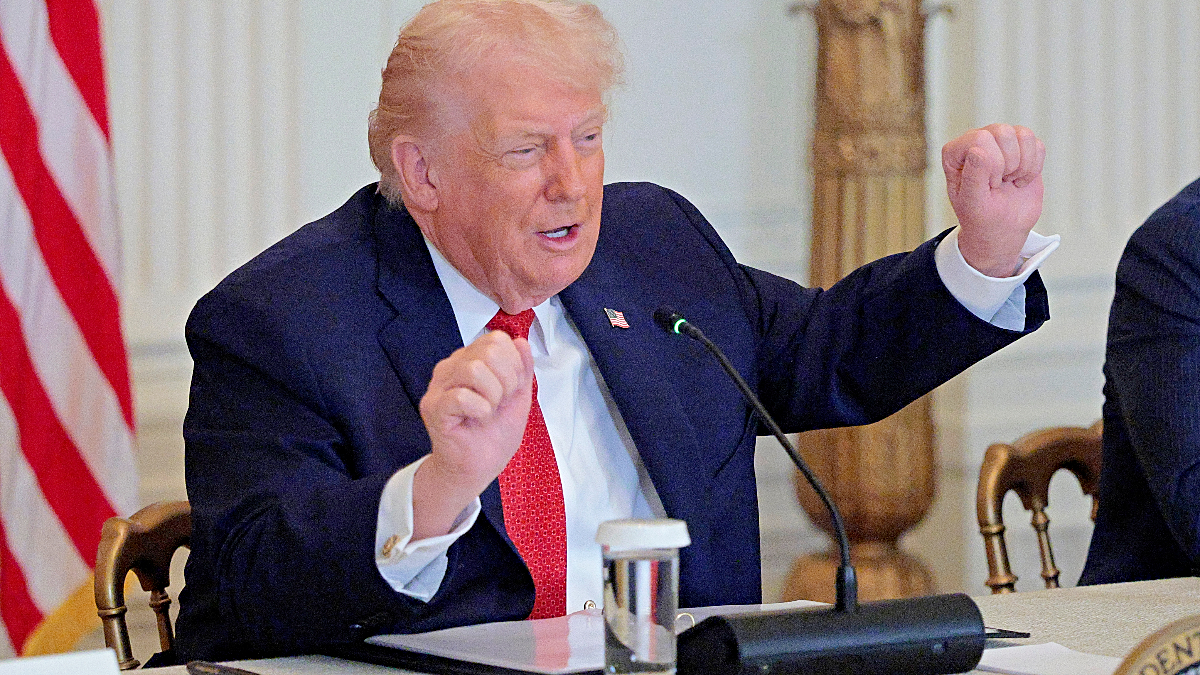
President Donald Trump was taken aback by Iran’s response after the country was struck by missiles in a US-led attack. But experts beg to differ—despite the tensions between the U.S. and Iran, former presidents chose not to attack for a variety of reasons.
“Have your advisers told you anything in terms of how long we can expect gas prices as high as they are right now?” Trump was asked by a reporter during lunch at the Trump Kennedy Center.
“I don’t need advisers to tell me that. I know what it is,” Trump said. He continued to boast about giving the same advice to UK Prime Minister Keir Starmer.
“You don’t need to meet with a team. You’re the prime minister,” Trump told Starmer. He continued, “Why do you have to meet with a team to find out whether or not you’re going to send some minesweepers to us or boats?”
“I can tell you when this is over, oil prices are going to go down very, very rapidly. So is inflation. So is everything else.”
A pivot to Russian oil?
Perhaps when struggling to answer questions, it’s best not to brag about not having taken expert opinions. Trump can learn from Starmer, who had the caution to meet with his team before rushing into a decision. As Trump confirmed that he didn’t “need advisers” to assess the risk, he should be willing to own up to the economic turbulence caused by his war campaign.
Will his solution be to remove sanctions on Russia long-term to stabilize global demand for oil? It’s too early to rule out, but it’s not improbable. The cost, however, will be shouldered by Ukraine and other European allies who are struggling to deter Russian aggression.
Trump surprised by Iranian retaliation
Trump went on to talk about the necessity of waging the war against Iran. “But frankly, much more important than short-term, or even long-term, oil prices. You can’t let the most violent, vicious country in the last 50 years have a nuclear weapon. Because the Middle East will be gone, Israel will go first, without question, and they’ll certainly take a shot at us before we get our act together.”
Trump then reacted shocked when Iran fought back. “Look what happened in the last two weeks. They weren’t supposed to go after all these other countries in the Middle East. Those missiles were set to go after them, so they hit Qatar, Saudi Arabia, UAE, Bahrain, Kuwait. Nobody expected that. We were shocked.”
The president wondered why no other Gulf states wanted to fight back against Iran. After which, he claims that the United States protected its allies—because if the US weren’t around, Iran would have tremendous power and would supposedly attack its neighbors.
But Iran wouldn’t be launching strikes against neighboring countries and targeting American military bases if not for the joint attack conducted by Israel and the United States.
Expert advice Trump skipped
According to the Brookings Institute, domestic pressure serves as a disincentive against war from both the United States and Iran. Neither country’s populace wants a full-blown war. The Brookings Institute also used the Iran-Iraq War and US involvement. They concluded that not only will the United States ultimately be blamed for failing its objectives, but they also pointed out that Iran will be using asymmetric warfare and exploiting American vulnerabilities in neighboring countries.
Hence, Trump shouldn’t be surprised that the other Gulf nations were attacked.
Professor Daniel Kurtzer from Princeton University also predicted that Iran would strike key US facilities in the Middle East and target Israel, leading to a prolonged war.
A lot of people saw this coming. Maybe if Trump referred to experts on the matter, he wouldn’t be entrenched in a war he’s now begging allies to save him from.
Have a tip we should know? [email protected]
Follow The Mary Sue:
