


A Louisiana Woman Got Into a Car Accident, Then the Other Driver’s Passenger Threatened to Call ICE and Called Her an ‘Illegal Immigrant’
"You need to know your laws before you start partying."
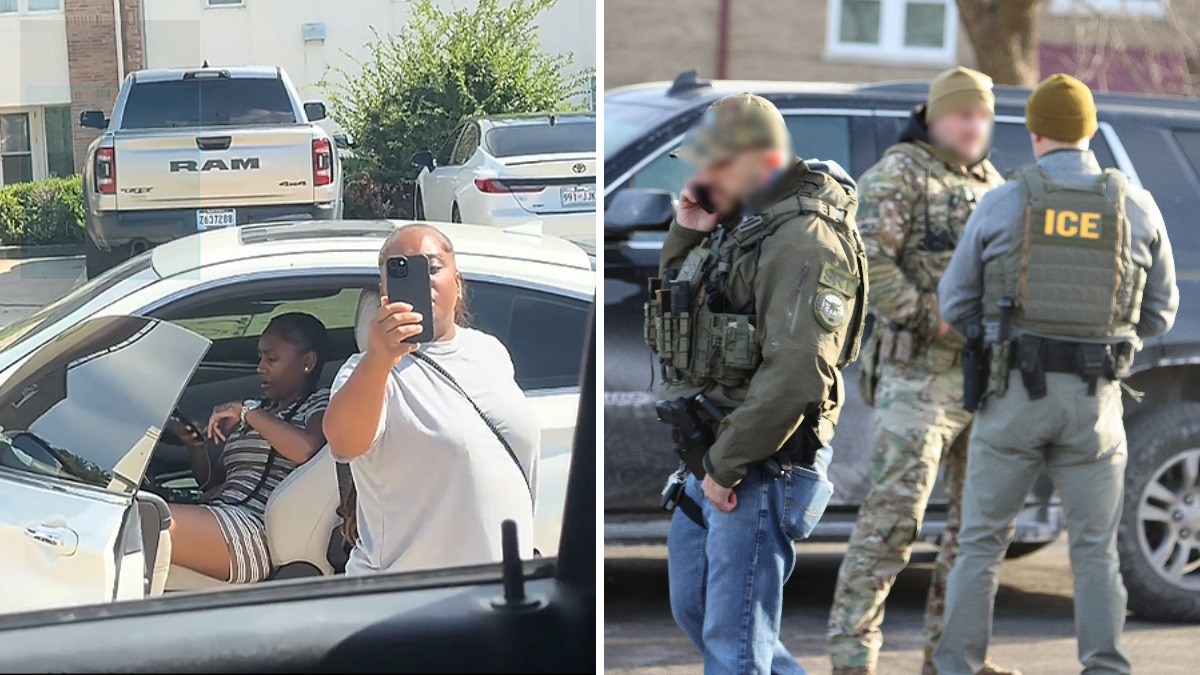
A Louisiana woman got into a car accident, and the other driver’s passenger used the moment to threaten her over her immigration status. According to The Nerd Stash, the woman, who posts on TikTok as Lucy, filmed the passenger standing outside the vehicle while they waited for police.
When Lucy rolled down her window, the passenger said, “I work for ICE! You better make sure you got your paperwork right!” She continued recording, telling Lucy, “The **** must not know that it’s illegal to have a lift kit on a **** truck. You need to know your laws before you start partying,” before calling Lucy an “illegal immigrant.” Lucy responded, “You’re just mad because you’re ugly.”
In a separate clip, Lucy is heard asking, “You think I don’t have papers?” and calling the passenger “racist.” The argument continued, with the passenger telling Lucy she was “going to pay” for the damage to her car, before police arrived.
The Passenger’s Own Legal Claim Doesn’t Hold Up
One specific claim in the exchange is checkable on its own. Multiple lift-kit legal guides confirm Louisiana has no general ban on lifted trucks; the state only regulates specific safety details like headlight height, with no statewide restriction on suspension or frame lifts themselves. Whatever role the truck’s modifications played in the accident, the blanket claim that lift kits are “illegal” in Louisiana isn’t accurate.
The threat to call ICE raises a separate legal question from the insult itself. Louisiana’s extortion statute, R.S. 14:66, criminalizes threatening someone specifically to obtain “anything of value or any acquittance, advantage, or immunity,” which can include a threat to accuse someone of a crime. That’s different from what happened here, though. Nothing in the exchange suggests the passenger was demanding money, a confession of fault, or any other concrete benefit in exchange for not calling ICE.
That likely means this specific incident falls short of what the extortion statute actually requires, even though the threat itself was clearly meant to intimidate. Falsely claiming to work for a federal agency carries its own separate legal risk under federal law. Under 18 U.S.C. § 912, falsely pretending to be a federal officer or employee is a felony punishable by up to three years in prison. Courts have held, though, that the false claim alone generally isn’t enough.
Prosecutors have to show either a further overt act consistent with the pretense or that the person tried to obtain something of value by using it. Simply telling someone “I work for ICE” during an argument, without anything more, is the kind of case the Justice Department’s own guidance says shouldn’t be prosecuted under this statute. Whether or not that threat is ever carried out, an actual encounter with immigration authorities can escalate in ways far beyond a roadside argument.
There’s also a state law angle tied to how the confrontation itself was conducted. Louisiana’s hate crime statute, R.S. 14:107.2, allows for enhanced penalties when a victim is targeted because of actual or perceived national origin, but only when it’s attached to a specific list of underlying crimes, including “terrorizing,” which Louisiana defines as intentionally causing sustained fear of bodily harm through a threat. Whether this exchange would meet that specific legal bar would depend on facts not shown in the video, like whether Lucy was placed in sustained fear as a result.
Lucy has not shared what happened once law enforcement arrived, and hasn’t said whether she plans to press charges.
Have a tip we should know? [email protected]
Follow The Mary Sue:
