


A Man Used His Robot Vacuum to Catch His Wife Cheating, but the Court Sentenced Him to Prison Instead
"It didn't give someone the right to spy on their partner."
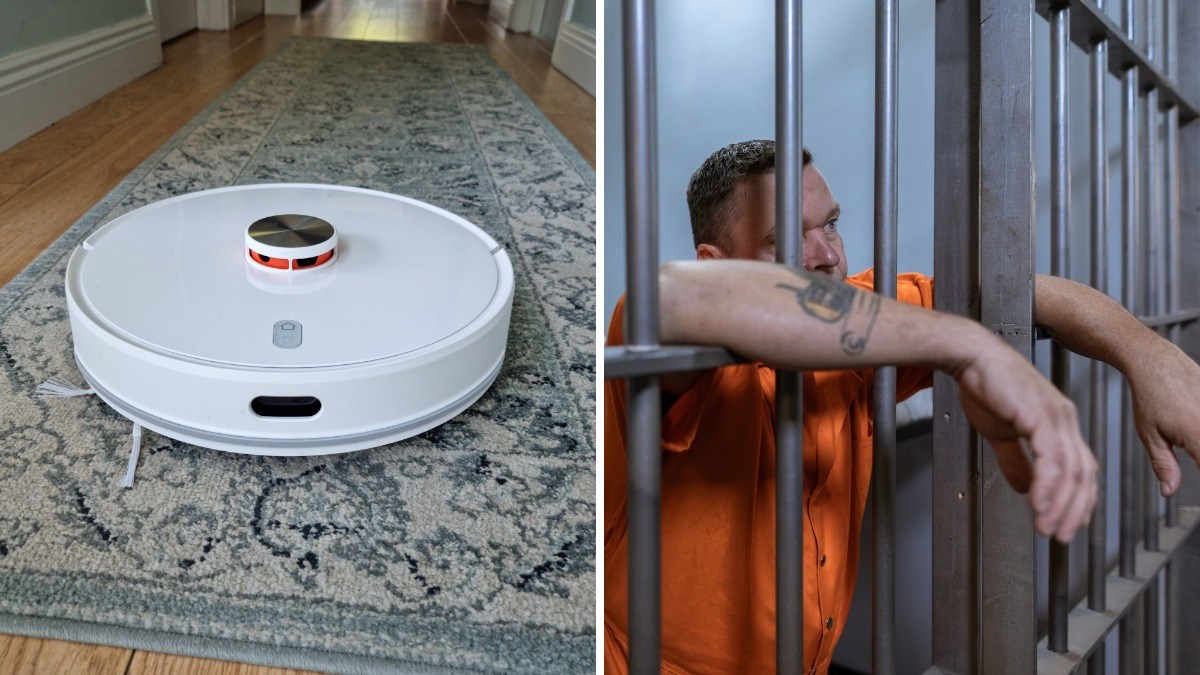
A man in Taoyuan, Taiwan, was sentenced to five months in prison for unlawfully recording intimate footage of his wife after he suspected her of cheating. According to LadBible, the couple married in 2021, and he began noticing suspicious behavior from her a couple of years later. He and his wife mostly lived with his parents but sometimes stayed at a holiday home on weekends.
In September, he started suspecting another man was involved after noticing unfamiliar items at the holiday home, including a toothbrush that wasn’t his or hers. Reviewing security footage, he found video showing an unfamiliar man driving his wife to the house and spending the night there.
On Christmas Eve, he remotely activated the home’s robot vacuum, intending to speak to his wife through it, but instead saw an unfamiliar man inside with her. He began recording the live feed and used the footage in a civil case against the two of them, seeking NT$2 million (approximately $61,500 USD) in damages. A court awarded him a quarter of that amount after determining the footage showed more than a friendship between his wife and the other man.
Why a Winning Case Still Led to a Prison Sentence
His wife then sued him for unlawfully filming her. He argued the recording had been necessary to gather evidence, but the Taoyuan District Court ruled that winning the earlier civil case didn’t excuse the surveillance, since she still had a reasonable expectation of privacy and hadn’t consented to being filmed naked. He was sentenced to five months in prison, though the sentence can be commuted with a fine of NT$150,000 (approximately $4,650 USD), and he’s said to be appealing.
A case like this would play out very differently depending on where in the US it happened, because the law here is genuinely split on this exact question. Under the federal Wiretap Act, several federal appeals courts have ruled that a spouse recording the other spouse inside their own home falls outside the law’s reach entirely, an “interspousal exception” first recognized by the Fifth Circuit in Simpson v. Simpson.
Other circuits, including the Eleventh Circuit in Glazner v. Glazner, have rejected that exception outright, ruling that nothing in the statute exempts spouses from liability. Since the US Supreme Court has never resolved the split, whether this kind of recording is a federal crime can depend entirely on which part of the country it happens in.
That circuit split, though, mainly covers recorded conversations and audio, not silent video. Video alone, especially footage capturing someone nude or partially undressed, is typically addressed by state voyeurism and unlawful-surveillance laws instead, and nearly every state has some version of one. These laws generally turn on whether the person recorded had a reasonable expectation of privacy in that specific room or moment, the same standard the Taiwanese court applied here.
Even if a recording violated one of these laws, that usually doesn’t make it useless in divorce court. Criminal rules about excluding illegally obtained evidence mostly apply to criminal prosecutions, not civil cases, so many states still allow a spouse to use footage like this in a divorce proceeding, even while separately facing criminal exposure for how they obtained it.
Have a tip we should know? [email protected]
Follow The Mary Sue:
